

Protein is an essential building block of animal feed. Yet many of the common sources of protein cause global warming, water shortages, deforestation and a loss of biodiversity. To address this challenge, Protix is pioneering the industrial-scale use of insects as a sustainable alternative that brings the food system back into balance with nature.

Director Marketing & Business Development
Protix
THE SUSTAINABILITY CHALLENGE
The animal feed industry faces multiple challenges: achieving greater sustainability, ensuring high-performance feed, safeguarding animal welfare and creating tasty feed products that will stimulate appetite. But how can these challenges be addressed cost-effectively and for the long-term?
IN TUNE WITH NATURE
The impacts of global warming can no longer be ignored. As society gains a better understanding of our impact on the environment, there is growing demand for a return to a more natural way of doing things with a lower environmental footprint. That includes how we produce animal feed for livestock and aqua culture. Currently, the protein in animal feed is derived largely from soy and fishmeal. But these use up large amounts of land and water, and there are issues surrounding greenhouse gas emissions, deforestation and overfishing. Alternative sources of protein are needed that are more in tune with nature.
NATURE’S NATURAL UPCYCLERS
One source of protein attracting a lot of interest is insects. Insects are part of the natural diet for many animals and fish. They are a source of valuable nutrients that contribute to healthy growth and development. Insects are nature’s most powerful upcyclers and are the missing link in our food system. They have the amazing ability to turn low-grade food waste into valuable high-end proteins and fats.
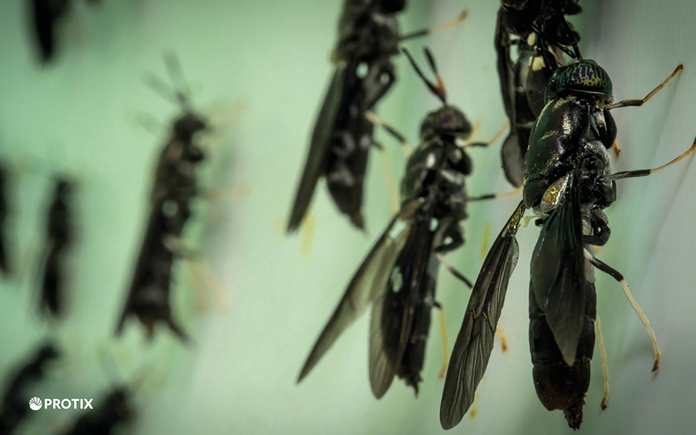
The larvae of the black soldier fly (Latin name: hermetia illucens) contain more nutrients than the larvae of other insects because the mature insect does not eat, and has to live off the accumulated reserves. The black soldier fly larvae are able to efficiently convert feedstuff into valuable biomass in a very short cycle. The larvae are processed into powerful ingredients for feed and food.
Benefits of black soldier fly larvae as a sustainable protein source
• Locally produced
Insect proteins (and the derived fats) are produced locally, and locally available plant-based waste streams can be used to feed insects. This reduces CO2-emissions for transport to a minimum.• Efficient nutrient recovery from organic waste streams
One tonne of insects is capable of transforming 4.5 tonnes of low quality, plant-based waste into high-quality nutrients.• Efficient land use
Insects can be grown quickly and do not need much space to do so. One tonne of insects can be grown in about 10 days using a land area of 20 square meters.• Low water usage
Very little water is required to breed insects – less than 30 litres per tonne of insects.• Zero waste
There is no waste in the breeding and processing of the black soldier fly. Even the insect frass which contains leftovers from the substrate, skins and insect droppings is a valuable raw material that can be used as a (organic) fertilizer.
A POSITIVE MESSAGE
Protix’s industrial-scale production of insect protein using the black soldier fly is the result of over a decade of technological innovation and commercial investment. It was essential to create the right machinery, processes and conditions to enable production on a large scale to satisfy market demand.
Interest in the use of insect-based protein in food and feed is increasing, opening up opportunities for new marketing messages. Some examples: In the Netherlands, a major supermarket chain is selling eggs from hens fed with the larvae of the black soldier fly. Consumers feel good that the hens are able to enjoy their natural foraging behaviour and diet, and lay delicious eggs. For the supermarket, the sustainable and circular nature of the egg production is important. More research into the effects on chicken is conducted in the upcoming months. The use of insect-based feed is enabling more sustainable shrimp farming with feed specially designed for land-based shrimp producers who want to use feed produced with locally sourced ingredients. Initial tests with a recently launched insect-based aquafeed product indicates improvements in shrimp growth and survival rates.
 A PROMISING FUTURE
There is now a solid amount of science-based knowledge and understanding about insect protein and its potential applications and every month more knowledge is being developed. The concept of insects used in feed and food is also becoming more widely accepted. Protix embarked on its mission to make the industrial-scale processing of insects viable in a spirit of collaboration. The company believes that the way forward is through further cooperation throughout the value chain to release the power of insect-based nutrition together.
In a Life Cycle Assessment by the Deutsches Institut für Lebensmitteltechnik (DIL), Protix has achieved outstanding sustainability scores for its insect ingredients. For example:
The CO2 footprint and impact on global warming of ProteinX® insect meal is almost seven-fold lower than the soy protein concentrate often found in livestock and aqua feed.
Each kilogram of ProteinX®, Protix’s insect meal, reduces water consumption by 330 litres versus soy protein concentrate.
About Suzanne van den Eshof
With almost 20 years marketing experience, in B2C, B2B and Durables, Suzanne is passionate about food and sustainability. She loves investigating new avenues and shaping the future in collaboration with partners across the value chain. Suzanne holds a Master’s degree in Industrial Design Engineering from Delft Technical University in the Netherlands, specialising in product design and development. She also completed a Marketing Excellence Programme at the Vlerick Business School in Belgium.