
dsm-firmenich Animal Nutrition & Health, Hardeman Egg Group and Royal Agrifirm Group have formed a strategic partnership powered by Sustell™ platform to scale low-carbon egg production. The collaboration aims to deliver verified emission reductions while maintaining price competitiveness across the value chain.
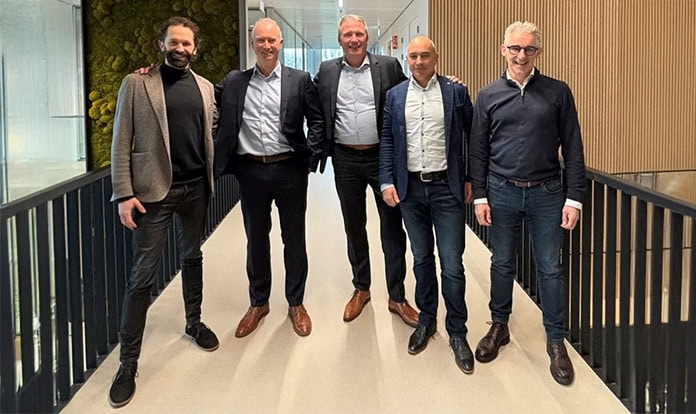
dsm-firmenich Animal Nutrition & Health, Hardeman Egg Group and Royal Agrifirm Group have joined forces to set a new benchmark for sustainable eggs, with the goal of making them affordable and accessible for everyone. According to the press release, the partnership, which combines industry-leading technology and innovation, will give consumers access to eggs produced more sustainably than conventional eggs, while maintaining a comparable price point and simultaneously enabling companies along the value chain to meet their sustainability commitments in a cost-effective way.
dsm-firmenich’s Sustell™ Carbon Value Program will be key to creating a new industry standard for sustainable eggs. The three companies have already completed a commercial pilot, with initial outcomes showing groundbreaking results.
Bas van Driel, Group Director Specialties at Royal Agrifirm Group, commented: “Through nutritional solutions we achieved more than a 17% reduction in carbon emissions, while layer performance was above the baseline. If we apply this approach at scale across roughly 10 billion eggs produced yearly in the Netherlands, we can reduce around 180 million kilograms of CO2e—equivalent to the yearly energy and gas consumption of 70,000 households—using technology that exists today.”
While surveys indicate that some consumers are willing to pay more for more sustainable products, mainstream adoption requires cost competitiveness across the value chain.
“The biggest impact comes from producing a lower-footprint egg that is attractively priced, ideally at price parity,” said Ton Gielen, CEO at Hardeman. “There are already far too many options on the shelves. If a consumer sees two cartons at the same price, they’ll pick the verified lower-footprint option and feel they’re helping the environment without paying more.”
Dr. David Nickell, Head of Sustainability & Business Solutions at dsm-firmenich Animal Nutrition & Health, stated: “Accuracy and credibility of measurement at scale are the foundation of an environmental claim that consumers can trust. When you combine robust, verifiable data with proven nutrition improvements, you lower the footprint per egg and improve productivity at the same time.”
In March 2024, dsm-firmenich and Agrifirm teamed up to connect their leading platforms, Sustell™ and PoultryNEXT, which focus on life cycle assessment (LCA) and farming performance insights, respectively.
In 2026, the partnership intends to bring the new sustainable egg standard to companies across the farm and food value chain.
“We’ll start small, but the recipe stays the same: at least three parties committing together, making verified reductions, and taking cost out so the consumer gets a lower‑footprint egg without paying more,” concluded van Driel.