


The Animal Agriculture Sustainability Summit at IPPE 2026 highlighted how efficiency-driven strategies and science-based innovation are shaping sustainable meat, poultry, egg and feed production. Sessions emphasized collaboration, practical solutions and measurable performance improvements across the value chain.
Organized by the U.S. Poultry & Egg Association (USPOULTRY), the Institute for Feed Education and Research (IFEEDER) and the Meat Institute, the annual Animal Agriculture Sustainability Summit brought attendees together during the International Production & Processing Expo (IPPE) to hear the latest on how the meat, poultry and egg, animal feed and pork industries are advancing their sustainability programs.
The summit opened with a panel discussion on “Genetics and Production Innovation for Sustainability,” moderated by Sam Wildman, director of strategic affairs for the Meat Institute. He remarked that sustainability in animal agriculture centers on efficiency, responsible production and the industry’s mission to provide food, not just politics or carbon metrics. Panelist Mark Pitman, sustainability engineer for Pitman Farms, discussed ways to cut Scope 1 and 2 greenhouse gas emissions through value-chain collaboration, solar energy adoption, agrivoltaics, natural gas microgrids, anaerobic digestion and biochar for soil and carbon benefits.
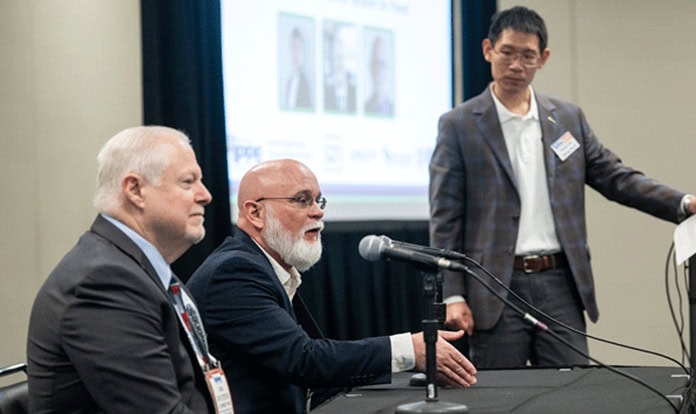
The second panel about “Air Quality and Ingredient Innovation for Sustainability” was moderated by Dr. Yuan-Tai Hung, senior manager of research at IFEEDER. The discussion included information shared by Dr. Hongwei Xin, dean of research at the University of Tennessee Institute of Agriculture, who stressed that air quality — temperature, moisture and pollutants — directly affects poultry performance, reviewing heat-stress indicators, ventilation, cooling strategies and best practices in litter, manure and air monitoring to reduce respiratory issues and improve efficiency. The panel also included Dr. Steve Lerner, senior scientific and business advisor at Novonesis, who reviewed ingredient innovations to shrink production footprints, linking productivity, profitability and responsibility. He noted that small efficiency gains in the world’s 1.4 billion metric tons of feed can yield major land-use and emissions reductions. Closing the session, Dr. Charles Starkey, vice president of scientific and regulatory affairs at the North American Renderers Association, emphasized rendering’s role in the circular economy, showing how feed ingredient selection, reduced food waste and full use of byproducts prevent landfill losses and strengthen sustainability across animal agriculture.
Together, the sessions reinforced a central theme of the summit: sustainable animal agriculture is built on practical efficiency, science-based innovation and collaboration across the production system to deliver food responsibly and reliably.