
According to a study by the University of New England (UNE), methane yield was slashed by 81 percent in grazing cattle with access to water troughs dosed with Rumin8‘s methane-reducing livestock supplement.
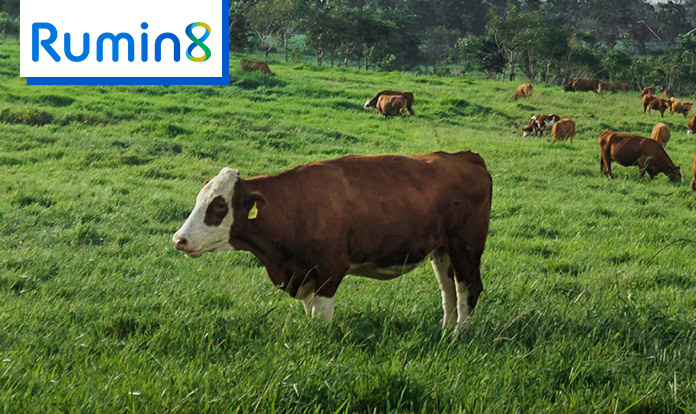 A University of New England controlled cattle study has found the methane yield was slashed by 81 per cent when trial cattle had access to water troughs dosed with Rumin8’s methane reducing livestock supplements, indicating a new tool is emerging to help cattle farmers who rely on grazing production systems to lower their methane emissions.
Delivery of Rumin8’s water-based formulation to cattle through water troughs opens up opportunities to reduce methane emissions from cattle in either remote, rangeland operations, or those with few animal handling touch points, such as pasture/grass-based cattle production systems.
At any one time 96% of the cattle population in Australia, the United States, Brazil and New Zealand graze grass. There are currently no methane-reducing additives commercially available for these cattle.
“We are very pleased with these results as they build on the significant trial data set that Rumin8 has generated with a range of formulations in a variety of production systems over the past three years,” says David Messina, Rumin8 Chief Executive Officer. “With so many cattle grazing grass around the world, the 81 per cent methane yield reduction achieved through water-based delivery was truly exciting, both in terms of addressable market and the positive climate impact this has the potential to create.”
The controlled cattle study was run by Australian climate technology company Rumin8 in conjunction with research partner, the University of New England (UNE), to test the efficacy of two different formulations of Rumin8’s proprietary methane inhibiting product against a control group. One was administered a water-based formulation via water troughs suitable for pasture-fed cattle and the other was an oil-based formulation incorporated into a feedlot ration.
The feedlot ration, incorporating Rumin8’s methane reducing oil formulation, achieved a 95 per cent reduction in methane yield.
“Our collaboration with UNE also underpins our commitment to research excellence, as we work towards decarbonizing the global cattle population and delivering effective and practical solutions for producers across a diverse range of production systems. We have now concluded more than 20 trials across the globe to demonstrate efficacy and safety, and to refine our formulations,” Messina added.
As a result of the successful outcomes from these studies, Rumin8 has publicised it has now entered into a longer-term agreement with UNE to expand the number and frequency of studies to be conducted at the University, and to accelerate the development and optimization of products for commercial use. In parallel, Rumin8 continues to progress its registration development programs in New Zealand, Brazil and the United States, with ongoing engagements with regulators in each country.