

Modern animal production is intensive and often presents challenges that stress farm animals. A heightened focus on animal health and well-being provides new opportunities for the animal nutrition industry to develop innovative solutions that can maximize animal performance. Our objective is to maintain the supply of safe, nutritionally optimized, cost competitive and environmentally friendly feed solutions for global livestock farms.

President of Feed Additives & Ingredients
ADM Animal Nutrition
We have been faced with a concept that has been spoken more frequently in recent years: “Animal welfare” … Consumers are now concerned with more than what they eat. They wonder about the origin of the food they consume and its production conditions. If it is an animal food, they care about the treatment shown to the animal while this food is being produced. This awareness and care are critical enough to direct consumption behavior and preferences. This is an invaluable approach to all living things with whom we share the planet and who contribute to meeting our food needs. It would not be an exaggeration to say that this approach, which is a sign of respect for nature and all living things, will have an important role in shaping our future.
So, what does this mean for the animal nutrition industry? While the livestock industry is already under the pressure of different factors such as the expectation for more production, healthy and quality production, less environmental impact, sustainability and low costs, is “animal welfare” an additional pressure factor? Pierre-Joseph Paoli, Head of Feed Additives and Ingredients, ADM Animal Nutrition, explains in a very descriptive manner that this is not an element of pressure, on the contrary, it is an approach that supports other positive expectations.
Paoli explains the importance of animal welfare expectations for the nutrition industry and their impacts on the industry for the readers of our magazine.
Mr. Paoli, what is animal welfare, what does it mean and why is it so frequently mentioned today?
Consumers are becoming increasingly conscientious, placing greater emphasis on traceability and sustainability, as well as indicators for responsible and safe animal feeding. Animal welfare refers to the circumstances of food production, including treatment of animals, feed quality, pharmaceutical use and living conditions. Research finds 73% of global consumers say they have positive feelings about companies that are transparent about where and how products were made, raised or grown1. Plus, 49% of global consumers are willing to pay a premium for products made with high quality assurances and verifiable safety standards2. These consumer concerns are also a driver behind the shift away from using antibiotic growth promoters in farm animal production. Furthermore, the animal nutrition industry is continuously seeking innovative solutions in the face of global challenges, from climate change to antimicrobial resistance. Farm management methods are evolving around the world to address these issues and support a supply chain that delivers high quality, safe, nutritious, delicious and sustainable food products.
 What is the relation between animal nutrition and animal welfare? What is the impact of animal nutrition on animal welfare?
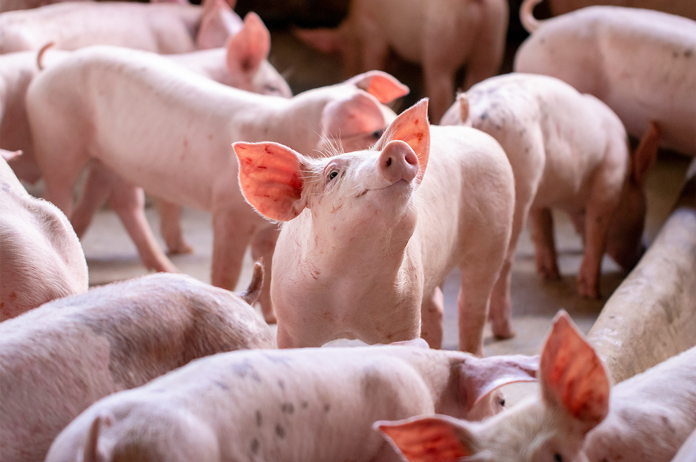
The relation stems from the impact animal nutrition can have on animal robustness. Nutrition has a direct correlation to animal resilience and therefore some issues around well-being can be mitigated by helping farm animals remain in good health. For example, certain formulations and feed additives can minimize the effects of heat stress on ruminants, swine and poultry. ADM offers two product lines to support livestock species experiencing heat stress: Fresh Up®* is available globally and for the U.S. market, there’s Thermal Care™*. These species-specific feeds have shown to leverage the synergistic effects of specialty nutrition formulations to counter the negative impact of high temperatures on animal outputs. As another example, sensory additives such as flavors and sweeteners may help address stressors in animal production. Palatants like ADM’s MAGNASWEET offer not only stimulate an animal’s taste and olfactory senses but can also create a positive experience that encourages feed intake. Less stress in swine production, for instance, may help avoid aggressive behaviors in pigs or improve lactation outputs in sows.
Expectations regarding animal foods (more production, healthy and quality production, less environmental impact, sustainable production, more economical food, etc.) are increasing day by day. How can livestock breeders respond to all these demands? And how can they ensure both welfare and commercial sustainability while responding to these demands?
Animal health and well-being are interconnected, and healthy animals tend to be more productive. Thus, raising healthy and unstressed animals helps farmers and producers achieve financial performance criteria, such as milk and egg yields, average daily gain and feed efficiencies. Science-based nutrition solutions can enhance animal resilience, optimize efficiency and support sustainability initiatives. At ADM, we’re investing in the global food industry to ensure the nutritional needs of a rapidly expanding population are met. Our complete feeds, premixes, additives and value-added services are designed to address food safety and security, responsibly utilize natural resources and reduce environmental outputs while helping farms maintain productivity and profits.
 How are animal welfare trends affecting the animal nutrition industry? What opportunities or challenges does this trend present for the future?
Modern animal production is intensive and often presents challenges that stress farm animals. A heightened focus on animal health and well-being provides new opportunities for the animal nutrition industry to develop innovative solutions that can maximize animal performance. Our objective is to maintain the supply of safe, nutritionally optimized, cost competitive and environmentally friendly feed solutions for global livestock farms.
Rigorous research and development initiatives in our sector have already led to new nutrition solutions that enhance animal performance with fewer inputs. For instance, organic trace minerals like ADM’s B-TRAXIM range have shown to improve digestibility and nutrient absorption compared to traditionally supplemented inorganic sources. Additionally, gut microbiome-supporting solutions are increasingly being explored as a way to support overall well-being. Our CitriStim™* specialty feed additive leverages the unique properties of Pichia guilliermondii inactivated whole-cell yeast to support gut microflora populations in poultry3, swine and ruminants, while AquaTrax provides a solution for aquaculture production. As a global leader in animal nutrition, we help farmers, producers, integrators and feed millers improve animal resilience for holistic health and well-being of their productions.
*Fresh Up®, Thermal Care™ and CitriStim™ are trademarks registered by ADM or its affiliates.
1Nielsen IQ, What’s in our food and on our minds, August 2016
2Nielsen IQ, Quality and efficacy may beat out price sensitivities amid coronavirus concerns, March 2020
3Shanmugasundaram; et al. (2014) Poultry Science, 93, 2763–2771.
Disclaimers
Not all products are available in all regions. This information is intended for informational purposes only and does not imply any warranty related to or express recommendations for the cure, mitigation, treatment, or prevention of disease. Consult with a veterinarian for the care of all animals during health challenges.
About Pierre-Joseph Paoli
Pierre-Joseph Paoli is the President of Additives, Ingredients & Amino Acids at ADM. With over 20 years of deep knowledge in the energy and animal nutrition sectors, Paoli manages the operational performance of ADM’s global animal nutrition business. He’s also a key contributor to ADM’s sustainability goals and is passionate about launching new feed solutions that optimize animal efficiency while minimizing environmental impact. Paoli holds a MSc of Mathematics from Ecole Centrale Paris and Oxford University as well as an MBA from INSEAD.