

Global Feed LCA Institute (GFLI) and the Organisation for Economic Co-operation and Development (OECD) held a joint seminar to provide valuable insights for measuring environmental footprints of animal feed. The international seminar was held on September 23, 2025.
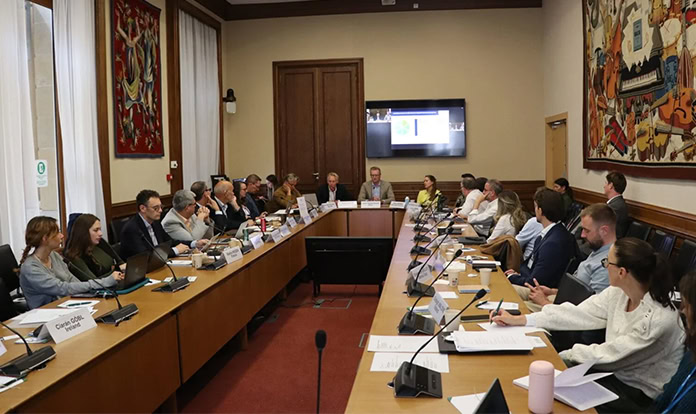
The first joint seminar of the Global Feed LCA Institute (GFLI) and the Organisation for Economic Co-operation and Development (OECD) marked an important milestone in the international dialogue on measuring and reporting environmental footprints in the animal feed sector. Over 40 policymakers from the 38 OECD member states, industry representatives, and experts from across the agri-food supply chain gathered in Paris, France, on September 23, 2025, joined by more than 160 online participants throughout the day, to address both the challenges and opportunities of environmental footprinting.
“It was particularly encouraging to see a wide range of stakeholders sharing knowledge and best practices” said Stefaan Van Dyck, Chair of GFLI. “The exchange will further sustainability efforts throughout the animal protein supply chain and will ensure that science-based targets of the industry will be met.
Central questions of the day included: How can the complexities of measuring carbon and environmental footprints be addressed within a global supply chain? How can governments anticipate regulatory and market pressures in this field? And how can synergies be created to simplify reporting obligations?
“The feed industry is increasingly measuring the environmental footprints of its products, which are important inputs in agri-food supply chains. It is valuable for us at OECD to learn about these fast-moving initiatives and explore synergies,” remarked Koen Deconinck, Economist/Policy Analyst at the OECD Trade and Agriculture Directorate.
KEY THEMES
The program explored four central themes:
• Why and how we measure the environmental footprints of animal feed,
• (Inter)national efforts in communicating environmental footprints,
• Examples of firm-specific data validation,
• Applying GFLI data in tools and solutions.
In plenary sessions GFLI members, data providers, national feed associations, and tool developers shared their insights and expectations. Their contributions highlighted a clear demand for uniform methodologies and greater transparency across the supply chain.
BRIDGING POLICY AND PRACTICE
The OECD provided the broader policy context, drawing on recent reports that highlight both the rapid growth of footprinting initiatives and the risk of fragmentation. Their 2025 follow-up study identified eight building blocks necessary for reliable and widespread measurement of agri-food carbon footprints. The collaboration with GFLI was recognized by participants as a crucial step in bridging policy development with sectoral implementation.
In the afternoon, policymakers and speakers engaged in discussions on the next steps: Aligning market demand, reporting requirements, and sector initiatives to foster more coherent and efficient approaches.
“Sharing our case study at the OECD and GFLI meeting was a great opportunity to explore how data can help make agriculture more sustainable. We’re excited about the potential for collaboration to drive positive change in farming practices,” noted Imke Hering, Lead of Value Offer Development at KWS Group.
The seminar will be published online and the link will be shared through the GFLI public newsletter.
ACKNOWLEDGEMENTS
According to GFLI’s statement, the success of this seminar was made possible with the support of the Permanent Delegation of the Netherlands to the OECD, in particular Jasper Dalhuisen, as well as through the ongoing collaboration with Koen Deconinck.
“It’s inspiring to see this Dutch-initiated seminar bring stakeholders together, showing the crucial role of animal feed in sustainable food systems and the power of international collaboration for simpler, more transparent reporting,” added Jasper Dalhuisen, Dutch Agricultural Counsellor to the OECD.
LOOKING AHEAD
This seminar sets a precedent for continued collaboration between GFLI, OECD, and partners across the agri-food chain. The shared goal is clear: To ease reporting burdens, promote transparency, and equip the sector with the best available, science-based data.