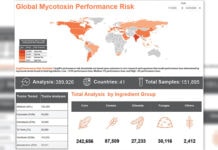


2021 Alltech European Harvest Analysis has shown that extreme weather patterns including drought lead to moderate to high mycotoxin risk in new crop grains, which pose threat to animals and producers.
Turbulent weather across Europe, including drought, throughout the 2021 growing season has directly impacted the presence of moulds and mycotoxins in new crop grains and forages. Mycotoxins are produced by certain species of moulds and are a concern for livestock producers due to their ability to influence feed quality and subsequent animal health and performance.
The 2021 Alltech European Harvest Analysis uncovered the true threat mycotoxins pose to animals and producers. For this year’s analysis, Alltech collaborated for the first time with SGS, a world leader in mycotoxin testing services. Combining these resources with findings provided by the Alltech 37+® mycotoxin analytical services laboratory, this year’s analysis offers the most comprehensive insights yet. Survey data has been collected for key feed ingredients on a regional level, and analysis is indicating the presence of moderate to high levels of mycotoxin risk.
The results of this analysis are based on 1,194 samples of barley, wheat, corn, corn silage, grass silage, alfalfa haylage, triticale, straw and whole crop silage (wheat and barley). These samples were collected from farms or animal feed production sites across Europe (Russia, Spain, Denmark, Hungary, Romania, Germany, Netherlands, United Kingdom, Ireland, Bulgaria, Czech Republic, Republic of Lithuania, Latvia, Greece, Belarus, Croatia, Serbia, Slovakia, and Ukraine) and offer a representative picture of the contamination risk in all regions, with an overall moderate to high risk.
AN AVERAGE OF 4.34 MYCOTOXINS DETECTED
Across all samples, there was an average of 4.34 mycotoxins detected, with 98.5% containing at least one mycotoxin and 86.1% containing two or more mycotoxins. Type B-trichothecenes were found in 87% of the grain samples, a similar number to last year. The highest concentration of deoxynivalenol (10,914 ppb) was detected in a Danish straw sample.
Out of over 600 corn samples analysed, 24% of these contained aflatoxins, a notably higher percentage than 2020 and something feed and livestock producers should be aware of when putting mycotoxin control plans in place for the coming season. Of the corn samples analysed using an LC-MS/MS method, fusaric acid was the most prominent mycotoxin, detected in 96.74% of samples, while type B-trichothecenes and fumonisins were found in 90% and 83% of samples, respectively.
SOME SAMPLES EXCEED REGULATORY LEVELS
One of the key themes appearing this year was the overall high levels of aflatoxin in corn samples across Central and Eastern Europe. This can likely be attributed to drought in the region adversely impacting crop quality. A number of the samples tested exceeded regulatory levels for the mycotoxin, posing a direct risk to livestock and creating concerns about the subsequent impact on milk quality. The analysis also revealed a unilateral low mycotoxin risk across the tested areas for small grains, such as wheat and barley. This year was also the first time a representative quantity of straw samples for use in swine production were tested, revealing a higher risk of mycotoxins, with DON being the most prevalent.
A noticeable trend in recent years is the growing presence of emerging mycotoxins. While last year more than 75% of samples contained this group (which includes specific mycotoxins such as beauvericin, moniliformin, phomopsin A, alternariol and enniatin A and B), this year 77% of small grain (wheat, barley and triticale) samples contained emerging mycotoxins. Fusaric acid, which is reported separately but also belongs to emerging mycotoxins, was found in almost 6% of small grain samples. Fusaric acid gets into many mycotoxin interactions and has a synergistic effect with other mycotoxins like fumonisins and moniliformin.
THREAT SHOULD NOT BE NEGLECTED
Zearalenone (ZEN), a mycotoxin that can significantly impact the fertility of most species groups, was detected in 46% of grain samples. Type A-trichothecenes (T-2 toxin/HT2-toxin), particularly harmful toxins, were detected in less than 43% of the samples – a percentage potentially higher than expected considering the dryer-than-normal conditions across much of Central and Eastern Europe this year. Very high levels of T-2 toxin (2,545 ppb) have been detected this year in corn collected in Eastern Europe (Ukraine).
”Overall, the current results indicate a moderate to high mycotoxin risk across Europe this year, and producers must remain aware of how the risk and impact will vary between different species and animal groups, with breeding animals and youngstock being more susceptible,” said Dr. Radka Borutova, European technical support manager with the Alltech Mycotoxin Management team. “We know that feeding even low-level contaminated feeds has been shown to impact animal health and performance, so even in lower-risk scenarios, producers should not neglect the need to guard against the threat of mycotoxins.”