

The Končanica Project in Croatia is pioneering a closed-loop fish farming model with insect protein to enhance sustainability and reduce waste. The project brings together Flybox®, FreezeM, and Ribnjačarstvo Končanica to integrate aquaculture, insect farming, and renewable energy into a circular bioeconomy.
Set on 1,300 hectares of historic fish farming land, the Končanica Project in Croatia marks a significant step forward in circular bioeconomy, combining aquaculture, renewable energy, and insect farming into one integrated, self-sufficient system. The initiative is expected to respond to growing climate and market pressures, including rising water temperatures, declining yields, and lack of value-added infrastructure, by introducing a multi-layered model that aims to revitalize the region while setting a blueprint for sustainable production in Europe.
At the heart of the project is a collaboration between three specialized partners: Flybox®, FreezeM, and Ribnjačarstvo Končanica, Croatia’s oldest carp farming operation,
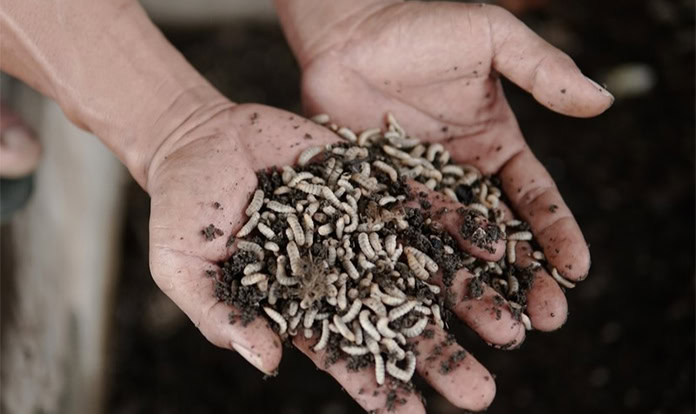
According to the announcement, Flybox® contributes its modular insect farming technology and operational expertise, enabling decentralized waste conversion and protein production close to the source. FreezeM supplies high-performance Black Soldier Fly (BSF) neonates using its PauseM® live-suspension technology, allowing rearing operations to be decoupled from breeding and seamlessly integrated into the aquaculture value chain. Ribnjačarstvo Končanica brings deep local knowledge and infrastructure, serving as the foundation for integrating modern H-RAS systems, fish processing, and energy capture from biogas and photovoltaics.
Together, the partners are developing a replicable, closed-loop model where organic by-products are converted into live insect feed and natural fertilizers, reducing waste, increasing resilience, and diversifying revenue streams. With legal and institutional support already secured, the Končanica Project is highlighted as a compelling example of how interdisciplinary collaboration and biological innovation can reshape the future of food, energy, and resource management.