
Cargill Aqua Nutrition has launched its 14th annual Sustainability Report that highlights its continuous progress in making a positive impact from the center of the aqua value chain.
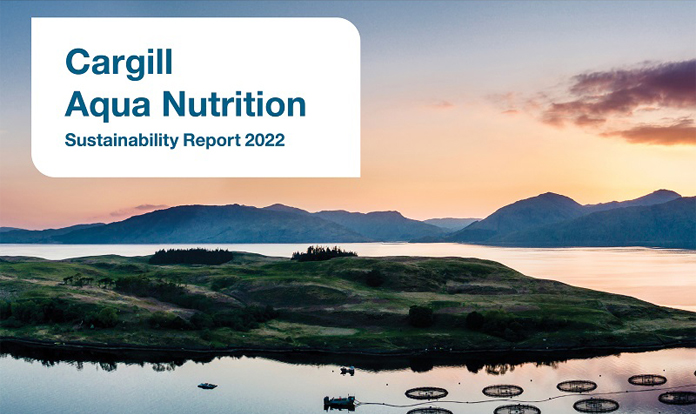 Cargill Aqua Nutrition has released its 2022 Sustainability Report. This is Cargill’s 14th year in reporting its continued progress in making a positive impact from the center of the aqua value chain and building on its transparency on key sustainability topics, providing reports on its supply chain, its operations, and its products performance.
Helene Ziv-Douki, President and Group Leader of Cargill Aqua Nutrition commented on the company’s sustainability approach: “At Cargill Aqua Nutrition, we find ourselves at the center of our industry’s value chain, interacting every day with numerous other stakeholders. We know their challenges, and we understand that we are in a unique position to help them work more profitably and reduce their environmental impacts. We always keep that fact in mind when we think about sustainability. Our impact is much greater when we design our programs with our partners at the forefront. Working together, we can combine their strengths with Cargill’s technical know-how, market insights and global reach, and devise the sustainable practices and products the global market desires.”
KEY HIGHLIGHTS FROM THE CARGILL AQUA NUTRITION SUSTAINABILITY REPORT 2022 INCLUDE:
• With our signature SeaFurther™ Sustainability program, we work with salmon farmers as well as ingredient suppliers to reduce greenhouse gas (GHG) sources embedded in the value chain. we aim to help reduce carbon emissions from salmon farming by 30% by 2030.
• Aquaculture’s carbon footprint mainly stems from the mix of raw materials in the feed. In 2022, we teamed up with eight U.K. farms to pilot climate-friendly regenerative agriculture practices to achieve a 1,000-tonne carbon reduction. In 2023, our goal is to sign up more farmers and avoid over 10,000 tonnes of emissions.
• Our work to improve the sustainability of marine ingredients continues by buying certified fishmeal and oil as before, but with an increased engagement in fishery improvement programs to develop more sustainable management and fishing practices, and an increase in the use of fishery by-products as feed ingredients.
• We continue to increase our use of alternative ingredients like insect meal and algae oil, for instance, to help expand our raw material basket so we can produce more feeds sustainably, as well as develop better feed packaging solutions that keep many tonnes of plastic out of the environment.
• In 2022, sales of functional feeds, which help keep fish healthy, reducing the need for medication like antibiotics, reached their highest level since 2017. We saw a 71% reduction in coldwater antibiotic feed sales since 2017.