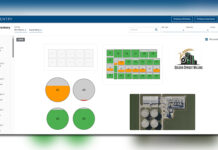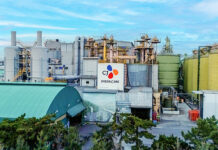


Stating that increasing efficiency in feed mills starts with determining the current situation and comparing it with both short- and long-term goals, Nils Lastein, Application Manager at ANDRITZ Feed & Biofuel, says, “ANDRITZ recommends hiring a qualified third-party consultant with a global perspective to inspect, analyze, interview and report on the state of the plant.”
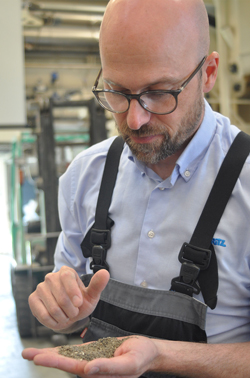
ANDRITZ Feed & Biofuel
Efficiency is the main goal of every business. Efficiency is also an important parameter to increase profitability for feed mills. Nils Lastein, Application Manager at ANDRITZ Feed & Biofuel, one of the world’s leading suppliers of process solutions, technologies and services for animal feed, aqua feed, pet food and biofuel industries, draws attention to this matter. So, how is efficiency achieved in feed mills? What impacts do production processes have on efficiency?
Underlining that for an efficient production, it is necessary first to determine the current situation and compare it with both short-term and long-term targets; Lastein explained the ways to increase efficiency in feed mills for our readers. More details are in our interview.
Dear Mr. Lastein, first of all, what does efficiency mean in a feed mill? What factors come to mind immediately?
Improving profitability is the clear goal of every commercial company and is the direct result of the relationship between fixed and variable costs. For feed producers, the highest variable cost is in the raw materials. Therefore, improving the efficiency of the feed so that animals better utilize the nutritional content, grow faster, and are ready for market sooner helps achieve that goal.
Nutritional improvement occurs in conditioner and pellet mills where a combination of moisture and temperature is used to cook starch and protein. Achieving the highest capacity, utilizing the correct amount of energy (with less waste), and less wear on machines further support efficiency.
Additionally, inefficient order planning resulting in processing many small orders and therefore frequent line clean-outs, can erode line capacity.
Where should a feed mill manager start when looking to improve efficiency?
ANDRITZ recommends hiring a qualified third-party consultant with a global perspective to inspect, analyze, interview and report on the state of the plant, allowing even the most experienced plant manager to benefit from vast and varied processing experience.
Improving efficiency starts with identifying the current situation and comparing it with both short- and long-term goals (2-5-10 years). The goals could include getting the plant back to its original design specifications.
What should be taken into account when planning and choosing technology for efficient production?
A careful study should be conducted to determine the best course of action: the introduction of new machines inside an existing building, the addition of an extension building, or an entirely new greenfield should be considered before updating existing equipment.
Sometimes clearing out areas inside the feed mill can free up room for new pelleting lines, and grinders and mixers can be placed in an outside extension. This approach may be more cost-efficient and better suited for a limited time frame as unexpected or prolonged downtime is extremely costly.
Carefully consider the options for renovation, extension, and remediation. Instead of simply selecting equipment, select a process and solution provider who understands which equipment is best for your process.
Could you give information about other factors affecting efficiency?
If we limit the efficiency concept to plant capacity and pellet quality, the following elements are important:
1. Good raw materials and appropriate storage. Good cleaning and aeration are necessary, as grains may quickly deteriorate without it. Impurities and foreign objects may also cause problems in both the hammer mill and the pellet mill for products which are bypassing the hammer mill.
2. Precise dosing. Systematic dosing deviations are, of course, costly. Still, random variations cause instability in hammer mills, mixers, conditioners, and pellet mills and may generate recalls due to declared specifications for the finished product. Instabilities can make operators reduce capacity to cope with erratic blockages. Carefully monitor your product reports, compare them with your inventory and perform regular chemical analysis of your finished feeds.
3. Precise grinding. Conditioning and pellet mill performance as well as capacity and pellet durability are heavily dependent on correct grinding. Maintained wear parts like hammers, screens and other internal wear parts are vitally important. Finally, don’t forget the filter, fan and air flow which are “invisible” but crucial elements of a hammer mill operation. Too much air or too little air flow have a critical impact on the grinding process. Keep a continuous eye on air flow, differential pressure, and adhere to your maintenance plan.
An often-overlooked way of increasing hammer mill capacity is to mix ingredients prior to grinding. Many grinders have difficulty transitioning from soybean meal to oat/barley meal. Under the best circumstances, the feeder may adapt, but there is the potential for the control system to stop the feeder or the main motor may trip, blocking the entire grinding chamber. Premixing prior to grinding helps the control system obtain a stable amperage load which can be increased further later in the process.
4. Efficient mixing and liquid application. Mixing and introduction of liquids is vitally important to ensure constant product composition entering the conditioning and pelleting machines. Again, instabilities lead to erratic stops and/or blockages. As a result, operators will reduce capacity to a level where the machine can continue to run. Continuously monitor your mixing quality (CV). Restricted liquid flow and prolonged mixing cycles are not solved by removing the blocked nozzles.
5. Good, long steam conditioning. Just like the airflow in the hammer mill, steam is invisible, yet vital to the operation. It is also difficult to inspect. Erratic pellet mill blockages very often originate from condensate separation problems. As steam penetrates meal particles from the outside, a high retention time, a minimum of 40 seconds or more, is required to improve the effect of steam conditioning. To maintain uptime, adhere to a predefined maintenance plan for your steam components.
6. Correct pellet mill operation. When the pellet mill blocks it is very seldom where the root cause lies but it is the area where operators tend to look to solve the problem. They will do that by pushing a roller into the die, thereby damaging the die surface inside. Clean your feed for impurities, look for stable amps trends and stick to your maintenance plan. A vibration monitoring system will give you immediate operational feedback but also supply long term wear and tear profiling, allowing you to plan and schedule maintenance stops rather than recover from costly downtime and repairs.
7. Cooling. Excessive cooling causes costly shrinkage (loss of product), inefficiencies, and introduces mold formation and mycotoxins in finished feed. Condensation in the cooler exhaust during line startup causes back-flow of water from the exhaust, which is one root cause of mold formation in pellets. Be sure that your discharge grid doesn’t have any leaks when closed. When discharge is needed, assure that an adequate opening is provided, dropping the product level significantly and thereby preventing the accumulation of fines in the cooler. Don’t forget your regular cleaning routines.
8. Screening. Removing fines from pellets seems like an easy job, but please remember how to handle the last fines during order changes and the closing of intermediate gate in the cooler. Oversized pellet accumulations are not intended for the finished product and should be removed using a coarse top mesh and a return route for oversize. Product accumulations may originate from corners in the cooler and build-up in the pellet chamber (door).
9. Coating. Operating the continuous flow coater is easy when the product flow is constant because the liquid flow is constant. However, as the cooler discharges in large surges, it is important to optimize nozzles and control software to handle this. Batch coaters do not have this problem, but they are harder on the pellets. Both coater types require regular cleaning, especially in areas where dry material comes into contact with liquids.
An ever-present huge improvement point is as also previously mentioned: stability. It cannot be repeated too often.
The pellet mill is very sensitive to instabilities in the composition of the mash. If the rollers slip, it could be caused by a number of things. It could be that the filters are discharging large amounts of dust, sticky condensate has accumulated between the conditioner and the pellet mill dripped into the pelleting chamber, causing roll slip, or large steam consumers causing a sudden drop in boiler pressure which hampers the quality of steam conditioning.
Regardless of where the supposed erratic pellet mill blockages originate, the consequences are still the same. The pellet mill capacity will drop to a level that can overcome the variations without blocking. That could be as much as a 50% reduction compared to the design capacity – for example, 6-7tph of broiler feed on a Ø700mm pellet mill, which should easily do 20tph.
Another system to investigate would be steam. Think of steam lines as a mediator for both gas and liquid. Condensate stays in the bottom of the pipe and flows with a headspace of gas above it. With increasing steam consumption, flow speed increases and condensate gets pulled with it and it could therefore easy overrun a drainage point where it is intended to discharge. Steam flow velocity would be 20-30m/s, it pushes the condensate at the same speed. It is not likely that water will run from 2” pipe at 20-30m/s into a ½” drain. Drains must be placed strategically, for example on 90° transition from horizontal to vertical and with the same diameter as the main pipe.
As the pellet mill first ramps-up, especially in cold conditions, steam flow and condensate return flow rate will be high. Sudden draining point overruns increase the risk of water entering the conditioner and consequently cause rollers to slip and the pellet mill to block.
How should these elements be optimized for efficient production?
Your operator screen processes and displays all relevant information but these values are replaced a second later. Since the human brain responds better to pattern recognition than it does to plain numerical data, it may be challenging to determine process values that are systematically fluctuating. Periodicities and correlations with other process values are impossible to identify unless you store and display trend values from key process parameters. With a tabletop profile, stable trend curves could be determined, allowing for push load limits to be increased.
To optimize for efficient production, adjustments must be performed but proper effect evaluation can only be done if you also measure the response variables (outcomes). Changes should be introduced carefully, systematically, slowly, and only one parameter at a time.
Fixing the problem is usually not the most time-consuming part of the improvement. Rather, the most laborious task is the analysis necessary for identifying the situation and developing the best solution. What you do not measure, you cannot adjust.
If we asked you to list four elements to increase feed mill efficiency, what would they be?
1. Stability
2. Stability
3. Stability is your main objective. Put effort into getting key equipment like grinders, boilers, and pellet mills into stable processing condition. Then the average load set point may be increased much closer to 100%.
4. Stability
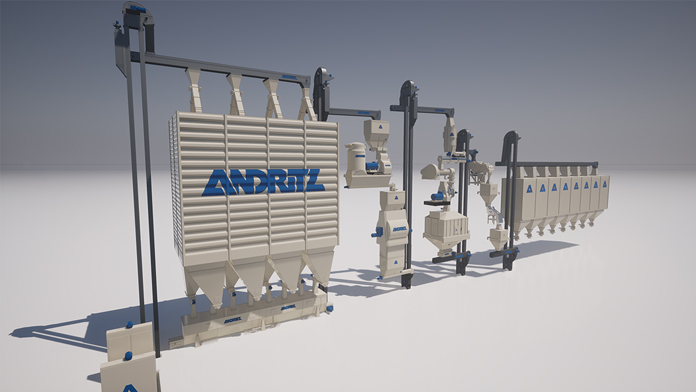 Can you tell us about the services and technologies that Andritz offers to feed mills for efficient production? What does efficiency mean for Andritz and what do you promise manufacturers in this regard?
1. Together with the products and aftermarket services, ANDRITZ offers in-depth process knowledge, together forming a cost-effective solution. At ANDRITZ we are there for you, even through the tough times.
2. ANDRITZ also offers complete plant solutions for customers looking for a turnkey solution.
3. With deep industry and process knowledge, ANDRITZ can offer process reviews of existing plants and thereby act as consultants for manufacturers wishing to optimize existing plants.
4. Process control systems not only let you control the key equipment, but also monitor trends.
5. The METRIS Vibe vibration monitoring system is tailored to feed pelleting applications, reducing unplanned stops and enabling you to carry out scheduled repairs and maintenance.
6. Feed expanders and automatic roller adjustment for pellet mills enable you to adapt dynamically to an ever-changing raw material market. Both instruments can keep pellet durability consistent, regardless of changing formulations.
7. Roll-slip sensors for pellet mills and automatic roller adjustment systems enable you to maximize the machine’s potential.