
While animal feed created from recycled food may be a new concept to some, it’s an established product that’s been used for decades. It’s consumed by animals across the U.S. each year and fuels the larger circular economy, while also offering benefits to stakeholders across the food system. Farmers and ranchers get safe, nutritionally similar animal feed for the same price or less than the feed they currently use. Their animals get a nourishing food source that meets their nutritional needs and has a reduced risk of mycotoxins.

Vice President of Commodity Trading
Denali
Farmers are famously resourceful. They work tirelessly to create maximum yields from minimal inputs. However, the food they work so hard to produce often isn’t treated with the same level of care. Today, one-third of all food in the U.S. goes uneaten, according to the USDA.
Much of this uneaten food is still highly nutritious, containing the same starches, sugars, fats, and proteins found in conventional feed ingredients. The good news is that much of this food does not have to end up in landfills.
Across the country, organic recycling companies are transforming uneaten food into high-quality feed ingredients and other agricultural inputs. When recovered and properly processed, this animal feed can become a consistent and reliable ingredient for livestock nutrition.
Creating a second life for unsold or uneaten food doesn’t just ease the burden on landfills – it benefits farmers and ranchers. It gives them a premium feed option at an affordable price point, while helping protect the land they depend on by supporting a circular agricultural economy.
A HIGH-QUALITY, LOWER-COST FEED OPTION
Animal feed made from uneaten food is produced with the same level of rigor, care, and oversight as any other animal feed product. As demand grows for lower cost and lower carbon feed options, these ingredients offer a few key advantages that have made them a go-to feed option for many producers:
It’s a nutritionally balanced food source for animals. For example, feed created from bakery goods provides a drop-in replacement for corn in dairy and feeder cattle, hog and poultry rations. These blends typically provide predictable levels of dry matter, starch, sugar, and energy that align closely with the nutritional profile of corn. Their consistent particle size and palatability make them easy to incorporate into existing formulations.
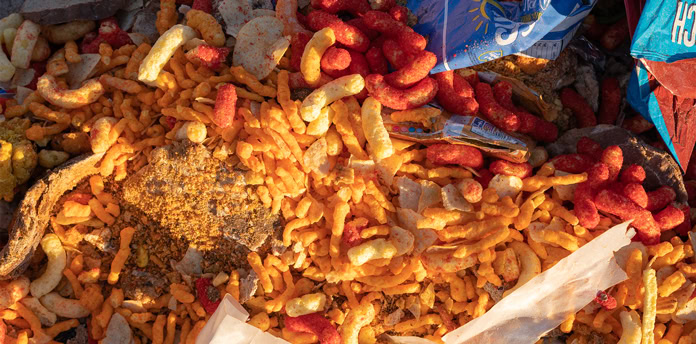
Photo: Denali
The result is a palatable ingredient that can support milk fat production, improve rumen health, and increase overall dry matter intake when incorporated into dairy and beef cattle rations.
It’s produced under rigorous safety standards and offers health advantages. Feed made from recycled foods is produced to the same standards as conventional feeds. It’s also less susceptible to most of the mycotoxins, like aflatoxin and vomitoxin, that can be found in grain-equivalent feeds.
It can lower farmers’ input costs. Feed created from unsold and uneaten food can be supplied at a price equivalent to or lower than a farmer’s lowest-cost feed formulation. It can also reduce the need for fat additives that are sometimes used with grain-equivalent feed to further save costs.
These ingredients also offer reliable flowability, uniform grind, and predictable bulk density, which makes them straightforward to store, handle, and blend in commercial feed mills.
HOW UNEATEN FOOD BECOMES A RELIABLE FEED INGREDIENT
When uneaten food is recycled into animal feed, food that would have gone to the landfill begins a whole new journey and gains a whole new purpose.
The process begins with raw materials that have already been pre-identified at the source. The organic recycling company works with food manufacturers, retailers, and restaurants to determine which of their unsold food streams are suitable for animal feed. This pre-identification is important because it ensures that only feed-grade material is collected for feed manufacturing.
Once received at a feed manufacturing facility, all incoming food material is screened to ensure quality and suitability for feed. If needed, the material is then depackaged on-site. Depackaging machines mechanically separate the feed-grade food materials from their packaging. This mechanical separation ensures only the clean, feed-grade materials enter the feed manufacturing process. After depackaging, the bulk raw material is aggregated and prepared for processing.
Next, the material is put through a validated heat process to neutralize any potential pathogens. After heating, it is mixed and ground to create a homogeneous finished product that meets defined nutritional specifications.
Throughout this process, several steps are taken to protect the quality and safety of the food product as it is recycled into animal feed. These steps include:
• Conducting product inspection and testing on all received food products.
• Employing individuals who are qualified in FSMA-compliant preventive controls at each facility.
• Using feed manufacturing procedures with standard operating procedures (SOPs) that have been refined over decades.
• Conducting lab analysis on raw materials received to regularly ensure feed suitability and on finished feed product to confirm its quality and nutritional composition.
The results of a lab analysis can be provided upon request to producers and nutritionists to give assurance of the feed’s nutritional composition. This allows producers to confirm that the feed correctly matches the nutrient specifications their animals need.
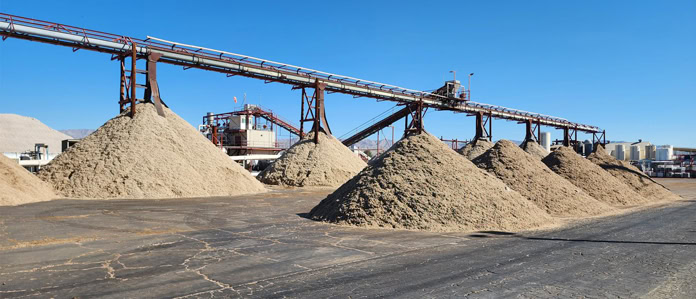
Photo: Denali
BENEFITS FOR AGRICULTURE AND THE PLANET
While animal feed created from recycled food may be a new concept to some, it’s an established product that’s been used for decades. It’s consumed by animals across the U.S. each year and fuels the larger circular economy, while also offering benefits to stakeholders across the food system.
Farmers and ranchers get safe, nutritionally similar animal feed for the same price or less than the feed they currently use. Their animals get a nourishing food source that meets their nutritional needs and has a reduced risk of mycotoxins. Retailers, food producers and restaurants save money and improve their sustainability by reducing their waste streams. Our planet receives less food filling its landfills where it emits methane as it decomposes.
Put simply, giving unsold food a second life offers a practical and proven way to lower feed costs, strengthen supply resilience, support the circular agricultural economy, and make productive use of food that would otherwise be sent to the trash heap.
About Will Clark
As the Vice President of Commodity Trading at Denali, Will Clark oversees sales, procurement, and risk management for animal feed ingredients, biofuel feedstocks, renewable fuels, and renewable energy credits. Before joining Denali, he held roles in commodity risk management and procurement at Tyson Foods and began his career as a financial analyst at ExxonMobil. He holds a BS in Agricultural Business and an MBA in Finance from the University of Arkansas. Outside of work, he enjoys spending time with his family and being outdoors.