

Trouw Nutrition will present insights from its 2025 Global Mycotoxin Review during an online event in February. The review will highlight global contamination trends, emerging risks, and data-driven strategies to support feed safety and risk management in 2026.

Trouw Nutrition will present its annual Global Mycotoxin Review on Thursday, 5 February at 9 am CET (English) and 4 pm CET (Spanish). Dr. Swamy Haladi, Global Category Director for Mould & Mycotoxin Management, will keynote the English language session, with guest presenter Avinash Bhat, Technical Specialist, breaking down the data and providing early-year predictions. Dr. Daniel Miranda, Global Technical Manager for Mycotoxins, will keynote the Spanish session, with guest presenter Eugenio Alcalde, Global Product Manager for Fylax reviewing data analytics and early predictions. According to the statement from Trouw Nutrition, highlights of the review follow:
DON AND ZEA CONTAMINATION DOMINATED IN THE YEAR 2025
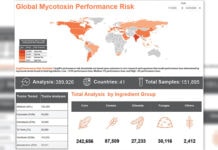
Trouw Nutrition analysed more than 115,000 samples from 46 different countries in 2025. These included various grains, protein sources, byproducts, silages, TMR, concentrates, and complete feeds. The analysis of the entire dataset showed that the number of samples contaminated with mycotoxins decreased in 2025 as compared to 2024. The major decrease was seen for fumonisins and T-2 toxin. DON and ZEA contamination were quite similar to last year, and were higher than fumonisin contamination. Such information may indicate that the conditions for mould growth and mycotoxin production were more conducive in temperate regions in 2025. The average mycotoxin concentrations on the other hand were quite similar in 2024 and 2025 samples.

EXPANDED ANALYTICAL CAPABILITIES ILLUMINATE THREATS POSED BY ENNIATINS
The company’s expanded analytical platform allows LC-MS/MS screening of up to 30 mycotoxins, enhancing the ability to detect emerging mycotoxins and previously under-reported risks in feeds and raw materials. Findings shared will include the increased incidences of enniatins, emerging Fusarium mycotoxins, especially in European grains.
“Taking the cues from our previous analysis, we conducted an in vivo study in Europe that evaluated the effects of enniatin exposure on piglets under practical production conditions. Advanced analytical capabilities identify enniatins as a relevant and widespread challenge in European samples and indicate that innovations should target the management of enniatins along with Big 6 mycotoxins,” Dr. Miranda noted.
ENHANCE FEED SAFETY AND QUALITY ASSURANCE
The 2025 Global Mycotoxin Review will also offer practices to help farms and feed mills enhance feed safety and quality assurance across their operations. Attendees will receive guidance on mycotoxin mitigation strategies at critical control points in the feed-to-food chain.
Remarking on key takeaways from the 2025 analysis, Dr. Haladi stated, “Blending rapid and expanded analytical capabilities with new research findings, the 2025 review will incorporate intelligent risk monitoring insights, explore innovative technologies for mycotoxin mitigation, and show how bio-intelligence in animal nutrition can improve animal health and performance. While what happened in 2025 is history, a significant amount of 2025 raw materials will be used in 2026 and the data intelligence will help in effective risk management, enhance animal performance, and support the bottom line of animal operations.”