


Once considered non-essential, nucleotides are increasingly recognized for their impact on growth, vitality, and stress adaptation. Growing research highlights their role in supporting immune health, recovery, and cellular resilience in cats and dogs.

Director Specialty Animal Nutrition Products
Aker Qrill Company
As the pet food industry continues to embrace functional ingredients and evidence-based nutrition, nucleotides have entered the spotlight. Once thought of as minor cellular components, these small yet powerful molecules are gaining recognition for the role they play in immune resilience, growth, and recovery in cats and dogs.
WHY NUCLEOTIDES MATTER FOR PET DIETS
Nucleotides are the structural units of DNA and RNA – the very molecules that carry genetic information and enable every process of life. They also serve as energy carriers through adenosine triphosphate (ATP) and contribute to cell signaling and enzyme function. Essentially, they are vital for cell division, protein synthesis, and tissue repair.
While cats and dogs produce nucleotides naturally, their ability to do so is limited under certain physiological conditions. Periods of growth, reproduction, illness, stress, or intense activity increase the body’s demand for rapid cell renewal and immune function – situations where the body’s own production may fall short. This is why researchers are increasingly referring to nucleotides as ‘conditionally essential nutrients’ for pets, especially during times of metabolic or immune stress.
MEETING HIGHER DEMANDS
Building on this understanding, growing evidence from studies in cats and broader animal nutrition suggests that dietary nucleotides can support immune response, intestinal integrity, and overall vitality in pets. Supplementation with nucleotides has been linked to improved antibody production and better resilience following stress or infection. As pets live longer and lead more active lives, these benefits are becoming increasingly relevant for maintaining immune balance, energy metabolism, and recovery.
A 2013 study published in Veterinary Immunology and Immunopathology showed that dietary nucleotide supplementation enhances the immune response in cats, suggesting a direct link between nucleotide intake and disease resistance. Similar effects have been observed in other animals, which also reinforces the importance of dietary sources at times of intense growth, activity, or recovery.
HOW NUCLEOTIDES WORK IN THE BODY
Nucleotides support some of the body’s most energy-intensive and renewal-driven processes. Their role in immune function is among the most critical, as the rapid production of immune cells depends on a steady supply of nucleotides. During infection, inflammation, or stress, these cells divide and differentiate at a higher rate, and external sources of nucleotides may help sustain immune responsiveness and recovery.
They are also vital for tissue repair and maintenance. Cells of the intestinal lining, the immune system, and red blood cells have short lifespans and require constant renewal. A sufficient supply of nucleotides supports this regeneration, helping maintain gut integrity, immune readiness, and efficient oxygen transport throughout the body.
When it comes to metabolism, nucleotides fuel the conversion of nutrients into usable energy. This energy supports muscle contraction, organ performance, and the body’s day-to-day performance. During periods of stress, like illness, travel, reproduction, or environmental changes, pets tend to experience elevated cellular turnover and energy demand. Supplementation may help the body stay balanced and support better recovery during times of stress.
DIETARY SOURCES AND FORMULATION OPPORTUNITIES
While commercial pet foods contain some naturally occurring nucleotides, mainly from meat and organ ingredients, the levels may not be sufficient to meet increased physiological demands. Due to this, formulators are exploring dietary nucleotide supplementation as part of functional and therapeutic diets.
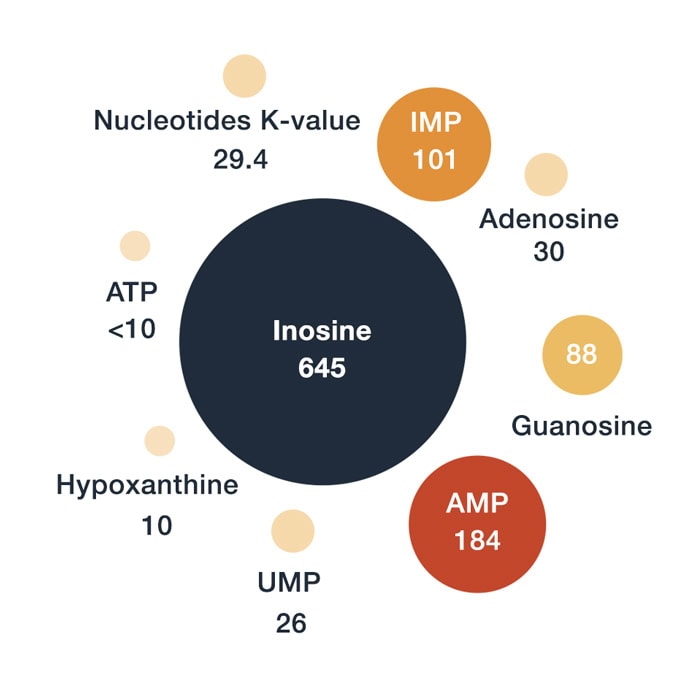
Numbers given in mg/kg
High-quality nucleotide sources can be derived from yeast extracts, certain fish meals, and marine ingredients such as krill meal (Figure 1). There is growing interest in marine-derived nucleotide sources, resulting in studies that explore bioavailability and potential synergy with other nutrients, such as omega-3 fatty acids, choline, and astaxanthin, which are key components associated with cellular health and anti-inflammatory effects.
Dietary nucleotides have particular relevance in formulations designed for life stages or conditions in which cellular turnover and immune activity are heightened. Growing puppies and kittens, for example, benefit from an additional supply to support rapid tissue development and immune maturation. Working and athletic dogs may also require higher nucleotide levels to sustain energy metabolism and muscle recovery during periods of intense physical activity.
In older pets, reduced metabolic efficiency and slower regenerative capacity can make supplemental nucleotides useful for maintaining immune balance and well-being. Animals recovering from surgery, illness, or stress may also respond well to diets enriched with nucleotide sources to help restore cell function and overall resilience. For stress-prone or immune-compromised pets, these formulations offer a way to help stabilize the body’s natural defense systems and promote long-term health.
THE ROAD AHEAD
As the pet food industry becomes increasingly shaped by science and sustainability, interest in functional ingredients like nucleotides will continue to grow. Across the sector, there is a growing focus on balancing efficacy, palatability, and natural sourcing with consumers’ expectations for evidence-based nutrition. At the same time, advances in precision nutrition are allowing formulators to tailor nucleotide inclusion to specific life stages, breeds, or health conditions, opening the door to more targeted and responsive feeds.
Sustainability remains a central driver of innovation in pet food. Researchers are exploring renewable marine ecosystems as potential sources of naturally occurring nucleotides, helping to build supply chains that are both traceable and responsibly managed. Together, these developments point to a future in which nucleotides play a key role in holistic, science-based formulations designed to support long-term health and resilience in pets.
References
1. Rutherfurd-Markwick K.J., Hendriks W.H., Morel P.C.H., Thomas D.G. (2013). The potential for enhancement of immunity in cats by dietary supplementation. Veterinary Immunology and Immunopathology, 152(3–4), 333–340
2. Ding T., Song G., Liu X., Xu M., Li Y. (2021). Nucleotides as optimal candidates for essential nutrients in living organisms: A review. Journal of Functional Foods, 82, 104498
About Tonje Elisabeth Dominguez
As Aker Qrill Company’s Director of Speciality Animal Nutrition Products, Tonje Elisabeth Dominguez works with companion animal nutrition. Earlier in her career, she worked at Nordic supplements company Orkla Health for six years, first as a scientific advisor and later as R&D Manager. Furthermore, she has held various technical and nutritional roles in Hill`s Pet Nutrition EMEA for 13 years.
She holds a master’s degree from the Norwegian University of Life Sciences and has frequently been an invited lecturer at the Norwegian School of Veterinary Science