

SPAROS has launched WINCod, a next-generation microdiet developed to address high mortality, skeletal deformities, and variable juvenile quality in Atlantic cod hatcheries. The solution supports early co-feeding strategies and improves larval robustness and predictability.
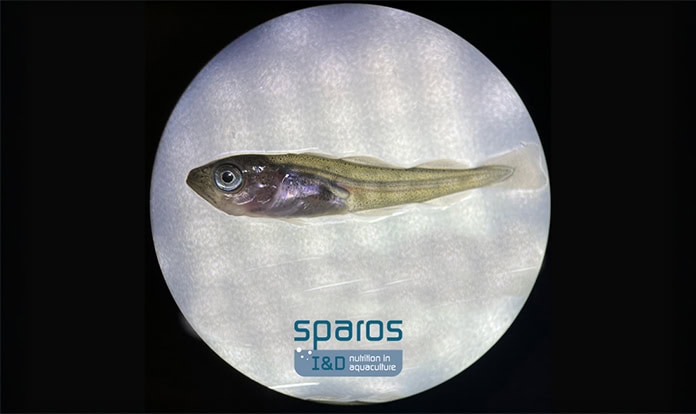
SPAROS has announced the launch of WINCod, a next-generation microdiet specifically developed for Atlantic cod larvae. Emerging from the EarlyCOD project, WINCod tackles key challenges in cod hatcheries—high mortality, skeletal deformities, and inconsistent juvenile quality.
Designed for early co-feeding protocols, WINCod pairs seamlessly with Planktonic AS’s cryoplankton (frozen live plankton), delivering a synergistic nutritional strategy that supports larvae during the critical first feeding and weaning phases.
Extensive trials demonstrate that WINCod significantly improves larval robustness, while reducing skeletal anomalies and promoting healthier organ development. The result is higher-quality juveniles, giving hatcheries greater predictability and control over production outcomes.
According to SPAROS, by strengthening larvae early on, WINCod also reduces dependence on traditional live feeds, helping simplify hatchery operations. Its formulation is the result of years of targeted R&D combined with industrial-scale validation, ensuring both biological performance and practical implementation.
WINCod is available in 150, 300, and 500 µm pellet sizes, allowing precise matching to larval developmental stages. Early adopters in Norway have already reported measurable improvements in hatchery performance. The product is ready for immediate deployment in commercial hatcheries, with SPAROS providing technical support for implementation and protocol optimisation.
With WINCod, SPAROS delivers an aquafeed that supports more sustainable, cost-effective cod aquaculture, accelerating the transition from research into real-world practical solutions.
The company stated that WINCod marks a major milestone for the growing cod farming sector—and a decisive step forward in early-stage nutrition.