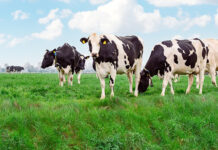


Marine macroalgae are gaining attention in animal nutrition as sustainable, multifunctional feed additives aligned with climate goals and evolving consumer expectations. While still a niche market, their applications span methane mitigation, immune and gut health support, antioxidant protection, mineral supplementation, palatability enhancement, and fiber provision. Understanding the current market dynamics, technical limitations, and innovation pathways is essential to assess how marine macroalgae can transition from specialized use to broader adoption in global feed systems.

CEO
NUQO Feed Additives
In the quest for sustainable and functional animal nutrition solutions, marine macroalgae have emerged as a promising category of feed additives. Though still considered a niche segment, macroalgae are steadily gaining traction due to their natural origin, multifunctional benefits, and alignment with environmental and consumer trends. This article explores the current market for marine macroalgae in animal nutrition, highlights key applications, delves into the technical challenges inherent to algae-based products, and outlines exciting research directions poised to unlock their full potential.
THE CURRENT STATUS OF MACROALGAE USE IN ANIMAL FEED
Macroalgae, or seaweeds, are not yet widely adopted in mainstream livestock feed but are carving out growing niches. Their use is more advanced in ruminants and aquaculture, while experimental applications in monogastrics like swine and poultry, as well as companion animals, are gaining interest. Unlike bulk feed materials such as cereals or forages, macroalgae are primarily employed as additive-level ingredients, targeting specific functional benefits rather than providing major nutritional energy.
Despite the current limited scale, the global market for macroalgae in animal feed is estimated at around USD 70 to 120 million in actual sales today, with future projections soaring to approximately USD 1.25 billion* in 2030 as sustainability goals, consumer demands for natural ingredients, and regulatory pressures intensify. The market is segmented into six primary application areas: methane mitigation, immune modulation and gut health, antioxidant support, mineral supplementation, flavor and palatants (particularly in aquafeed), and sustainable fiber sources (*Global seaweed new and emerging markets report – 2023 – World Bank).
FUNCTIONAL APPLICATIONS AND TARGET SPECIES
Methane Mitigation is a flagship application for macroalgae, especially in ruminants. Certain red algae species, notably Asparagopsis taxiformis, contain bioactive compounds like bromoform that disrupt methanogenic microbes in the rumen, achieving methane emission reductions of up to 80% in controlled trials. However, this application remains at an early commercial stage with current sales estimated between USD 5 and 10 million, poised to grow substantially as climate regulations pressure livestock producers to reduce greenhouse gases.
Immune Modulation and Gut Health applications are the most mature in the feed macroalgae market, with sales between USD 30 and 50 million. Brown seaweeds rich in phlorotannins, laminarin, and fucoidan provide anti-inflammatory and immunostimulant effects across ruminants, swine, poultry, and aquaculture. These polysaccharides also promote gut microbiota balance and intestinal barrier integrity, crucial for young or stressed animals.
Antioxidant Support leverages algae’s rich polyphenols, carotenoids, and vitamin E-like compounds to mitigate oxidative stress arising from heat, transport, or immune challenges. This niche is estimated at USD 10–20 million today, with expanding demand amid growing awareness of animal welfare and production challenges.
Mineral Supplementation utilizes brown algae as natural reservoirs of iodine, zinc, selenium, and calcium, supporting thyroid function and trace element nutrition in all species. The market is stable at USD 10–20 million, responding to “clean label” trends seeking natural alternatives to synthetic minerals.
Flavor and Palatants, primarily in aquafeed, exploit species like Palmaria palmata (dulse) for their umami taste, improving feed acceptance in fish and shrimp. This specialized market is nascent, with sales around USD 5–10 million, but shows promise as aquaculture expands.
Finally, Sustainable Fiber Sources use green and brown algae cell wall polysaccharides as fermentable fibers to improve digestive health, especially in ruminants and pigs. Current sales are modest (USD 8–10 million) but are expected to grow as improved algal processing technologies enhance digestibility and functionality.

TYPES OF MACROALGAE AND THEIR ROLES
Macroalgae fall into three major groups, differentiated by pigmentation and bioactive profiles:
• Brown Algae (Phaeophyceae) are the most widely used in animal nutrition. Species like Ascophyllum nodosum, Laminaria spp., and Fucus vesiculosus are valued for their phlorotannins, iodine, laminarin, and fucoidan content, contributing to immune support, antioxidant capacity, prebiotic effects, and mineral supplementation.
• Red Algae (Rhodophyta), including Asparagopsis taxiformis and Palmaria palmata, are prized for methane mitigation and aquafeed palatants, with bioactives such as bromoform and carotenoids.
• Green Algae (Chlorophyta), less utilized but gaining attention, include species like Ulva spp. These provide antioxidant compounds and fermentable fiber, suitable for prebiotic effects and gut health.
SOURCING AND GEOGRAPHIC CONSIDERATIONS
Macroalgae supply chains vary by species and region. Nordic countries such as Norway, Iceland, and Ireland are well-established sources of brown algae like Ascophyllum and Laminaria, relying on wild harvesting with developed logistics. In contrast, Asparagopsis cultivation for methane mitigation is progressing in Australia and Hawaii, with controlled aquaculture to ensure consistent quality and regulatory compliance.
France (especially Brittany) hosts pilot projects exploring Ulva, Palmaria, and Laminaria for aquafeed and livestock, aiming to localize supply and promote sustainable sourcing. Asia remains a large-scale producer of Laminaria and related species, primarily for human food but increasingly investigated for feed use.
TECHNICAL CHALLENGES OF MACROALGAE IN ANIMAL NUTRITION
Despite promising benefits, several hurdles limit the widespread adoption of macroalgae in feed. A primary challenge is the variability of algae composition, which fluctuates with species, season, harvest method, and geographic origin. This variability affects the concentration of key bioactives and minerals, complicating formulation and consistent efficacy.
Contaminant risk is another critical concern. Macroalgae can accumulate heavy metals, iodine in excess, and undesirable halogenated compounds. For instance, Asparagopsis contains bromoform, which, while effective for methane mitigation, raises food safety and regulatory scrutiny, necessitating precise dosing and monitoring.
Stability and bioavailability of algae bioactives during feed processing and digestion also pose significant challenges. Many active compounds degrade under heat, pressure, or extended storage. Furthermore, their release and activity in the gut environment are often unpredictable, undermining functional benefits.
Sometimes, the natural composition of certain macroalgae necessitates high inclusion rates in animal feed formulations to achieve the desired functional benefits. This can pose economic challenges for formulators, as using large quantities of algae increases feed costs significantly. Moreover, high inclusion levels may negatively impact the palatability of the feed, causing animals to reduce their intake or reject the feed altogether. These factors create important considerations when integrating algae-based ingredients into commercial feed formulations.
To address these issues, recent research focuses on advanced analytical methods to identify and quantify specific algae metabolites – so-called “phycogenics” – enabling targeted selection of strains and harvest conditions to optimize functional compound profiles. This screening accelerates product standardization and efficacy assurance.
Emerging micro-encapsulation technologies are also being explored to protect sensitive algae compounds during feed processing and storage, and to control their release in specific gut regions. Encapsulation improves stability and enhances bioactivity, making algae-based additives more reliable and potent.
An exciting frontier lies in fermentation and bioprocessing approaches that do not merely preserve but enhance the physiological activity of algae compounds. Controlled microbial fermentation can increase bioavailability, reduce unwanted compounds, and potentially produce novel metabolites with enhanced immunomodulatory or antioxidant properties.
MARKET OUTLOOK: BRIDGING TODAY’S REALITY AND TOMORROW’S POTENTIAL
Currently, marine macroalgae in animal feed represent a fragmented and emerging market, with aggregate sales estimated between USD 70 and 120 million. Immune modulation and gut health products lead today’s revenue, followed by antioxidant support and mineral supplementation. Methane mitigation, flavor enhancement, and sustainable fiber applications remain smaller but are evolving quickly.
Looking ahead, the market’s future value is forecasted around USD 1.25 billion, propelled by growing demand for natural, sustainable feed solutions that align with climate goals and consumer preferences. Among these, methane mitigation technology based on algae such as Asparagopsis taxiformis holds enormous potential due to its capacity to reduce enteric methane emissions by up to 80%. However, this promise comes with significant technical challenges. The production of Asparagopsis at commercial scale is complex, and the regulatory landscape – especially concerning bromoform residues – is uncertain. Moreover, cost remains a critical constraint: current algae-based methane mitigation solutions often represent an additional expense rather than a direct financial gain for farmers, making widespread adoption highly dependent on policy incentives and carbon credit schemes, which remain unpredictable.
Beyond methane mitigation, algae have traditionally found use in segments such as toxin binders, which are increasingly commoditized. In these cases, it can be difficult to quantify the added value specifically attributable to algae, given the competitive nature of this market and the relatively generic functions of such products.
A promising frontier lies in the exploration of specific algae-derived extracts and metabolites—often referred to as phycogenics—including sulfated polysaccharides, phlorotannins, laminarins, and other bioactive compounds. These molecules possess diverse biological activities, such as immune modulation, antioxidant properties, and gut health benefits (Karlsberger et al, 2025). Yet, unlocking their full potential requires rigorous scientific research to identify, isolate, and characterize these metabolites, alongside the development of advanced manufacturing technologies like microencapsulation to enhance stability, targeted delivery, and cost-efficiency. Emerging fermentation techniques also offer exciting opportunities to preserve and even amplify the physiological activity of algae compounds.
Despite these hurdles, the feed and agricultural sectors remain vital fields for algae applications. As producers seek new, sustainable feed additives, the technical advances and increasing market pressure for natural solutions ensure that macroalgae will continue to play a growing role. Successfully bridging the gap between current niche use and future mainstream adoption depends on overcoming economic, regulatory, and supply chain barriers while validating the functional benefits through robust science.
CONCLUSION
Marine macroalgae hold tremendous promise as multifunctional, natural ingredients in animal nutrition. Their proven benefits in methane mitigation, immune support, antioxidant protection, mineral supplementation, flavor enhancement, and sustainable fiber sourcing position them well for future growth. However, realizing their full market potential requires continued innovation to overcome variability, stability, and regulatory challenges.
Advances in phycogenic compound identification, micro-encapsulation, and fermentation-based enhancement technologies offer a path forward to more effective, consistent, and scalable algae-based feed solutions. As these technological and supply chain hurdles are addressed, marine macroalgae are poised to become a cornerstone of sustainable, science-driven animal nutrition in the coming decade.
Reference
Karlsberger, L.; Sandner, G.; Molˇcanová, L.; Rýpar, T.; Ladirat, S.; Weghuber, J. Antioxidant Power of Brown Algae: Ascophyllum nodosum and Fucus vesiculosus Extracts Mitigate Oxidative Stress In Vitro and In Vivo. Mar. Drugs 2025, 23, 322. https:// doi.org/10.3390/md23080322