

The Low Carbon Agriculture Consortium’s November 2025 webinar explored how modern hyperprolific sow genetics can be managed sustainably to reduce pig production’s environmental footprint.
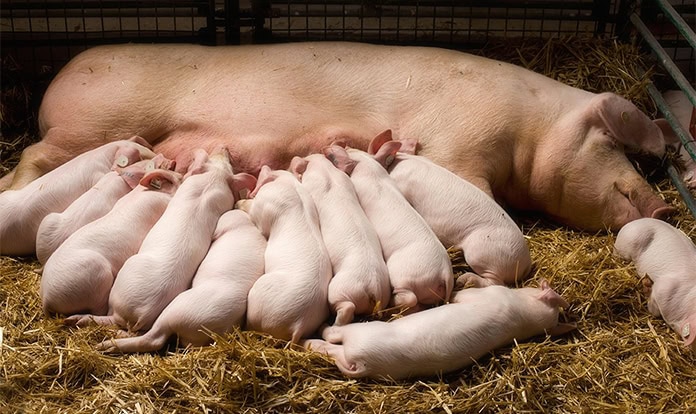
The Low Carbon Agriculture Consortium hosted a dedicated webinar on November 27, 2025, exploring how modern hyperprolific sow genetics can be managed sustainably to reduce the environmental footprint of pig production. The programme examined the full reproductive cycle—from gestation to lactation and longevity—offering practical solutions to help producers balance prolificacy, welfare, and efficiency.
“This webinar showed that sustainable pig production is within reach when genetics, nutrition, welfare and technology are aligned. The solutions presented today highlight the power of collaboration in helping producers move toward more efficient and low-carbon farming systems,” noted Olivia Garcia of Low Carbon Agriculture Consortium.
UNDERSTANDING THE IMPLICATIONS OF GENETIC PROGRESS
Today’s genetic advancements have led to significantly larger litters, increasing the need for adapted management to maintain welfare and environmental balance. Insights on how genetic progress can contribute to more resilient and sustainable production were provided by Nucleus.
ENSURING OPTIMAL CONDITIONS AT BIRTH TO SUPPORT EARLY PIGLET SURVIVAL
The first hours of life play a decisive role in piglet vitality, uniformity, and survival. The webinar showcased solutions to support a smoother farrowing process, stronger colostrum intake, and improved early development. Contributions included targeted calcium management to shorten farrowing and enhance lactation (Dietaxion), refined dietary fat profiles to improve energy utilisation and reduce carbon footprint (Valorex), and late-gestation probiotics shown to influence farrowing duration, colostrum composition, and early microbiota (Lallemand).
MANAGING LARGE LITTERS UP TO WEANING THROUGH NUTRITION AND WELFARE
With prolificacy comes the challenge of maintaining milk production and sow comfort while supporting strong litter growth. The webinar highlighted nutritional strategies that reduce dietary protein and optimise amino acid balance—improving litter weight with a smaller environmental footprint—and botanical solutions that enhance sow comfort at key stages to secure more piglets weaned. These approaches were shared by Mg2mix and Nor-Feed respectively.
PROMOTING SOW LONGEVITY AS A CORNERSTONE OF SUSTAINABILITY
Longer productive lifespans directly reduce the carbon footprint per piglet. The importance of controlled growth, precise mineral supply, and targeted nutrition to extend sow longevity was emphasised, with Mg2mix presenting evidence-based strategies to support this objective.
USING PRECISION TECHNOLOGIES TO OPTIMISE FEEDING AND REDUCE WASTE
Digital and automated feeding systems are emerging as major enablers of sustainability. Intelligent equipment allows rations to be adjusted to each sow’s requirements, improving body condition, reproductive performance, and feed efficiency while reducing waste. These precision solutions were highlighted in the webinar’s closing session.