

In response to recent criticisms, the Secretary-General of International Platform of Insects for Food and Feed (IPIFF) Steven Barbosa has highlighted insect meal as an essential solution for sustainable aquaculture backed by science and progressive EU policies.

Photo: IPIFF
The EU’s ambitious policies—such as the Common Fisheries Policy, the Vision for Aquaculture, EU Bioeconomy Strategy or the Oceans Pact—are designed to boost innovation, resilience, competitiveness and sustainability. With global demand for farmed fish expected to reach nearly two-thirds of total fish consumption by 2032, securing sustainable and scalable feed ingredients is more critical than ever, according to a statement by Steven Barbosa, the Secretary-General of International Platform of Insects for Food and Feed (IPIFF).
Leading market reports, including the World Bank’s “Harnessing the Waters” (2025), highlight that investment in alternative proteins—such as algae and insect meal—is set to grow exponentially, driven by the need to meet rising demand and reduce reliance on overfished wild stocks. The 2025 Global Aqua Feed Market Outlook emphasises that innovations in sustainable feeds, including insect-based ingredients, will be vital to supporting aquaculture industry growth while minimising environmental impact, Barbosa highlights. Furthermore, the 2025 Market Report Feed Proteins stresses that with the increased focus on sustainability and efficiency — circular economy models, like insect-based feeds, are becoming an increased priority to livestock producers.
ENHANCING FISH HEALTH AND IMPROVING GROWTH PERFORMANCE
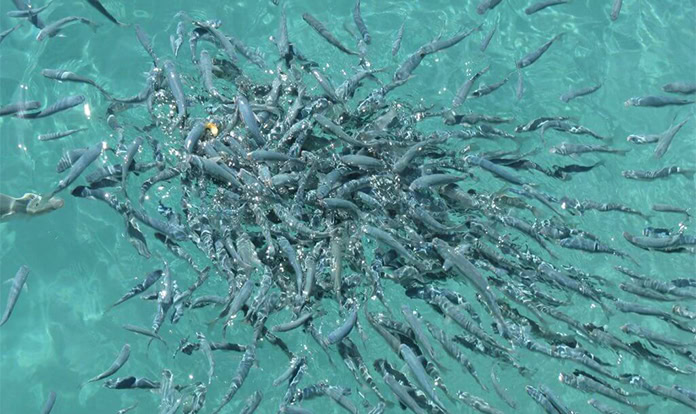
Several scientific studies, including as recent as from 2024 and 2025 clearly demonstrate the substantial nutritional, functional, and environmental benefits of insect meal. The Secretary-General points out that newer research keeps underscoring insect meal’s capacity to enhance fish health, improve growth performance, and reduce environmental impacts, contradicting a recent unfunded, partial and inconclusive article.
The same publication concludes that any novel aquafeed ingredient must navigate the same challenges faced by the insect industry. Thus, it offers no plausible conclusion that insects or other alternative ingredients are viable parts of the future of sustainable aquaculture. This narrow view, Barbosa notes, overlooks recent advancements and the growing body of evidence supporting insect-based feeds as a crucial component of innovative, resilient, and environmentally friendly aquaculture solutions.
Steven Barbosa explains that several research findings conclude insect meal enhances fish immunity and gut health, contributing to higher productivity and sustainability in aquaculture operations, while reducing biodiversity losses, one of the main aims of the EU Ocean Pact.
FULL CIRCULAR ECONOMY PRINCIPLES
The Secretary-General remarked, “Critics claiming insect meal is not ‘future-proof’ overlook that EU insect farming is conducted in controlled environments, following full circular economy principles, which drastically reduces exposure to geopolitical instability, fishing quota fluctuations, trade uncertainties, and climate-related risks—factors that severely impact aquaculture sectors elsewhere.”
Emerging innovations worldwide are further improving the environmental sustainability and scalability of insect production. Challenges such as high costs and limited volumes are typical for any industry and are driven by technical and economic barriers, like any other sectors that are tackling societal challenges with innovative solutions. Thus, barriers not associated with the intrinsic qualities of insect ingredients. Barbosa spotlights the sector as being on the cusp of scaling up, supported by favourable policy framework.
Backed by progressive EU policies, Barbosa states that insect meal is positioned as a crucial complement to traditional aquafeeds. It offers a sustainable protein source capable of bridging future feed supply gaps, reducing environmental footprints, and bolstering aquaculture sector’s resilience, with a low inclusion rate needed to achieve nutritional and functional benefits.
Steven Barbosa himself has a solid background working with EU institutions for almost 20 years. He is an experienced policy professional with a strong background in EU affairs, advocacy, and international relations. In previous positions he has worked within and towards EU institutions such as European Parliament, Council of the EU and European Commission.
“INSECT INDUSTRY DOES NOT STAND ALONE”
Barbosa continues by remarking, “Thus, by coupling insect meal with other more widely used aquafeed ingredients can be vital for the competitiveness and sustainability of aquaculture. Against uninformed articles’ claims, insect industry does not stand alone, rather works alongside all aquaculture active players, including other aquafeed producing sectors.”
In conclusion, dismissing insect meal as a non-solution ignores the latest scientific evidence, the support of leading universities and research institutions, and the positive policy environment fostering innovation, Steven Barbosa says. Insects are an essential component of Europe’s sustainable aquaculture future—enhancing profitability, environmental stewardship, and EU aquaculture sector resilience in line with Europe’s strategic goals. This has been a soundproof conclusion in other parts of the world and, progressively, in Europe.
“Critics publishing articles that neglect reputable researchers and universities, ignore recent scientific or technological advances, and dismiss to consult industry operators undermine their publications’ credibility and threaten the integrity of informed debate,” he adds.
“Aquaculture producing industry leaders challenged these recent misleading narratives, emphasising the importance of credible information in shaping sustainable policies and practices, especially for the sake of investors, who stress that they are seeking to improve the competitiveness, sustainability and resilience of their businesses,” Barbosa concludes.