


Enhancing animal performance while using fewer antibiotics on farm requires a comprehensive strategy, from biosecurity to feed hygiene. Animal gut wellness is crucial for growth, building up resilience to disease and focusing energy on better development. MCFAs and their derivatives play a key role in the AGP alternative solution.

Product Manager – Organic Acids
Pancosma
A RECOGNIZED AGP ALTERNATIVE
Antibiotic growth promoters, or AGPs, have driven high productivity and efficiency in modern livestock production by successfully targeting a certain spectrum of bacteria (Niewold, 2007; Jackman et al, 2020). However, high dependency on AGPs generates major disease control risks for both livestock and human health. Since the 2006 European Union AGP ban, withdrawing AGP from routine production and finding alternatives has become a worldwide target for sustainable industry development. AGP withdrawal significantly increases the incidence of certain diseases, dramatically influencing animal growth performance and efficiency. Today, researching optimal alternatives is an industry priority.
Many different feed additives such as probiotics, prebiotics, plant extracts, yeasts, and organic acids have been studied as part of the feed additive alternative program. Within organic acids, medium chain fatty acids (MCFAs) and their derivatives are known for their strong antimicrobial properties, especially against gram positive bacteria (Baltic et al 2017). MCFAs are saturated carboxylic acids, from C6 to C12, and are found in coconut oil and palm kernel oil in the form of triglycerides. Since many products containing MCFAs and their derivatives are available on the market, extensive studies have been carried out to assess the real benefits to animals. Lan and Kim 2018 showed that sow excreta microbiota could be improved—thus improving piglet performance—by adding a blend of organic acids and MCFAs to a sow’s diet. Similarly, Nguyen et al 2018 demonstrated that supplementation with these blends has positive effects on the faecal microbiota composition, immune response and growth performance of broilers.
ANTIMICROBIAL EFFECT: FATTY ACID VS MONOGLYCERIDE
The antimicrobial activity of MCFAs has been studied extensively since it was first discovered in human mother milk (Isaacs et al, 1986). Although the components in mother milk are not naturally antimicrobial, once the triglycerides in milk are digested in the gastrointestinal tract they free fatty acids and monoglycerides generating antimicrobial activity (Isaacs, 2005). MCFAs have been widely studied in the form of free fatty acids and monoglycerides to determine their antibacterial activities in vitro. Lauric acid (LA) is considered a potent MCFA with multiple antimicrobial (including antibacterial, antifungal and antiviral) activities (Desbois and Smith, 2009).
The most commonly-known antimicrobial mode of action of MCFAs and their derivatives is disrupting the bacterial cell membrane, thus inhibiting bacterial growth (Nagase et al., 2017). The glycerol backbone in monoglyceride lauric acid (GML) appears to grant stronger hydrophilic properties than its fatty acid form which shows a lower minimum inhibition concentration (MIC) against some gram positive bacteria in vitro, such as Streptococcus (Batovska et al 2009). However, this is not the case for every gram positive bacteria. This same study shows that LA and GML have an equal inhibition concentration of C. diphteriae, while LA has a stronger inhibitory activity against L. monocytogenes (both C. diphteriae and L. monocytogenes are gram positive bacteria that cause disease in humans). The study of Ruzin and Novick (2000) found that GML and LA have identical inhibitory activity against Staphylococcus aureus. Lauric acid is thought to be partially responsible for the inhibitory activity of GML against S. aures. They also found that similar concentrations of LA and GML suppress the induction of β-lactamase activity and block the expression of toxic shock syndrome toxin 1 (TSST-1) from S. aureus. Furthermore, LA and GML appear to produce a synergistic effect against Streptococcus pyogenes at different mixture ratios: the combination exhibits stronger inhibitory activities than either single ingredient (LA:GML=2:1, MIC: 20µg/ml; LA, MIC: 120µg/ml; GML, MIC: 30µg/ml) (Batovska et al., 2009). Both LA and GML demonstrate anti-viral properties against different enveloped viruses (Thormar et al., 1987; Hornung et al., 1994; Bartolotta et al., 2000; Li et al., 2009).
 MITIGATING PATHOGENS IN FEED
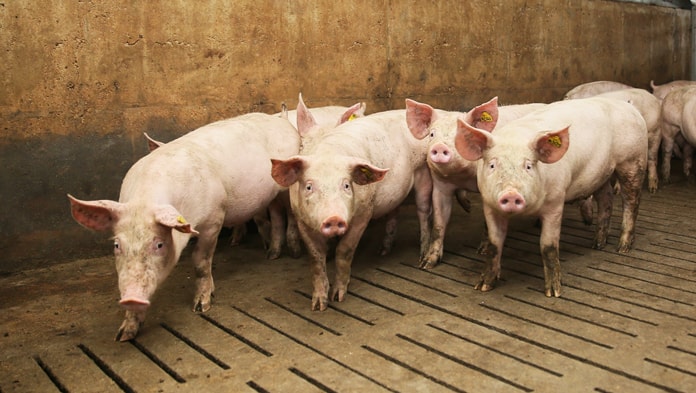
Based on in vitro antimicrobial findings, we can use organic acids as feed preservatives, and also as the first barrier for pathogen infection via the oral route.
Feed biosecurity awareness has grown steadily in recent years. Studies show that while animal by-product feed materials represent a major viral transmission risk, so do plant-based feed materials, especially soy-based ingredients (Dee et al., 2017). Today’s livestock industry depends heavily on global trading in raw materials, increasing the chances for viral transmission from continent to continent. Since the 2013 outbreak of porcine epidemic diarrhea virus (PEDv) in the US, further investigations have shown that contaminated feed and feed ingredients are potential sources of epidemic s (Dee et al., 2017).
A collaborative study led by Dr. Scott Dee from Pipestone Applied Research, Dr. Megan C. Niederwerder at Kansas State University, Dr. Aaron Singrey and Dr. Eric Nelson at South Dakota State University—and with the participation of Pancosma / ADM—shows that MCFAs are potential agents for mitigating transmission of porcine reproductive and respiratory syndrome virus (PRRSv), PEDv and Senecavirus A (SVA) to piglets from contaminated feed. MCFAs also helped challenged piglets significantly improve their average daily gain (Dee et al., 2020).
 GUT MORPHOLOGY AND
IMMUNE MODULATION
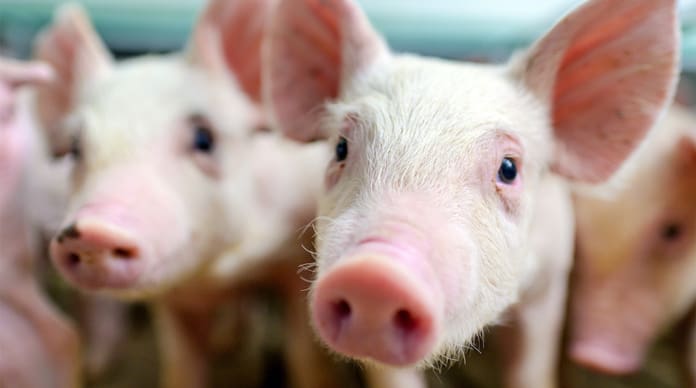
MCFAs and their derivatives not only modulate gut microflora by reducing unwanted pathogenic bacteria, also demonstrate an influence on gut morphology (Liu, 2015). Dierick et al (2004) shows that MCFA supplementation to young piglets resulted in longer villi in the small intestine with a lower crypt depth.
MCFAs also demonstrate a role in immune modulation (Kortekass, 2013), especially during inflammation (Liu, 2015). The study of Kono et al (2004) shows that adding MCFA triglycerides to rat feed helps protect their intestine by increasing IgA secretion and modulating the inflammatory immune response when challenged with endotoxin, LPS. Lee and Kang (2017) also found that MCFA supplementation to miniature pigs challenged with cyclophosphamide helped reduce intestinal inflammation and oxidative stress while strengthening the gut barrier function.
THE HIDDEN COST
Pathogenic challenge in animals generates high costs in terms of protein and energy. It has been roughly quantified that the lysine cost of the innate and acquired immune response was equal to a loss of 0.031 g average daily gain per kg bodyweight (Sandberg et al., 2007). Subclinical infection, if underestimated and neglected, can impact animals’ overall growth performance. Research shows that performance drops when AGPs are removed from their diet (WHO, 2003), because the incidence of disease is likely to increase, and animals require more protein and energy to deal with pathogens.
Enhancing animal performance while using fewer antibiotics on farm requires a comprehensive strategy, from biosecurity to feed hygiene. Animal gut wellness is crucial for growth, building up resilience to disease and focusing energy on better development. MCFAs and their derivatives play a key role in the AGP alternative solution. They function not only as what used to be known as an antimicrobial ingredient, but have other potential properties that promote animal wellness such as improving gut morphology, enhancing immune response and mitigating pathogens in feed.
About Eunice Lee
Eunice Lee did got her animal science Master’s degree at Wageningen University (NL) with a specialization in animal nutrition.
She has been working in the feed additive industry for 8 years as an expert in animal nutrition and brings currently her knowledges to Organic Acids range within Pancosma global leader in feed additives.