
Norwegian Mycelium (NoMy) has publicized its Japanese subsidiary, NoMy Japan KK, as well as its strategic partnerships. The company also introduced its innovative upcycling service, MycoPrime™, which combines the power of data science, fermentation technology and AI.
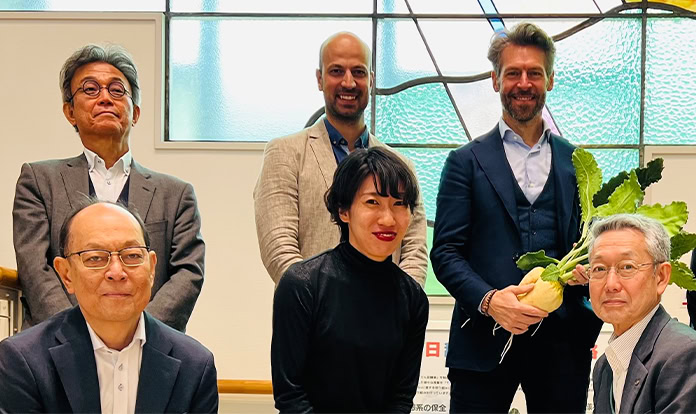
Oslo-based fermentation technology company Norwegian Mycelium (NoMy) has announced its entry into the Japanese market, with the establishment of a subsidiary company in the country, NoMy Japan KK.
Headquartered in Sapporo, Hokkaido, NoMy Japan (founded in January 2024) has forged key strategic partnerships with industrial actors to expand the reach of its core fermentation technologies utilizing food industry side streams. These include a Strategic Alliance with one of Japan’s largest sugar (beet sugar) manufacturers, Nippon Beet Sugar Manufacturing Co. Ltd and a feasibility study with Hokuren, a farmer cooperative of Hokkaido, with an array of agricultural production operations in its network. More partnerships are still confidential and will be announced soon, according to NoMy’s statement.
Additionally, the company is announcing the launch of its innovative upcycling service, MycoPrime™. The concept combines the power of data science, fermentation technology and artificial intelligence to drive its upcycling services with food industry partners. With MycoPrime™, NoMy Japan aims to help its partners find the optimal utilization of side streams, minimizing waste and CO2 emissions and maximizing water recycling, and design co-located production facilities for the manufacture of high value, sustainable fungi-based products.
The establishment of MycoPrime™ and the firm’s entry into the Japanese market reportedly distinguishes NoMy from other mycoprotein companies, by providing scalable and licensable end-to-end upcycling services that leverage its core competence and IP for developing solutions globally.
David Andrew Quist, NoMy´s Co-Founder and Chief Explorer says: “We are thrilled to announce NoMy Japan KK and introduce our MycoPrime™ upcycling concept to the world. There is a massive need and opportunity to de-risk the development of sustainable upcycling solutions and bring them to life. With NoMy’s technology and MycoPrime™, the food industry now has a reliable, end-to-end partner to create value instead of waste, and become a pioneer in food system transformation.”
Dr. Shu Ishikuri, President of Nippon Beet Sugar Manufacturing Co. Ltd, points out “Our goal is to create a new industry utilizing sugar beets, which have high carbon dioxide absorption capacity. NoMy’s technology, which utilizes the byproduct of the sugar manufacturing process to produce filamentous fungal protein as a food resource, has great potential to produce feed and food substitutes for animal protein. We believe that this technology will help to promote agriculture and solve food problems.”
NoMy’s expansion into Japan reflects its broader mission to revolutionize waste management and upcycling on a global scale. Ingrid Dynna, Norwegian Mycelium’s CEO underscores its strategy: “Through the launch of MycoPrime™ and partnerships with Japanese companies, we foresee strong growth and impact for our solutions in Japan, and become the premier service provider for upcycling food industry sidestreams in this important market.
Dr. Quist has also taken on the role of NoMy Japan’s Representative Director and will oversee its continued business development and core services expansion in the region. “Here in Japan, we are writing an exciting new chapter in the rich history of fermentation technology to transform not just foods, but food systems. With our partners, and with MycoPrime™ we are creating greater resilience in the food supply and improving food security.”