



Quality feed takes a farmer dedicated to details. Grain bins and the storage they provide are only the beginning. An ideal bin environment coupled with attention to detail, can make all the difference in optimal feed hygiene.

Material Handling Sales Director
Sukup Manufacturing Co.
Farmers are known for dedication to their livelihood. They buy the best when it comes to equipment and storage. Bins are some of the most visible products that aid in the process.
Whether you’re holding corn, beans, grains or nuts, the entire grain management process can be a daunting one.
Temperature, moisture, air flow and other environmental conditions must all be taken into consideration when it comes to what’s stored in your bin. Ultimately, commitment to proper bin management can help fight future headaches.
There are various products out there: non-stiffened and stiffened grain bins for on-farm storage, as well as commercial operations. There are in-bin drying systems that include axial and centrifugal fans, heaters and stirring machines. Fan-sizing is critical along with proper venting to keep grain in good condition.
Alongside that equipment there’s a growing need for the simple attention to the task at hand. Technology can aid in the daily grind; but broad knowledge can save you time, energy and dollars. Automation has many advantages over conventional operation but does require some basic understanding of proper grain management.
We saw 2021 bring a big bump in yields. Farmers are seeing the need for a safe place to store that grain. It’s understandable that producers want to best preserve and protect the grain they’ve grown.
 Then comes the decision: how long am I going to need to store this grain? Could it be weeks, months or even longer? That’s where the monitoring aspect of the entire process comes into focus. While some of the latest technological innovations to aid in that process can save time and energy that same technology can bring about a new set of challenges.
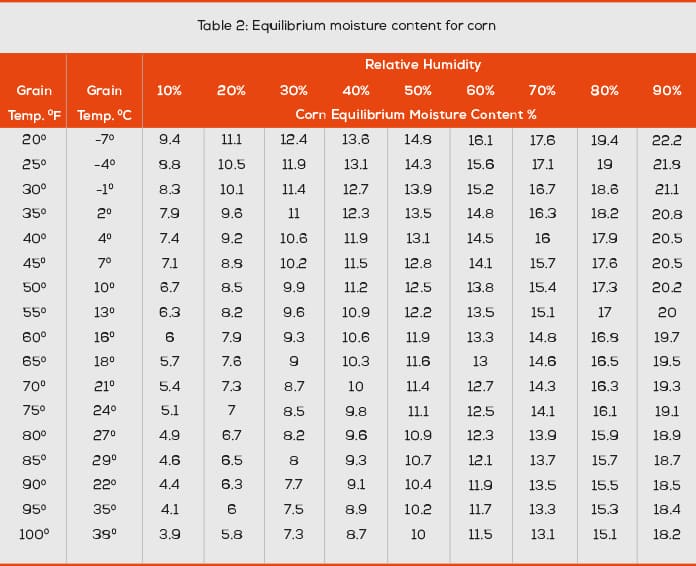
Basic Equilibrium Moisture Content Charts (see inset) like the one shown here, are often recommended in the care of the grain once it’s harvested. The EMC calculator can play an important role in storage and optimization. We know there’s a moisture content in the grain and combined with the air surrounding the grain, can make all the difference in achieving maximized market value.
Storing on-site to hold out for better prices brings a responsibility for the producer to best reap the benefits. Damaged grain-whether it’s splitting, cracking or mechanical damage from the combine can increase risk for grain spoilage.
 In seeking ideal feed hygiene keep in mind what you can control and be aware of:
• Out of condition grain can cause livestock to have a lower daily rate of gain and could lead to other health issues.
• Aflatoxin is a major concern for livestock producers. Certain molds may produce compounds that can be highly toxic to your animals. Even the nonfatal levels of the poisonous by-products can have a negative impact on your livestock. The process begins when there’s stress on your crop during the growing season. Proper harvest, drying and storing can prevent your animals from getting sick.
• If not alert, insects can also cause grain quality concerns. Elevated temperatures or even very dry grain can lead to infestation. A delicate balance is necessary for that grain moisture content. Too much moisture can lead to spoilage and insects. Your feed then becomes tainted and unpalatable for livestock; a contamination that can be costly on numerous levels. Again, proper storage, handling and fumigation can help prevent trouble before it starts.
Don’t be too proud to ask! Understanding the equilibrium of your grain is just another component of the job. Reaching out to your local county’s farm bureau can help bring clarity and answers to confounding conditions. Ask your bin manufacturer; they will often offer up the simple EMC calculation charts necessary to help guide your grain management.
Finally, know the weather. Your local meteorologist may not always hit the forecast! But for farmers banking on a profitable grain forecast, taking the time to know dew point and humidity levels could be just what’s needed to store that grain safely.
About Randy Marcks
Randy Marcks is the Material Handling Sales Director for Sukup Manufacturing Co. in Sheffield, Iowa where Safety is inGRAINed®. He has more than 20 years of industry experience.
Marcks also farms in North Iowa and runs a row crop corn and soybean operation.