

Announcing the development of new Single-Cell Proteins, dsm-firmenich states that the use of SCPs as an animal feed ingredient could reduce the land and water footprint required for animal farming and contribute to 1.5 degrees of global warming goals.
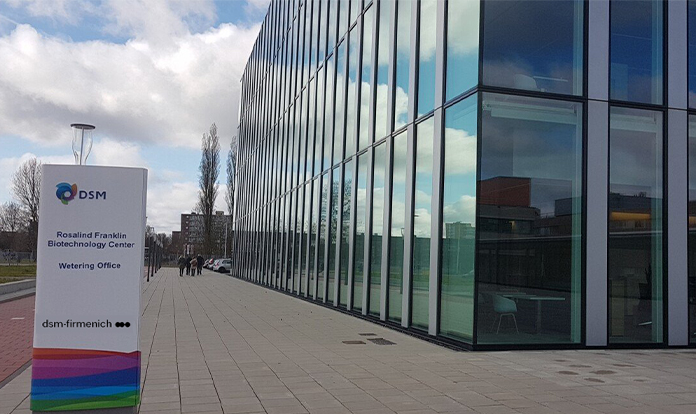 dsm-firmenich has announced that it has developed new, industry-leading, Single-Cell Proteins (SCPs) that have the capacity for the production of net-zero carbon protein to help meet demand and feed the global population within planetary boundaries.
The company stated that SCP will ensure the sustainability of food systems by partially decoupling animal production from conventional inputs and associated challenges, e.g., fertilizer use, deforestation, and water while helping to fill the projected protein gap.
The use of SCPs as an animal feed ingredient is a game-changer that can reduce the land and water footprint required for animal farming and contribute to 1.5 degrees of global warming goals, according to dsm-firmenich.
WHAT IS SINGLE CELL PROTEIN (SCP)?
SCPs are in essence a protein production powerhouse produced by fermentation technology. These proteins have an incredible potential for scalability. With very high growth rates these organisms can produce a considerable amount of protein compared to their initial weight and are the frontrunner when it comes to emerging proteins. These naturally occurring microorganisms can convert platform molecules into proteins, perfectly suited to replace fishmeal, wheat gluten, guar meal, soy or pea protein concentrates, and other plant proteins.
HOW ARE SCPS PRODUCED?
SCP provides a readily available, protein-rich microbial biomass, in the form of yeast, bacteria, or fungi. This can be achieved by combining biotechnology with new bioscience to train and evolve microorganisms to become super protein producers and maximise the nutritional value of the non-protein part of the cell structures.
WHAT ARE THE ADVANTAGES?
SCPs contain all or most essential amino acids required by animals, and can be used for aquaculture, poultry, swine, and companion animals for growth and development contain have numerous benefits, including:
• Shorter generation times.
• The ability to use different feedstocks or substrates.
• No requirements for land.
• The possibility to produce continuously throughout the year in any part of the world.
• No drop in animal performance when compared to traditional feeds.
ENVIRONMENTAL BENEFITS
• Alongside their incredible nutritional value, they are a low carbon-intensive microbial protein.
• SCPs can help close the impending protein demand gap without increasing the carbon footprint of our food system.
• It has the potential for net zero production carbon emissions and resource usage.
SALMONID FEEDING TRIAL RESULTS
Researchers at the DSM Bioscience Centre in Delft have shown excellent performance when compared to feeds containing fish meal and soy protein concentrate.
Rainbow trout were grown for 12 weeks on different inclusions of SCP ranging from 0%, 5% and 10% to 20% on extruded feeds, with single-cell protein replacing a combination of fish meal and soy protein concentrate. The data indicates single cell protein inclusion has no negative impact on fish performance measured by final body weight.
BUSINESS OPPORTUNITY
Net zero single-cell proteins are part of a $4 billion animal feed alternative protein market that is expected to double in size within a decade. According to the company, they represent an opportunity to provide nutrients that are essential to our food systems while making them considerably more sustainable.