

Mosa Meat is a Dutch food technology company that pioneered the ability to grow beef from a sample of cells taken by a veterinarian from a live cow. First introduced in 2013, over a hundred companies worldwide are now using “cellular agriculture” to make pork, poultry, beef, and fish from cells without raising a whole animal. With a rapidly growing population, this can be a powerful complement to the conventional methods.
President of Cellular Agriculture Europe
Mosa Meat
Agriculture has been evolving for thousands of years. From hunting and gathering our food, to domesticating livestock, to the green revolution of the 1970’s – we have made incredible strides in food production through constant innovation. Many of these impressive breakthroughs have been centered in the animal feed industry. As technology has advanced, the pace of innovation has accelerated rapidly. Today, the next iteration of domestication is underway, but it is occurring at a microscopic level with the feeding and domestication of cells – the building blocks of all animals.
Inspired by research in human medicine, the founders of Mosa Meat were able to demonstrate that beef can be grown from a peppercorn sized sample of tissue that is extracted from a cow without any harm. The meat is produced outside of the cow in an environment that simulates what happens in nature. The cells are placed in a stainless steel tank or “cultivator” that is filled with a nutrient-rich broth of sugars, amino acids, minerals, and vitamins derived from crops. The cultivator is heated to approximately 38° Celsius and the cells multiply by orders of magnitude, eventually growing into both muscle and fat that is harvested and recombined into the same minced beef products that meat eaters love.
This technique is now being used by more than 110 companies worldwide to make a range of animal proteins including poultry, pork, foie gras, fish, shrimp, and more. Some companies are drawing their sample of cells from live animals and some are using fertilized eggs. There are some variations in the methods depending on the animal being made and the intended final product, but the basics of the process are the same. Currently, cultivated chicken is approved and being sold in Singapore and the United States Food & Drug Administration has just given a greenlight for chicken to a company in the U.S. In Europe, companies will apply for pre-market approval through the Europe Commission as a “novel food” and that process takes 1.5-2.5 years from start to finish.
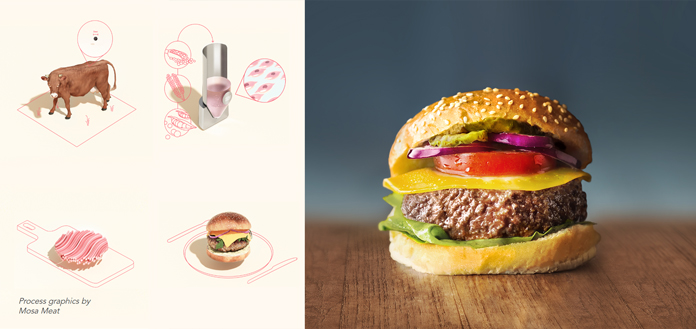 There are a number of advantages to making meat using this new production method. Using beef as an example, recent research has shown that when clean energy is used as the electricity source, up to 93% few greenhouse gases are released into the atmosphere. Additionally, the production process requires about 95% less land and 78% less water than conventional livestock methods. Cultivating meat also changes traditional time and geographical constraints. Our beef can be made from start to finish in approximately 8 weeks instead of 18-24 months and production facilities can be built in even urban environments. This may allow for boosting resilience in supply chains and to help bolster national food sovereignty campaigns.
That said, we do not envision that cultivated meat and this new cellular agriculture industry will replace conventional agriculture and livestock production. With the FAO predicting more than 10 billion people on the planet by 2050 and meat consumption expected to rise between 40-70% in the same time frame, we see cultivated meat as a powerful supplement to the overall protein portfolio. In combination with sustainability reforms to conventional meat production (like regenerative agriculture and methane reducing feed supplements) and innovations in the plant-based space, cellular agriculture will be a powerful tool in the solutions tool box for the challenges we face in climate change and biodiversity loss.
Our Maastricht-based company is ramping up now, building the largest cultivated meat campus in the world, and working with food safety regulators on multiple continents. As we prepare to scale up the production of our cultivated beef, we are building the strategic partnerships necessary up and downstream, including for the nutrients needed in our cell feed. Cellular agriculture is a rapidly growing industry and there is a lot of opportunity for collaboration between cultivated meat companies and actors in the traditional agricultural sector in the coming years.
About Robert E. Jones
Robert leads the public and regulatory affairs at Mosa Meat and serves as President of Cellular Agriculture Europe. He has 24 years of experience in government affairs, advocacy, and communications, including as an appointee by the U.S. Secretary of Commerce and senior director of an NGO working on food systems reform. He holds a Master’s degree in Management from George Washington University, a Master’s degree in Business & Entrepreneurship from the London School of Economics, and is a classically trained chef graduate of the Culinary Institute of America.