




Expert advice for heat stress from Alltech
Alltech shares expert advice to ‘Stop heat becoming a stress’ on dairy farms this summer.

Linas Agro Group completes acquisition of KG Group
On the 30th anniversary of its foundation, AB Linas Agro Group has completed one of the largest business acquisitions in Lithuania, acquiring the controlling stakes from several companies, acting together as KG Group.
Global Feed Additives Market and Trends
The global feed additives market draws attention as a growing market day by day. Some industry reports predict that the market will grow 6.1 percent between 2020 and 2027, reaching a value of $56.22 billion by 2027. The trends in the market of feed additives, which are generally used to increase feed efficiency, improve the quantity and quality of the animal products obtained, reduce the cost, and protect the health of animals, are shaped around animal and human health, welfare and environmental factors.

The role of technology in production of quality pellets and latest...
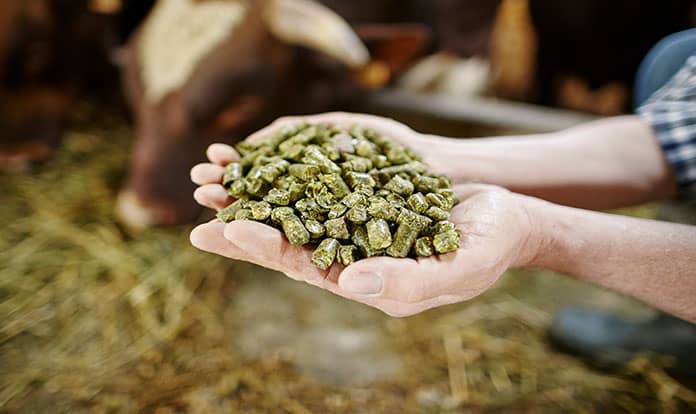
Many variables affect the pellet quality. We should distinguish between parameters originating from the ingredients and formulation, and process and technology related factors. Technology plays a vital role, as it is directly linked to a feed miller’s objective of producing pellets that are as hard as required and maintain a high and constant throughput while keeping energy costs at the lowest level possible.

Pellet and mash preference in feed production & production technologies
Pellet quality is not only made in the pellet mill. The saying “the chain is as strong as the weakest link” applies also here. Every process step adds to the achieved pellet quality. The finer the particle size after grinding the better the pellet quality, the higher the capacity and the lower the energy consumption at the pellet mill.

Improving pellet quality, the key to good performance
The pelleted feed manufacturing process has undergone a significant evolution in recent decades due to the demand for higher standards of physical quality, nutritional value and microbiological hygiene, as well as greater flexibility in the incorporation of new and varied raw materials. The digital age in feed industry is becoming increasingly important, KPI measurement and monitoring can be done in real time.

Covid-19 and global pet food market
The global pet food market value is estimated at $100 billion as of 2019, and is expected to continue to grow. GAPFA, the Global Alliance of Pet Food Associations, represents 13 pet food associations from all corners of the world and three global pet food manufacturers. In the lead up to the pandemic, these individual associations reported that humanisation and premiumisation were accelerating at a rapid rate, resulting in continued growth.

Using natural antioxidants effectively
The natural pet food trend started 25 years ago in the U.S. and has continued to expand globally. Throughout the world premium pet foods have become synonymous with the concept of being “natural” and there has been noteworthy acceleration of this in Europe recently. A significant part of this trend has been the development of natural antioxidant alternatives to help pet food companies maintain the shelf-life of their pet foods and to preserve pet’s health.

Options to mitigate the effects of heat stress in sows
It is important that pig producers know how to spot the signs of heat stress in their animals, as every factor of heat stress attributes to poor sow welfare. The best strategies to combat heat stress combine various techniques that reduce animal stress, improve animal performance, and boost the financial result for the farmers.

Challenging times demand an efficient production strategy
Swine producers face new stresses and persisting global challenges in 2021. Diseases, including COVID-19 and African swine fever, are altering market patterns. Meanwhile, incoming regulations bring additional changes to production practices. Combined, these elements call attention to the economics of swine production and highlight the need for improved efficiency to protect tightening margins.