

Aerbio has announced promising trial results for its new microbial protein ingredient, demonstrating strong performance in aquafeed formulations. The innovation shows potential to improve growth, feed efficiency, and sustainability in modern aquaculture systems.
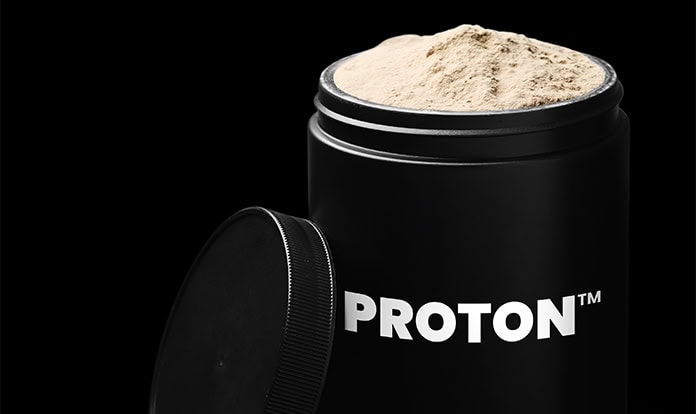
Is it possible to improve feed conversion ratios by 10% in aquafeed applications while cutting reliance on fishmeal? Peaking at 30% for salmon? For a Danish biosolutions company, the answer is yes. Trial results from Aerbio’s innovative protein ingredient, Proton™, demonstrate its potential to transform the aquafeed industry. The company notes that, having been rigorously tested, the protein ingredient’s performance in feed conversion trials has exceeded all expectations.
In trials conducted by independent third parties, Proton™ has replaced fishmeal at 5–20% inclusion rates in commercial-like feed mixes, used as control diets. The outcome was an improved feed conversion ratio of 10% for shrimp, while the salmon feed conversion ratio improved by up to a remarkable 30% in some tested feed formulations.
Aerbio points out that the commercial upside is significant. Based on the current market pricing of incumbent protein ingredients, the company estimates that using Proton™ could increase aquafeed value chains’ earnings by up to €700 per tonne of aquafeed where Proton™ is included. Proton™ targets an annual aquafeed market well above 50 million metric tonnes.

“The results have been overwhelming, even for us,” says Aerbio’s CEO, Kaspar Kristiansen. “To meet the protein needs of the future, we need to think innovatively, and that is what our team has done with Proton™. In itself, our product holds strong traits, but in a wider perspective, we believe our technology is the large-scale solution to meet the demand for protein in aquafeed.”
DELIVERING MEASURABLE VALUE
Proton™ is developed through a globally patented technology that uses microbes to convert CO₂ into premium protein. Produced without arable land and requiring minimal fresh water, the protein ingredient can significantly lower CO₂ emissions aside from the improved feed conversion ratios. In addition, Proton™ is produced entirely without marine inputs.
“We have on-going trials in collaboration with leading aquafeed players, and our focus is to integrate Proton™ into their formulations. We will deliver at value-based price points, based on measurable, real-world performance of our protein ingredients,” adds Kaspar Kristiansen.
With the world population projected to increase by over 20% by 2050, salmon and shrimp are set to become even more important food sources. Last year, a report from The Nature Conservancy’s Aquaculture Science Hub projected that the demand for salmon will increase by 40% within the next seven years.
Aerbio is gearing up for a scale-up, starting with a demonstration plant and subsequently the company’s first commercial plant. The company is currently fundraising for these next steps.