

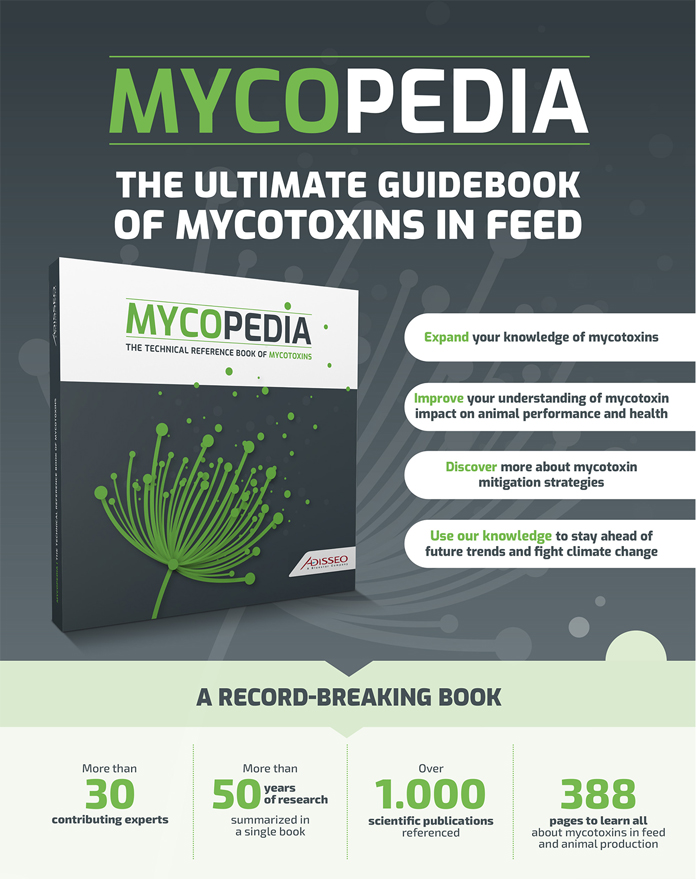
Adisseo, one of the world’s leading experts in feed additives, has presented Mycopedia, the ultimate guidebook of mycotoxins in feed. Key findings from over 50 years of research concentrated in a single practical guidebook.
 Mycotoxins have long been recognized as a significant challenge in livestock production, jeopardizing animal health, performance, and overall profitability. However, some in the industry continue to downplay the impact these compounds can have on their operations and/or rely on misconceptions or outdated information when developing their mitigation strategies.
With Mycopedia, Adisseo aims to empower industry professionals, who may not be experts in these toxins but require comprehensive knowledge, to effectively mitigate their adverse effects, with the latest in insights and opinions from academic and industry experts in the field.
The official launch of this ultimate Guidebook was held at ESPN in Rimini on June 20th, Italy.
DISCOVER THE WORLD OF MYCOTOXINS
Adisseo’s easy-to-navigate guidebook offers industry representatives the opportunity to discover the world of mycotoxins. Unique in its kind, it is also easy for any reader interested in a specific topic to delve into it further with its section on data sources. According to the company, as a tool, it is both handy and timesaving for anyone interested in learning more about mycotoxins in animal nutrition.
Adisseo points to the following topics for the question “Why should you dive into Mycopedia?”:
• Expand your knowledge of mycotoxins: their genesis and their origins (as summarized in mycotoxin ID cards), penetration pathways, critical accumulation sites and differences in appearance by geographic region and climate.
• Improve your understanding of mycotoxin’s impact on animal performance and health: a closer look at the specific effects of mycotoxins.
• Discover more about mycotoxin mitigation strategies: Implementation once the contaminated feed has been ingested.
• Use our knowledge to stay ahead of future trends and fight climate change: which is expected to have a significant impact on plant biogeography and fungal populations, with effects on mycotoxin patterns.