


While precision nutrition relies on accurately defining nutrient requirements, functional nutrition adds a deeper layer by considering how animals utilise nutrients under real production conditions. Gut health, microbiome activity, and environmental stressors all influence nutrient efficiency beyond theoretical models. The focus here is on how functional nutrition strengthens precision feeding strategies and contributes to future developments in monogastric nutrition.

Global Services Manager
AB Vista
The definition of nutrient requirements is the basis of precise nutrition. It allows the definition of the levels of individual nutrients to be fed to animals in order to cover their average needs for maintenance and production (i.e., growth, milk, egg).
Total and digestible nutrient requirements are usually estimated, following dose-response trials. Based on the estimation of individual requirements, ratios can be determined by species, breed, and age or live weight range, and they need to be constantly re-evaluated to match the ongoing improvement in genetic potential.
Mechanistic models capture interactions between nutrients and describe the dynamic growth response of an average individual under a given feed program, with specific nutrient levels. These models have been widely used in swine and some poultry species. They have proven useful in evaluating commercial feeding program strategies and their impact on performance, and consequently on production cost.
An additional level of complexity has been explored to account for population heterogeneity using stochastic models. Although this type of mechanistic model is more complex, it provides a better representation of the growth performance patterns of individuals within a population.
While mechanistic models contribute widely to precise nutrition by predicting daily requirements, it is also recognised that animals rarely respond exactly according to model predictions. Environmental factors play a key role in phenotypic response, including diet profile, ambient and sanitary conditions, immune status, and others. Nutritional strategies also vary across countries due to differences in genetics, ingredient profiles, production systems, and feed additives. Under these varying conditions, the study of functional nutrition has become critical to accurately estimate requirements and optimise performance and production cost.
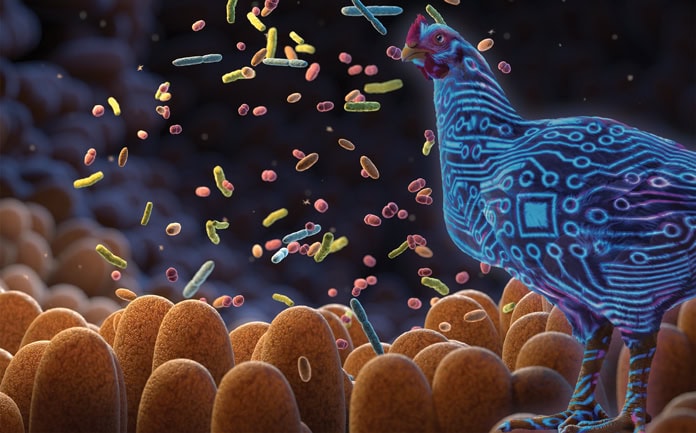 The term “functional nutrition” refers to nutrient utilisation dynamics, and to how nutrient and ingredient profiles and levels affect the overall health and performance of animals. Maintenance represents the main contributor to total daily requirements, and maintenance requirements are commonly estimated as a function of live weight (or body surface area). Interestingly, functional nutrition has highlighted the importance of the microbiome and gut health in defining animal growth response. However, a level of complexity remains that makes it difficult to estimate actual nutrient requirements under specific conditions. With functional nutrition, it is possible to gain greater precision in the estimation of maintenance requirements, either by accounting for additional demands or by reducing expenses associated with different contributing factors.
This article will examine how functional nutrition can contribute to precise nutrition, and what this may bring to future monogastric nutritionists.
STRONG GUT BARRIER INTEGRITY TO SUPPORT NUTRIENT UTILISATION EFFICACY
A well-functioning gut barrier is essential for efficient nutrient absorption while protecting the animal from enteric disorders. It helps prevent dysbiosis, limits pathogen adhesion and invasion, and reduces the risk of bacterial translocation into the bloodstream.
This barrier is composed of a protective mucin layer and an epithelial cell layer sealed by tight junctions. Together, these structures provide both chemical and physical protection, restricting pathogen entry while allowing nutrients to be absorbed.
Beyond its protective role, the intestinal barrier is also the site of dietary nutrient absorption. While providing highly and rapidly digestible nutrients is important to maximise absorption in the upper intestine, supporting early gut development also contributes to improved nutrient utilisation efficiency throughout the animal’s life. In some instances, early exposure to feed can enhance villi development and, consequently, increase intestinal surface area. Other strategies include the use of specific additives, such as butyric acid, to support villi development; formulating diets with an adequate dietary electrolyte balance to account for ingredient buffering capacity; or feeding the microbiome to accelerate its maturation (e.g., oligosaccharides).
 STIMULATING MICROBIOME FUNCTION IN THE LOWER GUT
Most microbial activity occurs in the lower intestine, where the majority of bacterial populations are located. Managing upper gut integrity is key to stimulate optimal microbiome function in the distal part, as excess or undigested nutrients will reach the lower intestine and become substrates for undesirable bacterial fermentation. Limiting starch flow to the lower intestine and maximising absorption by the animal helps control saccharolytic bacteria populations and reduces the risk of excessive lactic acid accumulation. Such accumulation may promote pathogen overgrowth and create more aerobic conditions, which are detrimental to key bacterial families such as butyric-acid-producing Lachnospiraceae.
Similarly, the presence of amino acids in the lower intestine stimulates putrefaction, resulting from protein fermentation and the release of branched-chain fatty acids and toxic metabolites such as indole, skatole, phenol, and cresol.
The microbiome plays multiple roles, many of which remain poorly understood. Microbial activity not only results in the production of metabolites that nourish the host, but also stimulates multiple host metabolic pathways and influences inter-bacterial communication (quorum sensing), which directly impacts bacterial family presence and activity.
Although this may have sounded counterintuitive in the past, it is now well established that adding fermentable fibre to the diet is an effective strategy to feed the microbiome and, in turn, reinforce gut and immune function. In addition to carbohydrates, bacteria also require nitrogen. While there is a growing understanding of the types of carbohydrates that benefit key bacterial families (e.g., xylo-oligosaccharides feeding Bifidobacterium), bacterial protein requirements in monogastrics remain poorly quantified.
Although an ideal microbiota has yet to be defined, quantifying bacterial family populations represents a valuable starting point to link microbial presence with key metabolites, such as short-chain fatty acids (SCFA), which may influence immune response, metabolism, and behaviour.
In addition, studies have demonstrated how the gut–brain axis can influence animal behaviour, and how the gut–lung axis may play a role in respiratory diseases, as well as in the stimulation of inflammatory or anti-inflammatory responses.
One of the main challenges is managing this high level of complexity, particularly under commercial production conditions. Translating biological responses into practical, actionable insights for decision-making therefore requires measurable and reliable indicators of gut function. One approach is to focus on microbiome activity rather than microbial composition alone.
Short-chain fatty acids are key metabolites that reflect microbial fermentation activity in the gut. These biomarkers can be quantified to provide valuable information on both the level and profile of SCFA production.
STRATEGIES TO MAKE ANIMALS ROBUST AND REINFORCING THEIR RESILIENCE
While animals are inherently driven to maintain homeostasis, we know the path is never smooth, and the organism needs to constantly adapt so it can perform as close as possible to its genetic potential. The stronger these adaptations, the higher the demand in energy and other micronutrients to maintain homeostasis. In other words, one should account for these expenses when maintenance requirements are estimated, and diets are formulated.
While inflammation is a normal response, it is demanding in energy, and multiple other micro-nutrients. Providing the nutrients to cope with the increased demand may allow to sustain performance. Other strategies may consist in stimulating the anti-inflammatory response or increase antioxidant capacity.
Animals face multiple sources of stress during their life. From life events such as hatching, vaccination, weaning, farrowing, or laying, to environmental and social stressors, all these events challenge homeostasis and may increase the presence of free radicals, also called Reactive Oxygen Species (ROS). When the availability of antioxidants is limited in the cells, the overaccumulation of ROS may result in oxidative stress. Depending on the duration and the intensity of the stress(es), oxidative stress may impair physiological functions, induce inflammatory response, opportunistic pathogen invasion, and ultimately infections.
Supplementing diets with antioxidants such as selenium, vitamin C and E, or live yeast reinforce antioxidant capacity and may enable animals to better cope with the excess of ROS in situations of stress.
WHAT DOES THAT MEAN FOR THE FUTURE?
To integrate adequate predictions of animal response into precision nutrition, more parameters than nutrient requirements and levels should be considered. Nutritionists need to define feeding strategies that support gut integrity, robustness and resilience to ensure efficient nutrient utilisation for maximum productivity and be closer to genetic potential.
Managing intestinal microbiome is a very complex task, indeed, but it can potentially add value to standard precise nutrition approaches. The microbiome still needs to be explored further, and ongoing research should bring more understanding of the host and microbiota interactions for future leverage.
Microbiome function can be explored in commercial conditions using faecal samples. As we collect more data, we also gain insights into animal responses, which will help us link bacteria presence with fermentation activity and gut health.
If we better understand how animals respond under different conditions, we can hope to better quantify their requirements, and adapt nutritional strategies to different scenarios and targets, and eventually be able to link these responses to mechanistic models.
About Virginie Blanvillain
Born and raised in France, Virginie Blanvillain lives in Quebec, Canada. She developed an international experience in the animal feed industry by working in research and development, technology transfer, nutrition and quality assurance. Over the past years, she has been actively involved in the development and implementation of innovative tools and services for nutritionists, producers, integrators and feed mills. She provides training and technical support to the AB Vista network worldwide, while leading the development and continuous improvement of NIR, carbon emissions and lab services.