


Pet owners are increasingly concerned about the environmental impact of pet foods but are not willing to compromise on nutritional quality. With ingredient choice being an important purchasing driver, opportunities for faba bean ingredients in pet formulations are being explored to enhance nutritional, technical, and sustainability credentials.

Product Manager Animal Nutrition
BENEO
In recent years there has been a groundswell of consumers driving change in pet food recipe formulation. When it comes to their purchasing choices, many are going ‘back to basics’ regarding the ingredients in their pets’ meals. The majority consider the quality of ingredients (71%) and the nutritional value (72%) a very important factor in their purchasing choices.i Also, more than 1 in 3 cat and dog owners buy natural pet food products when looking for pet food for specific needs.ii
Because of this, focusing on recipe composition and ingredient choice has never been more important for pet food producers and is essential to drive sales. Consumers are also continuing to demand more when it comes to the sustainability of the pet foods they purchase. Around 7 in 10 pet owners expect pet food brands to actively reduce their environmental impact.iii
PLANT-BASED PROTEIN POPULARITY
To tick the sustainability and ingredient integrity boxes, whilst also meeting pet owner demands for nutritious and balanced recipes, more pet food manufacturers are turning to plant-based sources for their cat and dog food formulations. With two in three pet owners now considering plant-based proteins to be better for the environmentiv, natural and high-quality vegetal proteins with sustainable credentials are a valuable resource for manufacturers.
Producers can use either plant-based protein isolates or concentrates to deliver added protein and other benefits in their finished products. Most isolates are produced through wet processing which enables a protein content of over 80%. However, they undergo extensive processing which requires more energy, water, and processing chemicals compared to concentrates, which also increases their cost and limits the opportunity for use in pet food recipes. Protein concentrates typically contain 60-80% protein but they also retain more of the original plant’s fibre, starches and micronutrients, offering interesting technical advantages.
As demand for plant-based, sustainable and clean label pet food gathers pace, faba beans are an interesting alternative for pet food producers looking to expand their vegetal ingredient portfolio and also for those wanting to make ‘no grain’ claims in their pet foods. This crop is popular with cat and dog owners too, reaching similar appeal as more widely used crops like wheat, barley and soy. In fact, 49% of pet owners strongly associate faba beans with being natural and 45% with being sustainable.v In addition, faba beans provide a range of technical and nutritional benefits in cat and dog foods that make them an attractive alternative to animal-derived or other plant-based ingredients such as those made from pea.
SUSTAINABLE SUCCESS WITH FABA BEANS
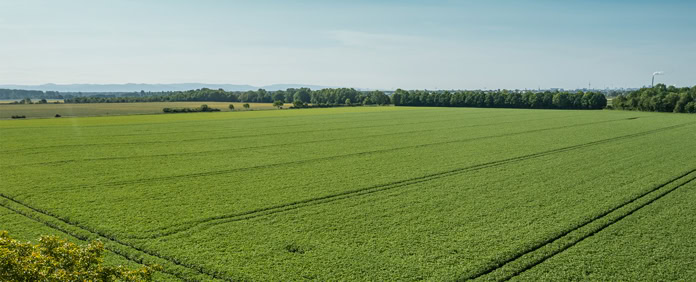
When it comes to sustainability, faba beans help to reduce greenhouse gas emissions at farm level. The faba beans can capture nitrogen from the air, to provide it for themselves and subsequent plants, which reduces the need for fertilizer input and improves soil quality. They are a resilient crop that has significantly lower carbon emissions than animal protein and can be grown easily in the northern hemisphere. Beneo’s faba beans are grown in Germany, in proximity to the production plant, and are REDCert2 certified, which is equivalent to the Farm Sustainability Assessment (FSA) from SAI at the highest “Gold” level.
Localised transportation costs, the fact that no water is used during production, the low energy input needed compared to wet processes and no requirement for chemicals or processing aids add up to a more sustainable process that also delivers lower production costs. The result is a better and more stable cost to protein ratio for producers than some animal-based ingredients or vegetal isolates, for instance. Also, the long-term contracts with local farmers ensure production and supply chain resilience for both Beneo and pet food producers using the company’s faba bean protein, starch and fibre ingredients.
Together with an external partner, Beneo also conducted a Life Cycle Assessment (LCA) for its faba bean ingredients. The comparison of Beneo’s LCA results with animal protein like fishmeal and competitive vegetal protein ingredients like soy or pea concentrate showed that faba bean protein concentrate gains a competitive edge through low climate change impact.
THE NUTRITIONAL AND TECHNICAL POWER OF FABA BEANS
Faba beans are a concentrated source of vegetal protein and starch which offer producers a good alternative to animal and soy proteins when creating plant-based or hybrid pet foods. Beneo’s faba bean protein concentrate provides pet owners with a non-GMO, clean label source of high-quality vegetal protein. It contains a minimum of 60% protein on dry matter and offers (ileal) digestibility scores close to 90%.
Containing quite high levels of glutamine, which supports the growth of intestinal cells, as well as arginine, which is considered to be important for cognitive health, faba bean protein concentrate presents a good essential amino acid profile. As it is also relatively rich in lysine, it can be combined with cereal proteins to achieve a complete essential amino acid profile. Alongside the concentrate, Beneo’s faba bean range includes a starch-rich flour with a typical 57% starch and minimum 21% protein content on dry matter. In addition, the faba bean hulls are a dietary fibre source for pet food recipe formulations.
DELIVERING COST SAVINGS IN WET PET FOOD WITH FABA BEANS
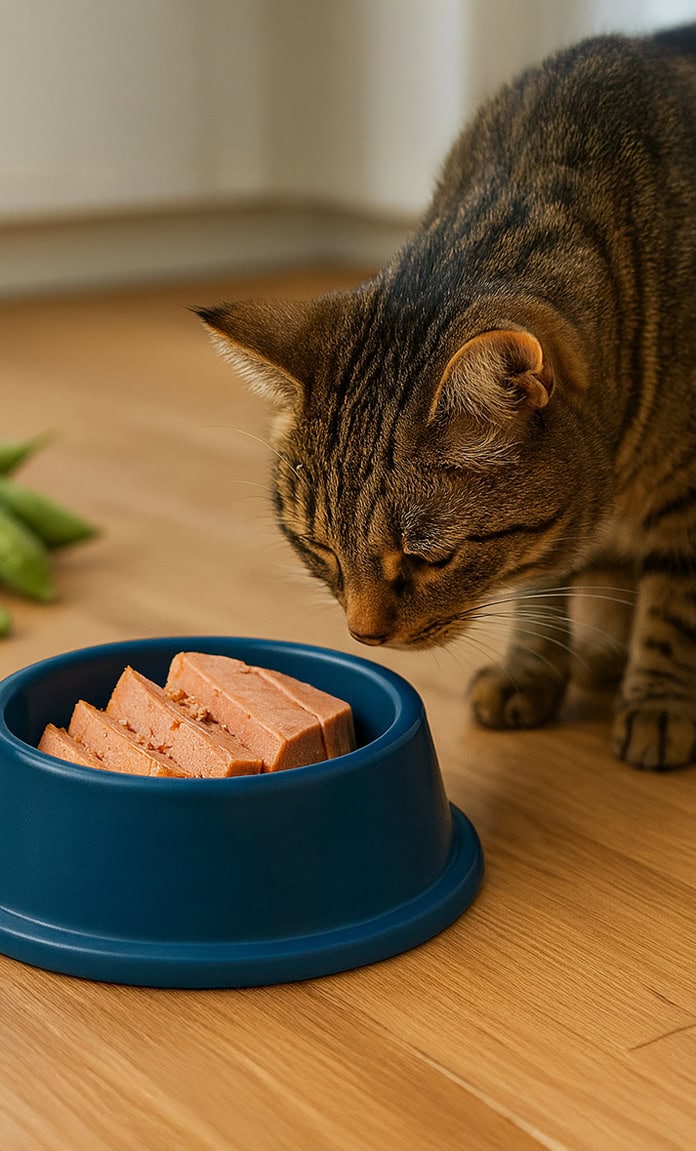
Wet pet food benefits from strong consumer appeal as it is often marketed as a more gourmet or healthy option. This positive perception is driving demand amongst pet owners, with a compound annual growth rate (CAGR) of 15.6% between 2024 and 2029 predicted in terms of value.vi Plant-based proteins such as those made from faba beans have a key role to play in wet pet food recipe formulation – especially with almost half of cat and dog owners being interested in seeing more plant-based proteins used in wet food like cans or pouches.vii A case in point is the use of Beneo’s faba bean protein concentrate as an alternative to spray-dried animal blood plasma (ABP).
ABP is commonly used in super-premium and premium wet pet foods to deliver emulsifying and texturising benefits, however these advantages come at a relatively high cost. Beneo’s faba bean protein concentrate can either fully or partially replace ABP as a binder and emulsifier in pet food loaves (pâtés) and chunks-in-gravy, with cost saving potential of up to 47%.viii
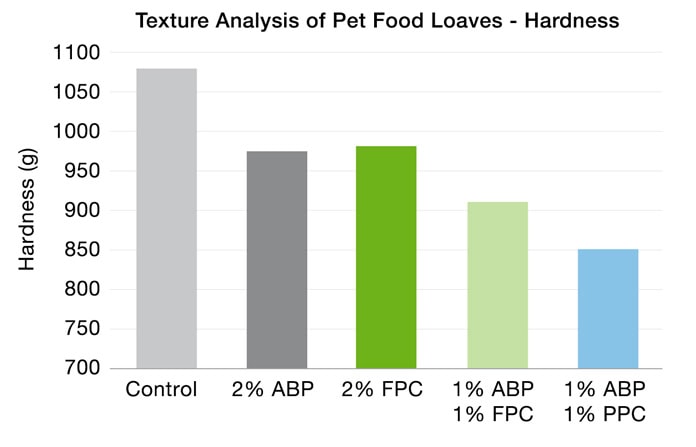
FPC = Beneo’s Faba Bean Protein Concentrate
PPC = Pea Protein Concentrate
Control: Reference recipe without ABP/FPC/PPC
Passion4Food, a specialist service provider for the pet food industry, conducted technical trials in pet food loaves using a high protein test recipe and then a commercially scalable one, in which 50% and 100% of the ABP content were replaced with Beneo’s faba bean protein concentrate. The tests showed that partial or total replacement of ABP did not result in any significant changes in the loaves height or weight and led to a comparable texture to the control loaves containing 100% ABP. In the trial, Beneo’s faba bean protein concentrate (FPC) was also benchmarked against pea protein concentrate (PPC), and a test recipe involving the partial (50%) replacement of ABP with PPC was also included. The results showed that the faba bean protein had higher binding capacities in the pet food loaf than the pea protein (Figure 1).
Testing on chunks-in-gravy products showed that chunks made with faba bean protein concentrate had a spongier structure and better holding capacity than those made with ABP thanks to the higher starch content of the vegetal protein. It was concluded that replacing at least 25% of the ABP in chunks-in-gravy recipes was possible with no significant impact on the appearance or quality of the chunks. Based on these successful trials, Beneo filed an international patent application for its faba bean protein concentrate as an alternative to spray dried animal blood plasma (ABP) in wet pet food, which was published in August 2025.
To assess the environmental impact of replacing ABP with Beneo’s faba bean protein concentrate, LCA calculations1 for the loaves test recipes were done, in particular for the climate change category, comparing their CO2 emission equivalents.2 The results demonstrate that when fully replacing ABP, Beneo’s ingredient leads to a 6.3% reduction in emissions. Enabling to combine cost and sustainability benefits, this plant-based protein ingredient delivers interesting potential for wet pet food producers.
NEW SOLUTION FOR DRY PET FOODS WITH FABA BEAN STARCH
As well as supporting the latest trends in wet pet food, the faba bean is a great ingredient for pet food producers looking to capitalise on the continued popularity of dry pet food. In fact, 89% of pet owners say to have purchased dry pet food in the past three months and more than half would be interested in seeing more plant-based proteins being used in this type of pet food.ix Thanks to its convenience and cost, the global market for it is predicted to reach a sizeable USD 34.63 billion by the end of 2030.x
This is good news for pet food producers of dry products, who benefit significantly from the high production capacity of extruded food, which can be achieved at relatively low costs. Traditionally, dry pet food for cats and dogs comprises specific amounts of nutrients such as protein, fat, minerals, and vitamins, with these accounting for 40-50% of the total formula. To complete the formula, neutral fillers are used. While these fillers are not nutritionally essential, they can enhance the nutritional profile of the product and can provide technological properties.
Carbohydrates, particularly starch-rich raw materials, are commonly used as fillers because cooked starch provides digestible energy. The choice of starch will affect both the technical properties of the dry pet food and its production process. Traditional starches include grains like wheat, corn and barley, however grain-free pet foods are on the increase as pet owners perceive them as healthier. The most common starch sources in these products are potatoes, sweet potatoes, peas, and tapioca. Beneo’s faba bean starch-rich flour is a legume starch alternative that can be used in non-grain dry extruded products.
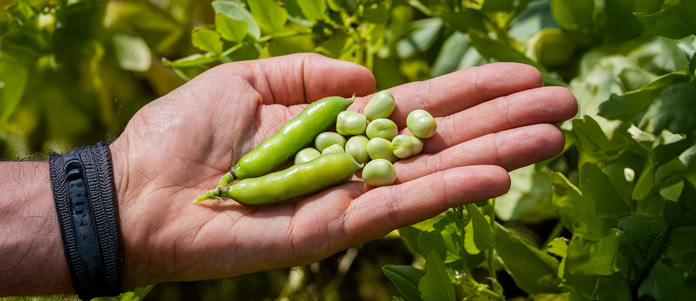
Until recently its performance in dry pet food wasn’t measured. However, thanks to technical trials conducted by Passion4Food with air-classified faba bean starch, it has been shown that it is suitable as an alternative to pea starch in dry pet food kibbles. Beneo’s faba bean starch-rich flour was used as a partial and full pea starch replacement in non-grain recipes, leading to no significant differences in energy consumption during processing. The trials showed that full replacement of pea starch, with up to 20% inclusion of faba bean starch-rich flour, is possible without significant changes in kibble quality. Higher inclusion of 35% faba bean starch-rich flour led to considerably increased expansion, improved pore structure and enhanced oil absorption capacity.
As cats have been shown to like more expanded and crunchy kibbles, the results of higher inclusion are particularly interesting for cat food producers. Therefore, though technically more challenging, inclusion of faba bean starch-rich flour up to 35% is possible in cat food or in high fat diets where the pore structure and oil absorption capacity can benefit the final product. The trials give pet food manufacturers another vegetal starch option for their dry pet food ingredient toolbox. At the same time, LCA calculations revealed that a 20% inclusion of faba bean starch-rich flour as replacement of pea starch in the trial recipe leads to a decrease in CO2 emission equivalent of approximately 30%.3
A further technical trial in cereal diets has also shown that Beneo’s faba bean starch-rich flour can be effectively used in cereal-based kibbles to enhance expansion and significantly increase elasticity. Addition of 5% faba bean starch slightly influenced the textural properties of the kibbles, reducing hardness and increasing elasticity, which could be beneficial in certain applications such as dental snacks, as it may prolong chew time.
Faba bean ingredients offer pet food producers a winning scenario in terms of their sustainability, supply chain stability, technical and nutritional credentials. Thanks to the work done by animal nutrition experts at Beneo and the collaboration with Passion4Food, pet food producers now have even more ways to meet end customer demands for healthy, nutritious and more sustainable recipes.
Footnotes
1Carbon footprint values are indicative and based on Beneo ingredient assessments and secondary databases (Agribalyse, Ecoinvent). Data are provided in good faith but without warranty. Users should verify suitability for their purposes and ensure compliance with applicable legislation before communication
2CO2 equivalent is a metric measure used to compare the emissions from various greenhouse gases based on their global warming potential
3Carbon footprint values are indicative and based on Beneo ingredient assessments and secondary databases (Agribalyse, Ecoinvent). Data are provided in good faith but without warranty. Users should verify suitability for their purposes and ensure compliance with applicable legislation before communication.
References
iBeneo Consumer Research on Pet Care 2025. FMCG Gurus conducted a quantitative online survey with 2.500 pet owners in the US, Brazil, UK, Germany, and China (250 cat and 250 dog owners per country)
iiBeneo Consumer Research on Pet Care 2025, N = 2.500
iiiBeneo Consumer Research on Pet Care 2025, N = 2.500
ivBeneo Consumer Research on Pet Care 2025, N = 2.500
vBeneo Consumer Research on Pet Care 2025, N = 2.500
viGlobal Data; CAGR was calculated based on value in million euro
viiBeneo Consumer Research on Pet Care 2025, N = 2.500
viiiThis is based on an indicative annual consumption of 50 metric tonnes of ABP
ixBeneo Consumer Research on Pet Care 2025, N = 2.500
xDry Pet Food Market Size (2025 – 2030) Virtuemarketresearch.com
About Dr. Maygane Ronsmans
With a degree in Veterinary Medicine Dr. Maygane Ronsmans also has a PhD in Veterinary Sciences. After working for a few years at an international biotech company, she joined the Beneo Animal Nutrition Department in 2019 as Product Manager. In this role she is responsible for offering technical support regarding Beneo’s products and co-products for customers and colleagues in animal nutrition markets worldwide. Beneo is active in Petfood, Aquafeed and Livestock Nutrition markets.