

Among the many factors influencing productivity in pigs and poultry, drinking water quality remains one of the most overlooked yet crucial elements. Encouragingly, the livestock industry is increasingly recognising the vital role that clean, high-quality water plays in supporting the health and performance of all farmed species.

Monogastric Technical Sales Manager
Azelis UK
The quality of water available exerts a significant effect on animal health and performance on any pig and poultry production unit. Productivity and profitability – not to mention animal welfare – can all be adversely impacted if a plentiful supply of clean, fresh water is not available.
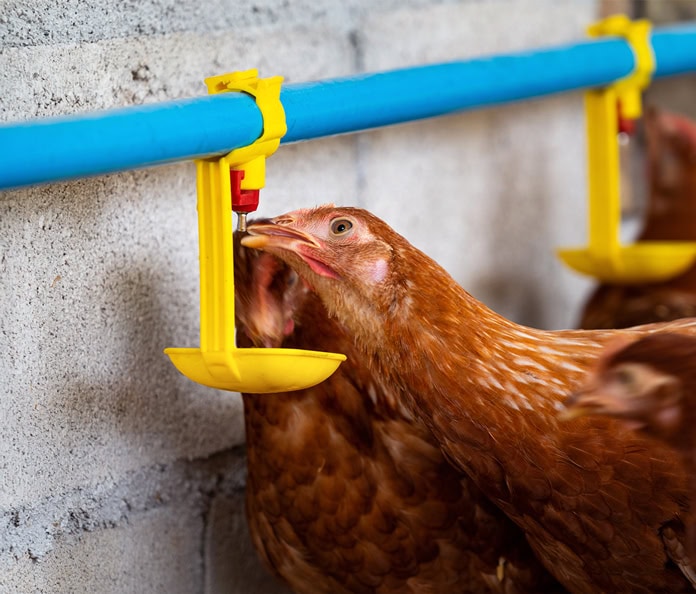
Farmed livestock typically consume at least twice as much water as feed. Drinking water quality is vital for poultry because, as with humans, around 70% of the bird’s body is made up of water and it is an essential nutrient for biological functions. Moreover, farm animals tend to decrease feed intake during stress or challenging situations, but they keep drinking water, which also makes the water a tool to address certain challenges. In most species, reduced water intake is directly linked to a reduction in feed consumption and production. Quality matters too.
Good water facilitates metabolic processes, chemical reactions, temperature regulation and waste product removal from any animal’s body. Better water quality also facilitates improved effectiveness of drinking water vaccines, simply because the cleaner the water, the fewer competing bacteria around to limit vaccine efficacy.
Poor water quality often leads to disease, reproductive issues and mortality – particularly in younger animals – so it is vital to test and improve any water supply destined for livestock consumption.
HOW DOES WATER BECOME CONTAMINATED?
Water can easily become contaminated on any farm. For example, hot weather can heat up the water supply and this not only adversely impacts intake – because, as with humans, livestock tend to avoid drinking warm water – but warmer water is a better breeding ground for bacteria.
Water quality concerns often stem from a farm’s water source, particularly wells or boreholes. Often, leaching mineral ions from the land into the water can increase a water supply’s salinity. Different animals have different tolerances for salty water, so keep checking the supply to ensure full compliance with the relevant animal health guidelines. One commonly overlooked example is the iron and sulphate content of drinking water. When these compounds attach to each other to form iron sulphate, this may contribute to the growth of E. coli and make it more resilient (Deumić et al., 2025).
Contamination of the drinking water supply with potentially toxic debris can also be an issue on some production units. Debris such as animal faecal matter, sewage waste, or even dead birds and animal carcasses – somewhere in the water supply line – can result in low production, disease or even death. Pesticide run- off from arable land can also sometimes contaminate a farm’s drinking water supply.
While most farms have a sanitisation system in place, many overlook the risk of recontamination from sources along the water lines post sanitisation.
Holding tanks or dead ends in pipes are optimal places for microbes to multiply and buildup to occur. Unmaintained waterlines can lead to the buildup of biofilm – a layer of microorganisms and organic matter that adheres to the inner surfaces of pipes and header tanks, often appearing as slime. The formation of biofilm can clog pipes and drinking nipples, restricting water flow and reducing water intake in pigs and poultry. Additionally, biofilm provides an ideal environment for harmful bacteria to thrive and multiply.
To prevent biofilm accumulation and ensure optimal water quality, drinking lines should be thoroughly flushed/cleaned before and after each production cycle and after medication/other additive use following a sanitisation programme to control and remove biofilm buildup. This helps prevent clogging of pipes and nipple drinkers and supports consistent water delivery.
HOW TO MAINTAIN WATER QUALITY?
Organic acids are now commonly used across the livestock industry – particularly within the pig and poultry sectors – to help maintain optimal water quality and gut health. Organic acids act as water acidifiers, helping to suppress biofilm formation within the supply line and so reduce the population of harmful bacteria that can potentially compromise animal performance, health, and food safety.
Organic acids can come in protected or free form. When added to drinking water, free organic acids are not only good at lowering the pH of the water, they are also effective at inhibiting pathogens in the water and upper gut when they dissociate to release their hydrogen ions. The site of dissociation depends on the type of organic acid: weaker acids can penetrate the cell walls of pathogenic bacteria. Once inside, the neutral internal pH of the bacteria triggers dissociation, lowering the cell’s internal pH. The bacteria then expend energy attempting to remove the hydrogen ions to restore their internal pH. Over time, this energy depletion leads to bacterial cell death and prevents further replication. In contrast, stronger acids dissociate in the gut, reducing the gut pH and creating an inhospitable environment for many pathogens.
Organic acids are also available in both buffered and unbuffered forms, which affects the point at which they release hydrogen ions to exert their acidity. A combination of both buffered and unbuffered free organic acids is particularly important in drinking water, as this helps to steadily reduce and stabilise water pH, encouraging consistent water intake. Due to the various modes of dissociation with different types of organic acids, water acidifier products which consist of a buffered and unbuffered free blend of organic acids, and at the correct concentrations work best for optimal performance.
THE BENEFITS OF USING ORGANIC ACIDS TO MAINTAIN WATER HYGIENE
Acidifying drinking water with organic acids improves water hygiene and provides the following benefits:
• Reduces biofilm formation and associated pathogen burden caused by species such as E. coli and Salmonella,
• Promotes growth of beneficial bacteria e.g. lactobacilli,
• Encourages water and feed consumption,
• Supports digestion and gut health.
Water Acidification Options
Perstorp’s the ProPhorce™ Water Solutions range consists of three products, all formulated with an optimal combination and high concentrations of both buffered and free organic acids.
Buffered organic acids do not dissociate as readily in the drinking water and therefore target the gut environment. This helps lower the pH of the small intestine, promoting the activity of beneficial bacteria such as lactobacillus. In contrast, unbuffered organic acids dissociate in the drinking water to lower the water pH and aid water sanitisation. This combination ensures a steady and stabilised reduction of the water to an optimal pH of 4.
When organic acids dissociate, they form organic acid salts. These salts can be utilised by beneficial bacteria to produce gut-enhancing compounds such as butyric acid, which plays a key role in maintaining tight junctions. Following dosing recommendations is essential to avoid underdosing and to make water lines less habitable for bacterial growth and biofilm formation.
Depending on individual farm needs, the ProPhorce™ Water Solutions range also includes organic acid blends enriched with additional additives, such as the essential oil cinnamaldehyde for further antimicrobial effects, and monoglycerides of butyric acid (butyrin) to further support gut health throughout the gastrointestinal tract.
Since animals consume at least twice as much water as feed – and tend to drink rather than eat when stressed or compromised by a health challenge – a fortified ProPhorce™ Water Solution provides a cost-effective option to maintain water hygiene and enhance bird performance.
References
Deumić, S., El Sayed, A., Hsino, M., Glamočak, A., Crnčević, N., & Avdić, M. (2025). Investigating the Effect of Iron Salts on E. coli and E. faecalis Biofilm Formation in Water Distribution Pipelines. Water, 17(6), 886. https://doi.org/10.3390/w17060886
About Annie Metcalf
Monogastric Technical Sales Manager for the UK at Azelis, Annie Metcalf specializes in nutritional solutions for pig and poultry production. Initially started her career as a pig nutritionist, Metcalf transitioned into this broader monogastric technical sales role with Azelis in Jan 2023. She completed a ‘poultry feed, nutrition, and development’ post graduate professional development at the University of Edinburgh in 2024 Working closely with feed manufacturers and producers, Metcalf delivers technically driven, practical strategies that optimise animal performance, gut health, and water quality management. Annie Metcalf focuses on translating scientific insight into commercially viable applications for modern livestock systems.