
HoloRuminant unites scientists, industry and farmers to uncover how ruminant-associated microbiomes interact with their host across early life, weaning, diet shifts and lactation. By combining genomics, metabolomics and other multi-omics tools, the project links microbial connectivity and heritability to animal health, welfare, productivity and environmental efficiency. One of its key insights concerns early-life health: Calf scour remains one of the most persistent and costly diseases in dairy production. By understanding and supporting the calf gut microbiome during this critical stage, we can strengthen immune responses, reduce disease risk and build the foundation for healthier, more resilient herds.

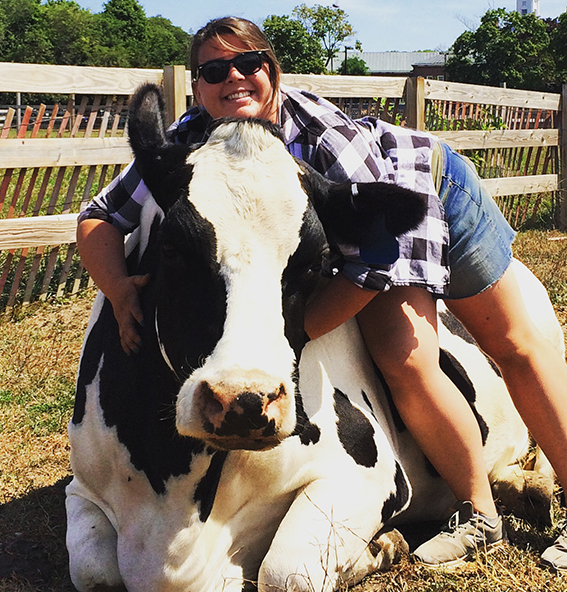
By Sabine Scully, Teagasc Walsh & Geena Cartick, European Forum of Farm Animal Breeders
THE CHALLENGE OF CALF SCOUR
Diarrhoea, commonly known as scour, is one of the most frequent and costly diseases in young calves. It can affect up to half of all dairy calves, often leading to dehydration, loss of appetite, and stunted growth. In severe cases, scour is the leading cause of death during the first month of life. Even when calves recover, the long-term impact can be substantial, including lower growth rates, delayed fertility, and reduced milk yields later in life.
The complexity of the disease makes treatment difficult. Scour is often caused by multiple pathogens at once—such as rotavirus, coronavirus, and Cryptosporidium—and not by bacteria, meaning that antibiotics are ineffective. Prevention, rather than treatment, is therefore the key to controlling scour.
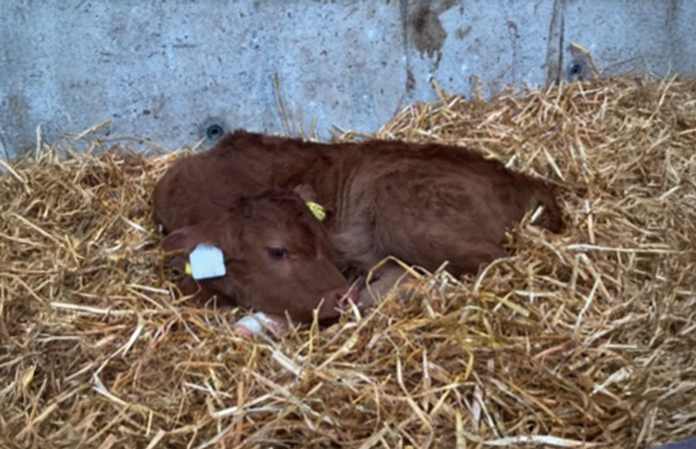
Photo: Sabine Scully March 2022
Early-Life Immunity: A Vulnerable Window
Newborn calves enter the world with an under developed immune system. They rely entirely on antibodies from colostrum to protect them against infection in the first weeks of life. However, this passive immunity declines sharply after two weeks, while the calf’s own immune system only begins to function effectively around three to four weeks of age (Image 1).
This creates a vulnerable gap where the calf’s defenses are at their lowest—just when exposure to environmental pathogens is high. During this period, any stress, nutritional imbalance, or microbial disturbance can tip the balance toward disease.
The Gut Microbiome: A Key Player in Health
In parallel with immune development, the calf’s gut microbiome—composed of bacteria, viruses, fungi, and other microorganisms—is still taking shape. In early life, this microbial community is unstable and sensitive to change. When it is disrupted (a condition known as dysbiosis), harmful microbes can overgrow, compromising digestion and immune function.
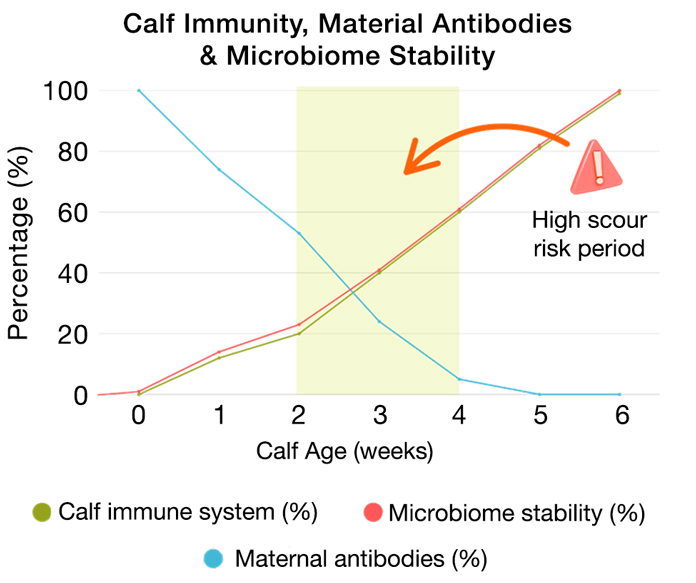
Recent research by Teagasc within the HoloRuminant project found that dysbiosis in the hindgut microbiome can occur before clinical scour appears. In this study, more than half of the calves developed scour even though they had received sufficient colostrum and antibodies (called adequate passive transfer of immunity). This shows that immune protection alone is not enough; supporting microbiome development is equally vital (Figure 1).
PREVENTING DYSBIOSIS: WHAT WORKS
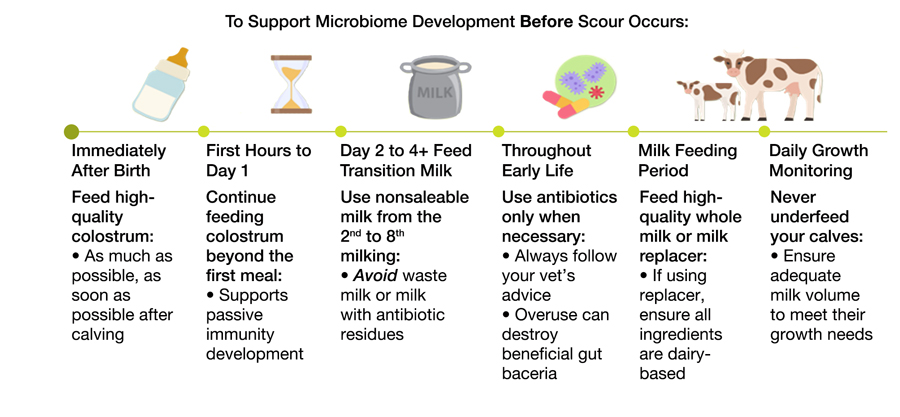
The good news is that the microbiome can recover if the calf is properly supported. Management practices that protect microbial community balance can help reduce the risk of scour and improve overall calf performance. Key strategies include:
• Colostrum management: Feed clean, high-quality colostrum (>50g/L IgG; BRIX ≥22%) as soon as possible after birth—ideally within two hours. Continue feeding transition milk for the first few days to extend immune protection. Transition milk is the nonsaleable milk produced by the cow between the 2nd and 8th milking.
• Nutritional consistency: Provide high-quality whole milk or a milk replacer made with dairy-based ingredients. Maintain consistent feeding schedules, feed adequate volumes of milk and avoid sudden changes in diet.
• Hygiene and housing: Keep pens dry, clean, and well-ventilated to reduce exposure to pathogens. Separate sick calves and clean and disinfect feeding equipment regularly.
• Judicious antibiotic use: Use antibiotics only under veterinary guidance. Overuse can harm beneficial gut bacteria, delaying microbiome recovery.
• Hydration support: During any signs of diarrhoea, maintain fluid balance with oral electrolytes between milk feedings and never skip milk meals.
• Monitoring and growth tracking: Regular weight and health checks allow early detection of problems before they escalate (Figure 2).
THE LINK BETWEEN THE MICROBIOME AND IMMUNITY
The developing microbiome and the immune system are tightly linked. Microbes in the gut train the immune system to distinguish between harmful and beneficial organisms. When the microbiome is disrupted, this balance is lost, making calves more prone to infection.
Supporting microbial development early in life therefore strengthens the animal’s ability to resist disease—not only in the first weeks but also throughout adulthood.
TOWARDS HEALTHIER, MORE RESILIENT CALVES
By focusing on microbiome-friendly management from birth, producers can reduce disease incidence, antibiotic dependence, and economic losses. The insights gained from HoloRuminant research help bridge scientific understanding with practical recommendations for on-farm use.
Healthy microbiome development is not a luxury—it is a cornerstone of sustainable dairy production. Supporting it means healthier calves, stronger immune systems, and improved lifetime productivity.
The HoloRuminant project has received funding from European Union’s Horizon 2020 research and innovation program under Grant Agreement No 101000213. This publication reflects the views only of the author, and not the European Commission (EC). The EC is not liable for any use that may be made of them information contained herein.
About Sabine Scully
The Teagasc Walsh Scholar and University College Dublin PhD student in HoloRuminant WP3, Sabine Scully investigates how diarrhoea and bovine respiratory disease affect calf microbiomes. Her past roles include Animal Science Educator at Cornell Cooperative Extension; MSc in Lille (Junia-ISA) on pasture feed-efficiency sensors; BSc Virginia Tech in Animal Science and International agriculture.About Geena Cartick
The Breeding & Genetics Advisor of EFFAB, Geena Cartick co-authored the 7th Code EFABAR, leads WP6 in HoloRuminant, and supports EU research knowledge exchange. Her background spans EMABG (BOKU), GENOSTAR (Fleckvieh sperm phenomics), LIVINfarm (insect breeding), and Avipro/Eclosia (broiler operations).