


Home Search
animal welfare - search results
If you're not happy with the results, please do another search
Covid-19 and global pet food market
The global pet food market value is estimated at $100 billion as of 2019, and is expected to continue to grow. GAPFA, the Global Alliance of Pet Food Associations, represents 13 pet food associations from all corners of the world and three global pet food manufacturers. In the lead up to the pandemic, these individual associations reported that humanisation and premiumisation were accelerating at a rapid rate, resulting in continued growth.

Geno appoints new regional sales manager
Norwegian Geno appointed Knut Ingolf Dragset as the company’s Regional Sales Manager for APAC & LATAM and also as Global Technical Sales Support Manager.

DSM-Novozymes Alliance launches its second-generation protease
The DSM | Novozymes Feed Enzymes Alliance announces the commercial release of its breakthrough second-generation protease, ProAct 360™ for poultry producers.

Feed additives for bio security and gut health
Berg + Schmidt developed the LipoVital product range consisting of nutritional feed additives. The company announced that unctional lipid toolbox supports natural pathogen control and efficient husbandry.
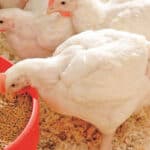
Evonik proves ecological advantages of its feeding solutions for swine and poultry
Evonik announced the results of comparative life cycle assessment certified by TÜV Rheinland in 2021. According to the assessment; modern feeding concepts based on amino acids reduce acidification, eutrophication and nitrogen-based emissions.

Arla builds dairy farm in Nigeria
Arla Foods will build a state-of-the-art commercial dairy farm in Northern Nigeria to support local milk production.

Save feed costs and reduce environmental footprint
Enzymes have long been recognised as a way to reduce environmental impact, improve animal performance, and lower the cost of feed. In general, the use of exogenous enzymes in animal nutrition has been fundamentally based on the destruction of antinutritive compounds, which increases the digestibility of nutrients and improves productive yields. This article discusses new enzyme application strategies to maximize feed cost savings, mitigate phosphorus excretion, and reduce carbon emissions.

Biovet obtains patent of Alquernat Nebsui in Colombia
Biovet announced that the patent of Alquernat Nebsui has been approved by the Industry and Commerce Superintendency of the Government of Colombia.

New gut health system solutions from Evonik
Evonik develops system solutions for the gut health of poultry and swine. Science-based new system solutions includs low-protein diets, amino acids, probiotics, services and consulting.

Practical tips for heat stress prevention in ruminants from Lallemand
Heat stress impacts the performance and well-being of all ruminants. This was first clearly demonstrated with large epidemiological studies in dairy cows (Burgos and Collier, 2011), indicating short-term production losses and longer-term welfare issues.