


During early life, piglets face many social, environmental and dietary stresses that can have an impact on their growth performance, as well as increasing the risk of digestive disturbances. However by including rice in weaning-piglet feed significant benefits have been noted. Here Karel Thurman, Commercial Director of Animal Nutrition at BENEO, discusses how feed producers can support piglet health and growth using rice ingredients, helping boost both long-term performance and farmer profitability.

Commercial Director of Animal Nutrition
BENEO
There are many challenges facing pork production at present, but despite these Robert Hoste, pig production economist from Wageningen University in the Netherlands, believes that global pig meat production could increase from 120 million metric tonnes (MMT) to 180 MMT by 2050i. However, this growth is dependent on optimising factors like production management, feed quality, swine health protocols and genetic stock.
PIGLET WEANING AND FEED TRANSITION IMPACT LONG TERM PERFORMANCE
According to recent data from Eurostatii, the number of breeding sows has remained fairly static recently, showing a small 0.5% decrease in number to 11,269,000 in Europe over the last year. However, over the years the average litter size of sows has increased and there has been a reduction in piglet birth weight, with an increased proportion of small piglets (less than one kg birth weight) in large littersiii. The long-term effects of a low piglet birth weight are higher morbidity and mortality, and lower growth ratesiv.
Weaning weight is also an important influencing factor of post-weaning growth, morbidity and mortality. According to a study by Main et al.v, “variation in weaning age can be a major contributor in live weight at the end of finishing, with weaning ages of 12, 15, 18 and 21 days compared and results showing that earlier weaning ages are associated with lower weights”. Notably when farmers practice ‘early’ weaning to achieve a quicker return to oestrus and improve fertility for the sow, piglet weight can be negatively influenced. So, the challenge is how to achieve the best performance for both the sow and her piglets if early weaning occurs.
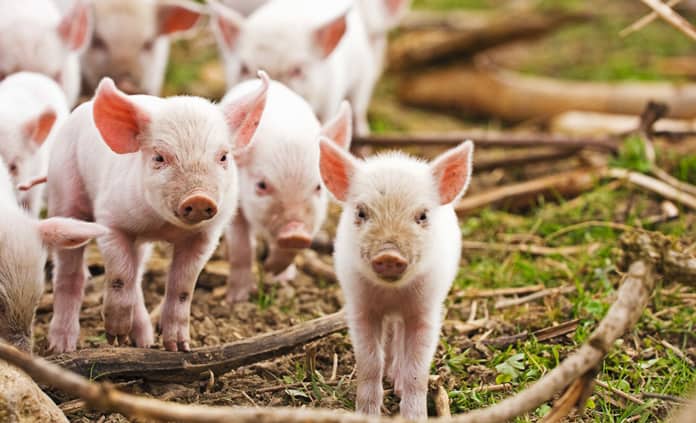 Like any young animal, piglets are sensitive to digestive disturbances. This is because their digestive tract and immune system are not fully functional and the intestinal microbiota not yet well established. Add to this the environmental stresses and contact with pathogenic organisms and it is no wonder that the switch from sow’s milk to solid pre-starter formula feed can trigger a range of digestive issues, impacting both piglet’s health and long-term performance (e.g. time to slaughter).
According to Professor Jana Seifert from the University of Hohenheimvi, the piglet immune system is not complete until six weeks of age. At this stage they have a more established microbiome, both in the gut and on the skin, and the immune system can tolerate a greater concentration of illness-provoking viruses and bacteria in the environment. By this time, it is possible to support piglets’ growth and digestive health by switching them to a rice-based feed.
 IMPROVING DIET DIGESTIBILITY AND PIGLETS’ GROWTH PERFORMANCE
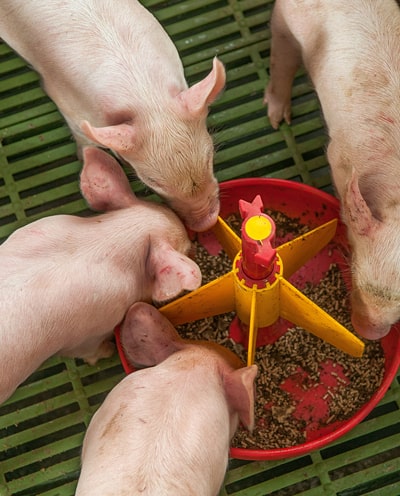
Compared to wheat, corn, tapioca and potato, rice has a very small starch granule size (2-8 µm) and presents a neutral taste that is palatable for piglets. The unique granular structure of its starch fraction allows rice flour to be a highly digestible ingredient, making it of particular interest for use in feed for sensitive or young animals such as piglets. While most cereal ingredients are further processed or cooked to gelatinise the starch and improve their digestibility, the rice flour can either be included raw or cooked, as in both states it is highly digestible.
In a digestibility trialvii, cooked corn was substituted with raw or cooked rice in feed for weaned piglets. The results showed a marked improvement in the average daily feed intake and apparent total tract digestibility for the piglets consuming the rice-based diets. Alongside improved digestibility, the research also showed that replacing corn with rice in piglet diets also significantly improved average daily growth and growth-to-feed ratio.
On top of benefiting from a highly digestible solution pig producers also gets the opportunity to finetune the speed of digestion via the choice of rice variety used in their piglets’ feed. According to researchviii, using a rice variety with higher amylose content – such as indica – lead to slower digestion rates than if a waxy rice variety with no amylose was used. The slower digestion rate also achieved lower blood glucose levels, a factor that was accompanied with improved piglet growth performance. The impact that rice flour can have on piglet development has been further analysed by BENEO in trialsix where standard commercial piglet feed was compared with one containing 6% BENEO rice flour. The results showed that piglets fed a diet containing rice flour had an average daily weight gain that was 7% higher than those on the standard feed.
In addition to its starch, rice flour contains a certain percentage of protein, that is an easily digestible source of plant-based protein with a well-balanced amino acid profile. Rice flour also has low ash and fibre levels (maximum 1% each). This is important as too higher ash levels in feed can degrade its quality and lead to intestinal disturbances. Additionally, high fibre content dilutes the energy and protein content of the feed, which is not optimal for maximising growth performance of production animals.
RICE-BASED DIETS SUPPORT PIGLET DIGESTIVE HEALTH
As well as promoting growth performance, the inclusion of rice in feed has been linked to a significant reduction in piglet removal ratex. It has also been shown to be supportive for piglets facing various diseases, including postweaning colibacillosis (PWC)xi, porcine intestinal spirochaetosis (PIS)xii and swine dysenteryxiii. Many hypotheses have been put forward as to why this is the case. These include the fact that the high digestibility of rice flour and its low fibre content both decrease the amount of undigested substrates that reach the large intestine and that could be available for fermentation and growth of E.coli or other pathogenic strains. Also, the low allergenicity of rice protein means it is well tolerated and generates low or even no digestive inflammation – which can be another noted cause of diarrhoea. Alternatively, there is the ‘Unknown Health Factor’ or ‘rice factor’, which is the unconfirmed component of white rice that may play a role in reducing the incidence of diarrhoea. None of these hypotheses alone, or in combination has – as of yet – been confirmed. Although research is ongoing to isolate why rice-based diets are effective in supporting healthy growing, day-to-day farming practices show that including rice in piglets diets may help with maintaining their digestive health and performance.
 RICE FLOUR IS AN IDEAL INGREDIENT FOR PIGLETS
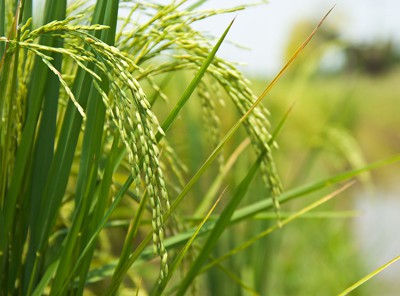
Rice flour is an ingredient of choice for piglet feed, as it is highly digestible, has low levels of both ash and crude fibre contents and is a source of high-quality protein. On top of its nutritional benefits, rice flour shows good palatability in piglets. Overall cereal taste is key in feed design and piglets show a preference for clean, soft flavours. In research conducted by Solà Oriol et al.xiv, rice-based diets were highly preferred by piglets compared to other cereal diets.
In addition, at BENEO, close attention is paid to the production process of rice flour to ensure the highest quality of the ingredient: from the transportation and control of the non-GMO raw material, to its controlled dry milling and sieving to ensure reproducible granulometry, and consequent stable digestibility.
In an era where antibiotics are banned from in-feed use, choosing the right selection of highly quality and functional ingredients is even more paramount to ensure a smooth weaning process and better animal performances. In contrast to wheat and maize, rice has not long been recognised as valuable ingredient for piglet formulation. However, thanks to greater insights and a better understanding of digestion kinetics and the benefits of including rice flour to improve growth performances, this has changed and now feed formulators across the world are increasingly seeing the value of incorporating rice flour into the diets of young piglets.
References:
ihttps://www.thepigsite.com/articles/eurotier-2021-whats-on-the-horizon-for-the-global-pig-industry
iiPig Population – Livestock Survey, Eurostat, December 2020
iiiBlavi, L.; Solà-Oriol, D.; Llonch, P.; López-Vergé, S.; Martín-Orúe, S.M.; Pérez, J.F. Management and Feeding Strategies in Early Life to Increase Piglet Performance and Welfare around Weaning: A Review. Animals 2021, 11,302. https://doi.org/10.3390/ani11020302
ivLópez-Vergé, S.; Gasa, J.; Farré, M.; Coma, J.; Bonet, J.; Solà-Oriol, D. Potential risk factors related to pig body weight variability from birth to slaughter in commercial conditions. Transl. Anim. Sci. 2018, 2, 383–395.
vBlavi, L.; Solà-Oriol, D.; Llonch, P.; López-Vergé, S.; Martín-Orúe, S.M.; Pérez, J.F. Management and Feeding Strategies in Early Life to Increase Piglet Performance and Welfare around Weaning: A Review. Animals 2021, 11,302. https://doi.org/10.3390/ani11020302
viAt a Hamlet Protein Feed Your Brain seminar in 2019, Professor Jana Seifert from University of Hohenheim – https://www.thepigsite.com/articles/clean-diets-help-build-immunity-and-gut-health
viiVicente, B.; Valencia, D. G.; Pérez-Serrano, M.; Lázaro, R.; Mateos G.G. The effects of feeding rice in substitution of corn and the degree of starch gelatinization of rice on the digestibility of dietary components and productive performance of young pigs. J. Anim. Sci. 2008, 86, 119–126.
viiiBENEO trial, Centralys (2006)
ixBENEO trial KULeuven (2011)
xChe, T. M.; Perez, V. G.; Song, M.; Pettigrew, J. E . Effect of rice and other cereal grains on growth performance, pig removal, and antibiotic treatment of weaned pigs under commercial conditions. J. Anim. Sci. 2012, 90, 4916–4924. The removal rate calculates the number of pigs removed daily from each pen because of mortality or morbidity.
xiMontagne, L; Cavaney, F.S; Hampson, D.J.; Lallès, J. P. ; Pluske J. R. . Effect of diet composition on postweaning colibacillosis in piglets. J. Anim. Sci. 2004, 82, 2364-2374.
xiiHampson, D.J.; Robertson, I.D.; La, T.; Oxberry, S.L.; Pethick, D.W. Influences of diet and vaccination on colonisation of pigs by the intestinal spirochaete Brachyspira (Serpulina) pilosicoli. Veterinary Microbiology 2000, 73, 75-84.
xiiiPluske, J.R.; Siba, P.M.; Pethick, D.W.; Durmic, Z.; Mullah B.P.; Hampson D.J.The incidence of swine dysentery in pigs can be reduced by feeding diets that limit the amount of fermentable substrate entering the large intestine J. Nutr. 1996, 126(11), 2920-2933.
xivSolà-Oriol, D.; Roura E.; Torrallardona D. Feed preference in pigs: Effect of cereal sources at different inclusion rates. J. Anim. Sci. 2009, 87(2), 562-570.
About Karel Thurman
Karel Thurman holds a degree in BioScience Engineering and Applied Economics. After working in livestock nutrition, he joined BENEO Group in 2008. He has been the head of the BENEO Animal Nutrition Department since 2013. In that position he is responsible for the sales of BENEO Products and CoProducts in animal nutrition markets worldwide. BENEO is active in Petfood, Aquafeed and Livestock Nutrition markets.