

A Nofima study led by researcher Antony Philip shows that applying zinc through coating rather than premix can significantly improve digestibility in salmon feed. The approach also reduces environmental losses and supports more efficient mineral utilization in aquaculture systems.
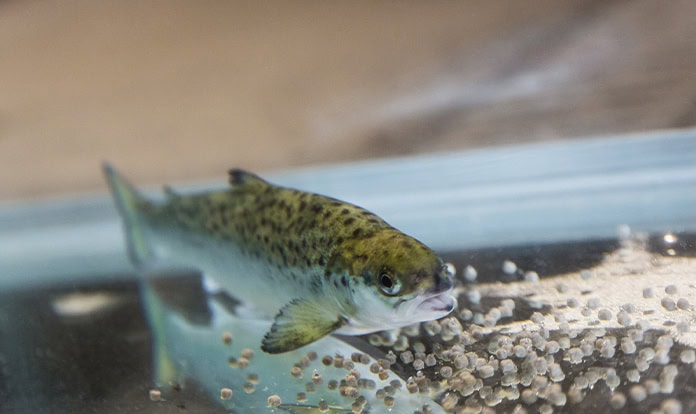

Source: Nofima
The Norwegian food research institute Nofima is calling for a shift in how zinc is added to salmon feed, as researchers highlight gains in nutrient uptake, fish health and environmental performance. “We should change the way we add the mineral zinc to salmon feed,” says researcher Antony J. Prabhu Philip. “The gains are better uptake and health in the salmon, lower emissions to the environment, and more circular use of sludge.”
Zinc is a mineral that fish need to stay healthy, for example to repair wounds. The drawback with today’s salmon feed is that the salmon retain a rather small fraction of the zinc, while large amounts are lost straight to the aquatic environment.
At the same time, regulatory pressure is increasing. The EU wants to reduce zinc emissions to the environment, and the salmon farming industry across Europe is struggling with stricter limits on how much zinc is permitted in the feed, according to Philip. Today the limit is 180 mg zinc per kilo of feed for salmonids and 150 mg/kg for other fish species. EFSA (the European Food Safety Authority) has proposed lowering the level to 150 mg/kg also for salmon feed.
According to Philip, improving zinc digestibility is key to meeting these requirements. “The solution is to increase the digestibility of zinc in the feed, so the salmon still gets enough zinc, even if the content in the feed is reduced,” he says.
BRIEFLY ABOUT THE FEED PROCESS
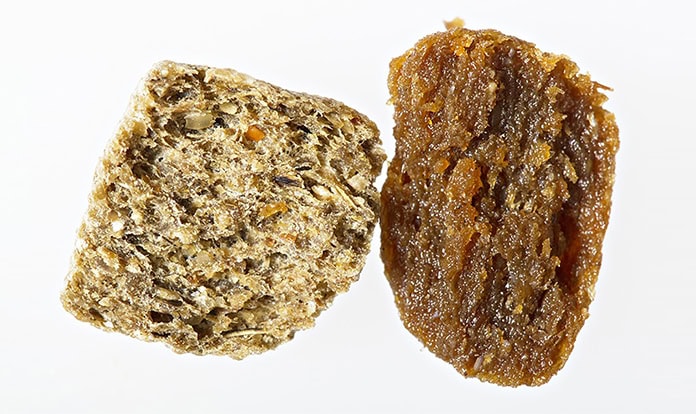
Today, zinc is added in a premix to the feed blend before it goes through an extruder (a machine that uses high temperature and high pressure) and is turned into pellets. A premix is a blend of micronutrients.
Normally, after the pellet comes out of the extruder, it is coated under vacuum with oils. The oil is then drawn into the pellet, and this allows additives that cannot tolerate high temperature to be included in the coating. Minerals are usually not included in this coating step because they tolerate high temperature well. However, they can still be trapped in rigid protein structures formed during heat treatment.
FROM PREMIX TO COATING
“When zinc binds in these structures, it hampers release and uptake in the salmon gut,” explains Philip. This is why he wants to move zinc supplementation in feed from the premix to the coating.
Philip has worked with mineral nutrition throughout his career. Educated in fish nutrition in India, he holds a dual PhD in mineral nutrition in fish from the Netherlands and France. He was then recruited to Norway to build knowledge on mineral nutrition in salmon. After ten years working on different zinc sources, environmental factors and the salmon’s own zinc physiology, he became convinced that the solution to low zinc uptake in salmon had to lie in the supplementation method.
At the Norwegian research institute Nofima, he was given the opportunity to test a new supplementation method at their Feed Technology Centre. This centre has the equipment and expertise to trial different feed formulations and processes.
TRIPLE WIN DOCUMENTED IN POST-SMOLT
At Nofima he therefore launched an internal project to develop the method and document the effects on post-smolt (salmon between 200 and 280 grams) kept in land-based tanks with seawater. Here he confirmed that when zinc was added in the coating, zinc digestibility increased by up to 15 percentage points. Zinc in faeces was reduced by up to 25 percent.
If the method is adopted, it will deliver a triple win:
• Better zinc uptake in the fish, which may benefit health.
• Less zinc is lost to the environment because more is absorbed by the salmon.
• Lower zinc concentrations in aquaculture sludge, improving the potential for utilisation and value creation from the sludge.
With the new project TOP-zinc, Philip and his colleagues at Nofima are taking the next step. They will identify which strategies give the best uptake, and how this affects fish health in long-term sea-cage trials. The project is carried out in collaboration with the Institute of Marine Research, Akvaplan-niva, MOWI Feed AS, Huvepharma NV and NIVA. It is funded by FHF – the Norwegian Seafood Research Fund.

Director at FHF
Source: Marius Fiskum, FHF
Renate Johansen, R&D Director at FHF, confirms that excess zinc in the environment can have a negative impact on the microscopic life around fish farms. “With climate change, both the need and the awareness that we must minimise our negative impact are increasing,” she says, and continues: “New EU requirements, which will probably mean that zinc levels in the feed must be limited, could cause deficiency diseases in salmon unless we find a good solution that gets more of the zinc from the feed into the fish and less out into the environment. The industry therefore has high expectations that the TOP-zinc project can help solve this challenge.”
PREPARING THE INDUSTRY FOR NEW RULES
The new method makes it possible to meet the salmon’s zinc requirements even if EU regulations change. The new regulation has not yet been introduced, and the researchers still have a lot of documentation work ahead of them. Nevertheless, Philip believes that feed companies and farmers stand to gain a lot by testing the method already now in smolt facilities.
“By changing the method, feed companies can help increase uptake, cut emissions and reduce feed costs. In TOP-zinc we are exploring options that can support decisions on zinc supplementation strategies in salmon feed, also in the grow-out phase at sea,” says Philip. “In the past, poor zinc digestibility was ‘only’ a biological issue, but now it is also becoming an operational challenge, and that makes the interest in finding solutions much greater,” he concludes.