


As a natural food source of protein, vitamins, and minerals, the algae play an important role in both human and animal nutrition. Thanks to the studies carried out in recent years, special structures such as phycocyanin and polysaccharide in the content of algae attract attention. In addition to its growth and immune effects, it has been reported that algae also have productivity-enhancing properties in animal products such as meat, milk and eggs in the field of livestock.

Founder
Marin Biotechnology
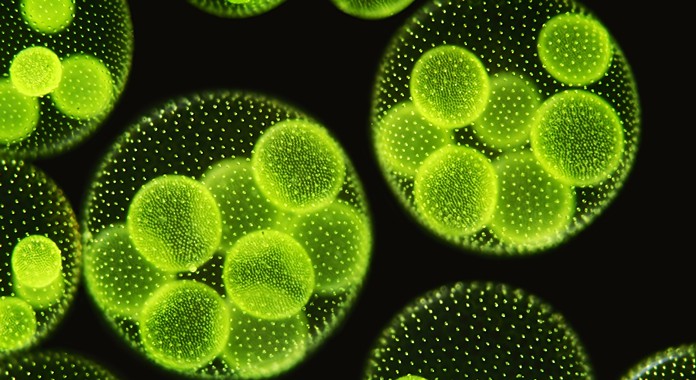
Microalgae are simple microscopic heterotrophic and/or autotrophic photosynthetic organisms that grow in the aquatic environment and can be in unicellular or multicellular structures. Microalgae, which can be found in prokaryotic or eukaryotic structures, can reproduce rapidly and can live even under adverse conditions thanks to their unicellular or simple multicellular structures. It is estimated that there are more than 50000 species of microalgae, but about 30000 species have been identified so far. There are many ingredients in the structure of microalgae, mainly lipids (4-55%), carbohydrates (6-57%), and proteins (10-63%). Some microalgae species have also been reported to contain more than 70% (on dry weight basis) lipids.
Microalgae, which generally live autotrophically in nature, perform photosynthesis using their pigments. By performing photosynthesis, they convert carbon dioxide, water and sunlight into biomass. However, depending on the specific characteristics of the species, they can also develop as heterotrophic and mixotrophic, apart from autotrophic conditions. Heterotrophic microalgae use organic carbon as a carbon source in dark conditions. Glucose, galactose, mannose, fructose, sucrose and lactose are commonly used as organic carbon sources in heterotrophic and mixotrophic growth. Bioreactors are used in industrial microalgae production. Microalgae cells are cultured in the laboratory and they are provided to grow and multiply in bioreactor tanks. When the microalgae reach the desired maturity and content values, they are dried by various methods (freeze and spray drying).
DIFFERENCES BETWEEN MACROALGAE AND MICROALGAE
Macroalgae are large aquatic photosynthetic plant-like organisms that are visible to the naked eye. They are often referred to as seaweeds. Whereas microalgae are small aquatic photosynthetic plant-like organisms that can only be seen under a microscope. They are often called phytoplankton. Thus, this is the main difference between macroalgae and microalgae. Besides this, another important difference between macroalgae and microalgae is that macroalgae are multicellular whereas microalgae are unicellular.
ALGAE AS A VALUABLE INGREDIENT
Problems such as food insufficiency and unbalanced nutrition that may be encountered with the increasing population push human beings to find alternative sources. In this context, algae attract attention with their high nutritional content and health benefits, as well as providing a sustainable food supply. And with these features, algae are also considered a candidate to be a functional food. Daily consumption of foods with the addition of functional ingredients produced by algae can improve health and reduce the risk of chronic diseases. Algae, which have been considered as food for centuries in Asian countries, have now been used in almost every region of the world, either directly as food, as a food additive or as a food supplement.
Similar developments are valid within the livestock sector. The feed raw materials used cannot meet the demand due to population growth, and their costs are increasing day by day due to climatic, ecological, logistical reasons. It is seen that global warming, wars, global crises and pandemic also contribute to these cost increases.
 SUSTAINABLE PRODUCTION: FROM WASTE MATERIALS TO VALUABLE FOOD…
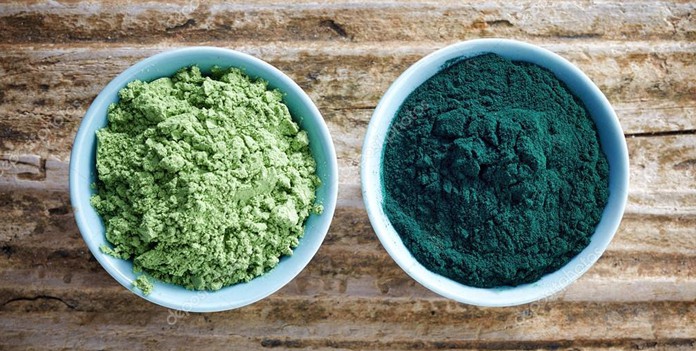
One of the main elements that make algae popular today is its compliance with the sustainable production model. Algae use waste materials as an energy source, converting them into valuable nutritional ingredients such as omega-3 fatty acids. Therefore, algae are one of the most important producers of the food chain. It seems possible for algae to be an important source in meeting the nutritional needs in the future, due to the fact that they can increase their weight 2-3 times in a day, their production is easy and economical, and there are no side effects. Metabolites such as fat and fatty acids, protein, carbohydrates (sugars), pigments, minerals, vitamins, sterols, antioxidants and bioactive polyphenols can be produced from algae, which show a very rapid increase in biomass due to their division and proliferation.
USAGE AREAS OF ALGAE
Algae have been used for various purposes in many areas from past to present. Algae are among the important resources used in many fields such as the food industry, medicine, pharmacy, agriculture, animal nutrition, waste treatment, cosmetics, and biodiesel production. Algae contain many bioactive molecules with wide biological activities such as antioxidant, antibacterial, antiviral and anticarcinogenic. Phycocolloids, which are used as active and auxiliary substances in pharmacy, are obtained from algae. In addition, antioxidant compounds contained in algae have an important place in the fight against free radicals, which are formed during the functioning of metabolism and are the initiator of some chronic diseases.
ALGAE AS AN ALTERNATIVE INGREDIENT IN ANIMAL NUTRITION
Nutrition plays an important role in the regulation of growth, development and physiological functions as well as being necessary for the maintenance of life. Depending on these factors in both human and animal nutrition, the demand for healthier and natural products is increasing day by day. In addition, the increasing world population, the decrease in agricultural resources and the variability of economic conditions have led to studies for the production of easy-growing, high quality and natural alternative additives. There is a reliable consumption of algae, one of the natural alternative additives, from the past to the present. These natural foods, which are sources of protein, vitamins and minerals, play an important role in both human and animal nutrition. Thanks to the studies carried out in recent years, special structures such as phycocyanin and polysaccharide in the content of algae attract attention. In addition to its growth and immune effects, it has been reported that algae also have productivity-enhancing properties in animal products such as meat, milk and eggs in the field of livestock. In addition, the use of algae in the fields of animal feed utilization and fertility improvement has also been demonstrated by studies.
Industrial algae are the main source of DHA, an omega-3 fatty acid. Living organisms (humans, animals, etc.) cannot synthesize these fatty acids in their bodies and they must be taken with diet. DHA is the most important fatty acid necessary for the development of the brain and retina, the need for this fatty acid is quite high, especially in the early stages of development.
 THE CONTRIBUTION OF ALGAE TO SUSTAINABLE ANIMAL PRODUCTION AND THE ENVIRONMENT
Algae are one of the most important producers of the food chain. It seems possible for algae to be an important source in meeting the nutritional needs in the future, due to the fact that they can increase their weight 2-3 times in a day, their production is easy and economical, and there are no side effects. Metabolites such as fat and fatty acids, protein, carbohydrates (sugars), pigments, minerals, vitamins, sterols, antioxidants and bioactive polyphenols can be produced from algae, which show a very rapid increase in biomass due to their division and proliferation.
¾ of the world’s fishmeal and fish oil is produced from pelagic species (anchovy, sardines, mackerel herring, etc.) obtained by fishing from the open seas. In order to ensure the sustainability of natural stocks, careful fisheries management such as seasonal quota determination and controlled fishing is implemented by the governments of the relevant countries. However, these implementations are insufficient and resources are rapidly depleted. 1 ton of microalgae is equivalent to 40 tons of wild sea fish.
Ruminants play a very important role in the food chain as they can utilize cellulose and non-protein nitrogenous compounds (PON) that other livestock and humans can partially digest or not digest at all. But ruminants also have some disadvantages. Methane, a greenhouse gas that is formed as a natural result of ruminal digestion in these animals, is both an economic and an ecological problem. Recent studies have shown that cows fed algae reduce their gas emissions by 70%.
PRODUCTION OF MICROALGAE IN THE WORLD
Microalgae have found the most application area as fertilizer in the Far East, and this is the oldest known area of use. There were such practices in the 12th century in countries with wide coasts such as France, Ireland and England. In recent years, America has been leading the studies on microalgae production. According to the microalgae production share of the countries in 2009, the United States of America is the leader in the sector with 47%. Most of the microalgae produced by the USA is used in the pharmaceutical and cosmetic industry. China ranks second with 21% algae production and uses all of the microalgae it produces in the food industry. Australia and New Zealand follow China with 14%. New Zealand, on the other hand, is the most efficient country using microalgae in terms of obtaining microalgae-based biofuels. These countries are followed by the European Union countries with 10%, Argentina with 6%, and Brazil with 2%.
Algae are considered to be feed additives thanks to the valuable fatty acids and antioxidant compounds they contain. Thanks to high omega-3 levels, algae are used as enriching nutrient in feed and food. However, it has been observed that animals consuming algae also cause significant changes in performance data. Microalgae produced at industrial scale today have different mechanisms of action according to strain differences, and their production amounts need to be increased in order to be used as raw material. Algae, which can be enriched with protein, are quite sufficient in terms of amino acid profile and digestibility.
THE FIRST AND ONLY MICROALGAE MANUFACTURER IN TURKEY: MARINBIO
Our company, which continues its activities in the market under the brand of “MarinBio”, carries out the production of cellular organisms using biotechnological methods and the sale of natural substances with added value to the feed, food, cosmetics and pharmaceutical industries, keeping human health at the forefront.
Many cellular species in nature and their contents have not yet been discovered. Thanks to the rapidly developing technological methods today, the benefits of these living species are investigated in detail and offered to the service of humanity. Marin Biotechnology continues its research activities in this direction with determination and aims to be one of the leading companies in its field in the world.
Marin Biotechnology, the first and only company in Turkey to produce 15 tons of microalgae per month on an industrial scale, supports sustainable feed production with Algome™ and Algome Grow™ microalgae products, which it produces independently from sea-based sources. We think that Algome™ product, which has a high lubrication feature, will attract attention by individuals who eat Vegan-Vegetarian diets due to its rich omega-3 & DHA profile in its oil content. We aim to increase the potential of algae with our R&D studies and domestic-foreign projects by making significant contributions to sustainable agriculture, animal husbandry and food with biotechnological methods.