


Trouw Nutrition’s latest research demonstrates that aligning calf feeding with natural metabolic pathways can improve health, welfare, and dairy performance. Early-life nutrition strategies offer farmers practical tools to boost growth and farm efficiency.
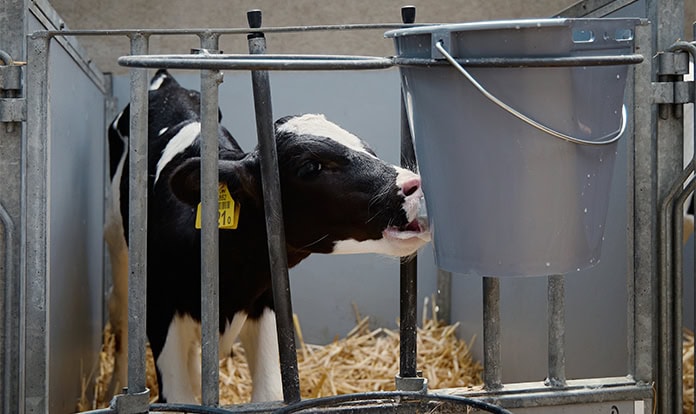
Emerging research from Trouw Nutrition and its LifeStart programme is prompting a shift in how the dairy sector approaches calf nutrition. Scientific insights shared in the white paper “From feeding to nurturing: The evolving science around calf feeding” reveal that metabolic programming during early life can support animal health and welfare, environmental sustainability, and long-term dairy performance. Research findings reveal how calf-centric nutritional inputs can influence lifelong metabolic pathways to nurture health, resilience, and productivity. Highlights extrapolated from the white paper follow:
EXPANDING METABOLIC PROGRAMMING INSIGHTS
The latest findings build on earlier LifeStart research that showed feeding milk volumes closer to a calf’s natural consumption patterns can positively influence development, reduce health issues, and support higher milk production later in life. A meta-analysis of 12 studies found that for every additional kilogram of average daily gain during the pre-weaning phase, dairy heifers produced approximately 1,500 kilograms more milk in the first lactation.
Expanding on these findings, pioneering research has found that the composition of nutrients, particularly the profile of specific fatty acids, can have an outsized effect on metabolic processes that set calves up for longtime performance. Research findings show that the balance and composition of fats in cows’ milk play a crucial role in gut maturation, immune development, and overall metabolic health.
MIMICKING NATURE TO SUPPORT CALF NUTRITION
Fats are a vital energy source, influencing calves’ organ development, gut function, metabolic activity, and immune readiness. While whole milk contains roughly 30% fat, many calf milk replacers (CMRs) are formulated with higher lactose levels and contain just 16%–20% fat. A growing body of evidence suggests that reducing lactose and raising levels of dietary fat closer to the levels found in cows’s milk may be beneficial in boosting calf health, reducing diarrhoea, and enhancing pre-weaning survival. Bovine milk is innately complex, including more than 400 different specific fatty acids that fulfil different functions. Butyric acid (C4:0), for example, is naturally found in cows’s milk and helps to initiate gut maturation. As the cow shifts from producing colostrum to whole milk, fatty acids like C4:0 support closure of the calf’s intestinal lining, strengthen the gut barrier, and send signals that trigger rumen development. Traditional approaches to supplying butyrate in salt forms have presented challenges that pose concerns for handling and the accumulation of excess minerals in animals’ tissues and the environment. LifeStart researchers explored tributyrin (TB), a compound containing three butyric acids. This approach more closely resembles natural milk fat as a means to restore C4:0 levels in CMRs and also avoids the handling and environmental drawbacks.
INSIGHTS FROM DOCTORAL RESEARCH SPUR INNOVATION
New insights into how milk composition affects physiological processes inside calves stem from the PhD work of Trouw Nutrition ruminant researcher Juliette Wilms. Her research assessed the effects of low-fat formulations on calf development and metabolism, the impact of fat composition in both whole milk and CMRs, and the potential to improve calf nutrition through a closer alignment with the fatty acid profile of natural milk. Wilms’ work indicates that increasing fat content and restoring C4:0 to more natural levels helps support metabolic health, early resilience, and more efficient growth in modern dairy systems. Her findings also inspired Trouw Nutrition to develop Sprayfo Ultimo, a calf milk formulated with the optimal level of fatty acids found in cows’ milk, to naturally signal healthy development and save farmers up to three weeks in rearing time.
IMPLICATIONS FOR DAIRY SUSTAINABILITY AND PROFITABILITY
As dairy farms face increasing pressure to improve productivity while meeting animal welfare and sustainability expectations, metabolic programming offers a promising approach. LifeStart research suggests that improved early growth can reduce the age of breeding, support earlier first calving, and lower rearing costs while contributing to healthier, more resilient herds.
“LifeStart research is helping us better understand how early nutrition influences long-term performance,” said John Doelman, Global R&D Director, Trouw Nutrition. “These insights support a more holistic approach to raising calves that considers physiology, welfare, and lifetime productivity.”
Eile van der Gaast, Global Product Manager for Calf Milk Replacers, added: “We are hearing from customers that these insights are helping them manage rearing strategies more effectively. By focusing on metabolic programming, farmers can improve herd performance and health outcomes in ways that strengthen sustainability and the economic performance of the farm.”
WHITE PAPER AVAILABLE
The white paper “From feeding to nurturing: The evolving science around calf feeding” is available for download and provides a full summary of the supporting studies and their implications for calf-rearing systems.