

Escalating climate pressure is forcing the livestock industry to rethink not only its production models but also its nutritional strategies. Enteric methane emissions from ruminants have moved to the center of climate policy due to their high warming potential in the short term. But can the fastest and most actionable impact on methane reduction truly be achieved through nutrition? Science-based approaches, diverse solution models, and field applications are making the answers to this question increasingly clear.
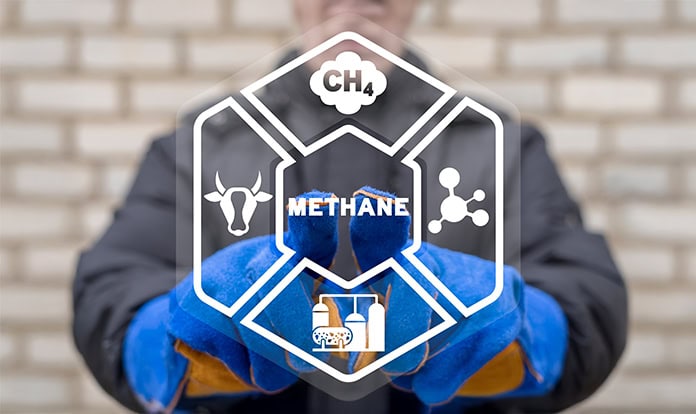
The animal production industry is at a critical turning point in the struggle against the global climate crisis and the pursuit of sustainability goals. Enteric methane emissions from ruminants, in particular, hold a significant share of global greenhouse gas inventories. Because methane possesses a very high global warming potential in the short term, its reduction has become a strategic priority for climate targets. However, controlling these emissions is no longer viewed merely as an environmental responsibility; it has also emerged as a strategy for maintaining efficiency in the face of regulatory compliance and tightening profit margins. For these reasons, methane reduction is now one of the top priorities for policymakers, consumers, and stakeholders across the animal production chain.

Global Sustainability Lead for Ruminants
Cargill
Jason Jeong-Hoon Kim, Global Sustainability Lead for Ruminants at Cargill, explains the impact of methane on the climate system and why it has become a priority target: “Methane, the second-largest contributor of greenhouse gases, originates largely from enteric fermentation of ruminants and is expected to rise with increasing global demand for beef and milk. Methane has a high global warming potential over short timeframes — more than 80 times stronger than carbon dioxide (CO2) over 20 years. However, methane breaks down relatively quickly in the atmosphere, with a lifespan of about 12 years. Its warming effect peaks early and then declines sharply, nearly disappearing within a few decades. CO2 doesn’t break down quickly; instead, it accumulates in the atmosphere. Even after 100 years, CO2 emissions still contribute to ongoing warming. Therefore, while CO2 reduction is essential for long-term climate stability, methane mitigation can yield rapid climate benefits, making it a strategic target for short-term climate action.”

CEO and Founder
CH4 Global
Drawing attention to the role of agriculture in global methane emissions, Steve Meller, CEO and Founder of CH4 Global, states: “Agriculture is the largest contributor of methane emissions globally, which is why methane emissions from animal production have become increasingly important to governments around the world. Enteric methane is the largest contributor.”

COO/CFO and Partner
Vetos Europe
Gianluigi Sgarbi, COO/CFO and Partner at Vetos Europe, highlights consumer expectations and the perceived environmental role of livestock farming: “Even if the dairy and beef cattle sectors play a marginal role in the carbon footprint pressure, as shown by precise and consistent numbers at world level, the consumers appreciate that their food is as sustainable as possible or, better, that improves the environment. Specifically, approximately 14.5% of global greenhouse gas (GHG) emissions are attributable to livestock production, with fluctuations depending on the continent considered, and therefore the system and level of development of its livestock farming. Of this 14.5%, a large portion derives from rumen methane emissions, which represent over 39% of the total (FAO 2023). Methane is considered a stronger pollutant than carbon dioxide even if this theorem is now changing with new metrics that consider the atmospheric lifetime, 10 years for methane versus 1000 years for carbon dioxide. However, if it is possible to make dairy and beef cattle farming more virtuous, it must be done, and reducing methane is an easy and effective way.”
STRATEGIES FOR REDUCING METHANE IN RUMINANTS
Today, the most widely accepted strategy within the livestock industry for mitigating methane emissions is focusing on nutrition. Ruminant feeding strategies stand out as a primary solution area due to their potential for rapid impact, feasibility in the field, and their ability to be integrated alongside production efficiency.
Pointing out that managing methane emissions from cows could be part of the solution to mitigate global warming in the short-term, Jason Jeong-Hoon Kim shares the following regarding methane reduction strategies: “Diverse strategies have been studied to reduce emissions of methane from ruminants, including increased production efficiency, nutritional modifications, genetic selection, vaccination, wearable technologies, and microbiome manipulations. Nutritional modifications and increasing production efficiency have been a significant focus in animal nutrition due to their rapid effects, benefits for farmers and the environment, and relatively easy application.”
Evaluating the topic within the context of regulations and practical applications, Steve Meller draws attention to natural solutions, stating: “Mitigation can be achieved simply by feeding ruminants natural solutions such as whole Asparagopsis. As a natural solution, governments don’t have to work to reverse worrying greenhouse gas emissions, they’re simply preventing the greenhouse gasses from being emitted in the first place. There are limits to the ability of any farmer to reduce emissions – whether it be solar panels or increasing energy efficiencies, carbon farming or sinks, or even electric farm machinery. However, introducing methane-reducing feeds, which are low-cost and highly-efficient, create a simple answer and enable farmers to meet increasingly-stringent regulations in different countries by tackling one of the largest sources of farm emissions.”
Reminding us that as the population grows, the demand for beef and dairy will continue to rise, Meller states that a remarkable 90% reduction in methane is possible. He explains: “To prevent agricultural emissions increasing, we can act now. Asparagopsis has been proven in various studies to reduce methane emissions by up to 90 per cent, by feeding cows Asparagopsis-based feeds consisting of as little as .5 per cent of their daily diet. This is a low-cost, natural solution which can support farmers to also earn a premium for providing low-emissions beef or milk to the market.”
Similarly, Gianluigi Sgarbi touches upon natural products, stating: “Some natural products are able to modulate methane emission at rumen level without impairing animal productivity and, much more important, animal welfare. Indeed, it is essential that this reduction is, first of all, achieved by natural products, and that it is not excessive, no more than 25%, to avoid compromising cattle health and performance.”

HOW DOES NUTRITION CONTRIBUTE TO METHANE REDUCTION?
Nutritional solutions for mitigating methane emissions consist of various strategies targeting different biological mechanisms. These solutions range from approaches that directly modulate rumen fermentation to those that indirectly reduce emission intensity by improving feed efficiency.
Jason Jeong-Hoon Kim classifies nutritional strategies according to their mechanisms as follows: “Nutritional strategies/solutions to mitigate ruminant-derived methane are primarily defined by their modes of action and can be grouped into three broad categories: hydrogen sinks, inhibiting the methane-forming enzyme, and reducing or suppressing methane-generating microorganisms. Because hydrogen produced during fermentation is a key precursor for methane, diverting hydrogen away from methane formation represents a central mitigation strategy. This can be achieved by increasing propionate, a hydrogen sink, through increasing production efficiency or by supplying alternative hydrogen sinks, such as nitrate. Once consumed by cows, nitrate is rapidly converted into ammonia, consuming hydrogen that otherwise supports methane-generation. This competitive mechanism has shown to reduce methane by up to 20% without negatively affecting productivity. The second approach targets methane-forming pathways by inhibiting enzymes used by methane-generating microorganisms. Compounds such as 3-nitrooxypropanol (3-NOP) and bromoform of red seaweed (Asparagopsis) can inhibit the enzyme with reported methane reductions of 30% or more. The third strategy aims to directly suppress methane-generating microorganisms by using essential oils, unsaturated fats, or vaccines. Although methane reductions are generally modest (5-10%) in limited trials, these approaches may offer simpler and lower-cost applications. Overall, careful long-term evaluation is essential to ensure animal health and performance.”
Approaching methane reduction in conjunction with productivity and animal welfare, Gianluigi Sgarbi explains appropriate nutritional strategies as follows: “Methane emissions must be related to productivity, and, therefore, efficiency is the key. For this reason, nutrition must aim to maximize animal welfare and, with it, productivity. To reach this target, the use of a balanced diet and high-quality and healthy feed are the primary objectives, which should then be complemented by strategies aimed at maximizing digestive efficiency. In this regard, influencing the various metabolic pathways in the rumen and adequately reducing methane production, which represents an energy loss, are proven to be successful strategies. In this regard, scientific research has provided not only specific recommendations for nutrition and formulation, but also truly effective additives, buffers, pre-, pro- and post-biotics, to which our pool of essential oils, tannins and bioflavonoids are now added due to the positive effects on rumen and animals’ health.”
Focusing on feed additives as a methane-reducing nutrition strategy, Steve Meller emphasizes Asparagopsis – the core area of expertise for CH4 Global – and states: “We have found the most effective solution to be whole, dried Asparagopsis, fed to cows at .5 per cent of their daily rations. Our work has focussed on how to deliver a product that ensures consistent efficacy, stability, palatability and ease of integration into existing farm operations. We have formulated our product Methane Tamer to stabilize the key components in Asparagopsis – especially bromoform – and to ensure cattle will eat the product as part of their daily rations. We started with cattle in feedlots, as humans control everything that cattle eat. Our product is designed so it can be easily mixed into daily rations. It can also be easy to control when fed to dairy cattle as part of their daily TMR. Our research has shown that Asparagopsis is palatable when dried and mixed with natural additives, such as molasses. We know that consumers do not want to buy food products – whether they be dairy or beef – if the cow has been fed chemicals or extracts. Farmers are also leaning towards feeding their cattle natural products that are chemical-free.”
COMPANY-SPECIFIC SOLUTIONS AND TARGETED MECHANISMS
Today, many companies have developed unique nutritional solutions targeting different biological processes for methane reduction. These solutions exert their effects through mechanisms such as rumen fermentation, hydrogen sink, microbial populations, and feed efficiency.
Jason Jeong-Hoon Kim summarizes the approach of Cargill ANH, which integrates methane reduction within a framework of animal performance, health, and safety: “Cargill Animal Nutrition & Health (ANH) addresses methane from ruminants through a combination of direct nutritional solutions and indirect productivity-driven strategies, under our ruminant sustainability platform called ReaCH4ReductionTM. The platform aims to reduce both absolute emissions and methane intensity while safeguarding animal health, performance and farmer profitability. The primary direct methane-mitigation solution ANH developed with years of research is SilvAir™, a patented feed material solution designed to function as an alternative hydrogen sink in ruminants. In a recent meta-analysis published in the Journal of Dairy Science, SilvAir has been shown to reduce methane emissions by up to 20% without adverse impacts on animal performance. In addition, SilvAir™ provides nitrogen and available calcium to a cow’s diet. ANH also supports indirect methane-intensity reduction through advanced nutrition optimization. Solutions such as Dairy MAX™ and Beef MAX™ balance dietary protein fractions and energy supply to reduce waste losses, thereby lowering methane emissions per unit of milk and meat produced. Across all approaches, ANH applies a holistic framework that integrates methane reduction with animal performance, health and safety. By linking mitigation to improved feed efficiency. milk and growth productivities, combined with nutritional and performance-driven strategies, ANH aims to deliver emission reductions while supporting sustainable, high-performing livestock systems for farmers and food companies.”
Focusing on bromoform, a prominent compound in methane reduction, CH4 Global stands out with an additive based on Asparagopsis, a red seaweed containing this compound. Steve Meller emphasizes CH4 Global’s product-driven approach: “CH4 Global grows Asparagopsis, which is a native seaweed to southern Australia. Our Methane Tamer product consists of whole, dried Asparagopsis. When fed to cattle at just .5 per cent of their daily rations, it has been found to reduce methane emissions by up to 90 per cent.
Methane Tamer prevents methanogenesis, the microbial production of methane in rumen. Our study results have shown that feeding Methane Tamer to feedlot cattle as part of their daily diet reduces the feed energy lost to methane production resulting in feed efficiencies, with feedlot cattle putting on more weight with the same feed. We are currently working on dairy and other trials.”
Vetos Europe was recently named the “Best Company in Carbon Reduction within the Beef Industry” at the World Finance Carbon Awards 2025. At the heart of this award was Anavrin, Vetos Europe’s flagship solution reported to provide measurable and verifiable methane reduction. Gianluigi Sgarbi focuses on this solution, stating: “Anavrin, a specific and carefully selected blend of essential oils, tannins and bioflavonoids, was developed to support and improve the ruminal functions, while modulating methane production. In particular, the essential oils contained in Anavrin play an important role in the kinetics and activity of certain bacteria, while tannins have positive effects on protein metabolism and inflammation, and bioflavonoids as antioxidants. By keeping a stable ruminal environment, enhancing the total volatile fatty acid production, especially of propionate instead of acetate, and controlling the growth of methanogenic bacteria, Anavrin improves ruminants’ zootechnical performance while curbing methane emissions. The findings, published in peer-reviewed scientific journals, consistently confirm that Anavrin reduces methane emissions from enteric fermentation (from 13% up to 23%), improves production performance in dairy cows (+3.2% to 3.8% in energy and protein corrected milk), and beef cattle (+5.5% to 6% in average daily gain), feed efficiency (by 6% to 8% in beef and dairy), and also health and welfare in some studies. Anavrin technology is grounded in rigorous scientific validation over the past several years by research institutions and universities through both in vitro and in vivo and studies, even under different production systems, animal types and environmental conditions. In all the studies methane mitigation was associated with an improvement in production performance, fundamental point to be really sustainable and in line with the demand of animals’ protein that will characterize the near future.”

HOW CAN METHANE REDUCTION EFFICACY BE MEASURED AND TRUSTED?
In recent years, many different solutions and product options for methane reduction in ruminants have been developed, and development continues. But how should the efficacy of these solutions be measured? How do we decide which standards and solutions to move forward with? Experts believe that methane reduction should be evaluated not just through emission outputs, but alongside animal performance, health, and economic returns. The need for measurement technologies and standardization is critical for reliability and widespread adoption in this field.
Jason Jeong-Hoon Kim emphasizes the importance of measurement and standardization: “Strong scientific evidence is the foundation of credibility. Controlled animal trials conducted under industry-relevant feeding and management conditions with reliable measurement technology, such as GreenFeed, supported by peer-reviewed publications, are essential for evaluation. Further, efficacy of nutritional solutions for methane reduction should be evaluated using a holistic, system-based framework that extends beyond single-point emission outcomes. Robust assessment must integrate biological validity, animal performance, health and safety, and economic return. Methane results should therefore always be interpreted alongside dry matter intake, methane yield and intensity, feed efficiency, and key performance indicators, to ensure mitigation doesn’t compromise productivity or health/safety. For large-scale continuous evaluation, a systematic on-farm measurement system should be developed for traceability and access to reliable activity data with standardized processes. ANH values science-backed proven solutions and underscores the need for greater standardization in how methane-reduction efficacy is assessed and reported to improve transparency. It enables fair comparison among technologies and accelerates adoption by farmers and food company partners.”
Steve Meller highlights the farmer’s perspective: “For any farmer, animal health is a priority. We are working with farmers on a daily basis to evaluate everything from weight gain to milk production volumes, feeding efficiencies and general animal health and happiness. No farmer would feed a supplement to their cows which would reduce milk volumes, affect taste, weight or the quality of their beef. So while emission reductions are important, they must be considered in the context of animal health and productivity. Any evaluation would need to focus on measures which result in positive outcomes for farmers, whether that be feed efficiencies – and therefore cost savings – or increasing milk volumes, weight gain, or increased marbling scores. Farmers need to be profitable, otherwise international industries and food chains will collapse. If we can support farmers to save costs through feed efficiencies, mitigate climate change, claim carbon credits or achieve a premium for their product due to their efforts to make a positive change, the farming industry should be able to prosper.”
Gianluigi Sgarbi expresses the need for scientific validation and certification as follows: “In the article “Feed additives for methane mitigation: Recommendations for testing enteric methane-mitigating feed additives in ruminant studies” published in the Journal of Dairy Science in 2024 (https://doi.org/10.3168/jds.2024-25050), clearly comes that there are only three technologies to evaluate scientifically the methane reduction, the respiration or metabolic chambers, the GreenFeed system, and the sulfur hexafluoride method, and these technologies must be used to certify the effect of a methane mitigator additive and thus his efficacy, also on the production performance. It is also important to emphasize that the results of scientific research must be welcomed with confidence by the production sector and related industries, especially when the additive’s effectiveness is further certified by programs such as the Verified Carbon Standard (VCS) for GHG reductions. Too often, both in livestock farming and in industry, further attempts to verify what is already established and proven effective only increase the risk of confusion and uncertainty. Research is an extremely difficult and complex field and therefore must be entrusted to researchers equipped with the appropriate skills and tools.”
CONCLUSION: EFFICIENCY, WELFARE, AND CLIMATE IN THE SAME EQUATION
The reduction of methane emissions in livestock is not merely an environmental responsibility; it has emerged as a field of transformation directly linked to efficiency, animal welfare, and economic sustainability. Nutritional solutions, with approaches centered on rumen biology, offer the potential to provide significant short-term climate gains while delivering actionable solutions without compromising production performance. In a world where the demand for animal protein continues to rise, science-based, measurable, and standardized nutritional strategies play a key role in ensuring the industry remains both aligned with climate goals and economically viable.
Reducing methane emissions does more than contribute to climate targets; it also offers tangible benefits in terms of animal health, productivity, and farmer profitability. Through natural feed additives, balanced rations, and innovative nutritional solutions, the livestock industry has the opportunity to advance toward a more sustainable and low-emission production model.