


INVE Aquaculture and Tianjin University of Science and Technology have inaugurated a joint laboratory to spearhead research in brine shrimp biotechnology and early-stage nutrition, strengthening the link between academic science and hatchery performance.
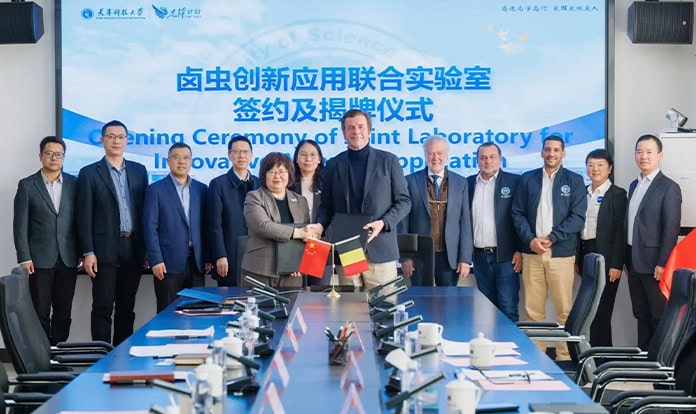
INVE Aquaculture and Tianjin University of Science and Technology (TUST) have announced the establishment of a Joint Laboratory for Innovative Artemia Applications, marking an important step in their long-standing collaboration in aquaculture research and innovation. The signing and inauguration ceremony took place on March 6 at the university’s Binhai campus in Tianjin, China.
The event brought together representatives from both organizations, including Patrick Waty, CEO of INVE Aquaculture, and Wang Min, Vice President of Tianjin University of Science and Technology. The ceremony was also attended by Patrick Sorgeloos, a pioneer in Artemia research, together with representatives from the Asian Regional Artemia Reference Center (ARARC).
The joint laboratory aims to strengthen collaboration between academia and industry by combining TUST’s expertise in aquatic science and brine biotechnology with INVE Aquaculture’s long-standing experience in Artemia biology, live food technologies and early-stage nutrition for hatcheries. The initiative will support research, technology development and the application of new knowledge to aquaculture production systems, with particular focus on Artemia and early-stage nutrition, key factors in hatchery performance.
Over the years, Tianjin University of Science and Technology and INVE Aquaculture have maintained close cooperation in areas such as product development, technical expertise and talent development. The new laboratory aims to further expand this collaboration, creating a platform for applied research, innovation and knowledge exchange.
The initiative also reflects INVE Aquaculture’s broader R&D approach, which promotes science-based innovation through strategic partnerships with leading research institutions worldwide. In China, this collaboration contributes to a local-for-local R&D strategy, supporting solutions tailored to the needs of the local aquaculture industry while strengthening international scientific cooperation.