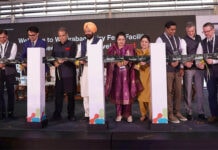


Industry experts gathered at the Bangkok Poultry Nutrition Forum to explore smarter feed strategies that can unlock broiler and layer performance through precision nutrition, genetics and data-driven formulation. The event, supported by Ecolex Animal Nutrition, brought together regional and international specialists.
 Ecolex Animal Nutrition, as Platinum Sponsor, put its One Health vision into action at the recent Advanced Poultry Nutrition Forum in Bangkok, supporting an event focused on pushing the poultry sector to its next performance level. Industry leaders, nutritionists and integrators from across Asia–Pacific gathered to examine how cutting‑edge nutritional science and smarter formulation can unlock the genetic potential of modern broilers and layers, closing the gap between expected and actual farm results. The programme brought together local, regional and international experts from poultry genetics companies, consultancy, academia, industry associations and allied suppliers. Among the many highlights from their presentations were:
GENETICS – THE FOUNDATION FOR SUCCESS
A forward‑looking presentation from Greg Hitt, Regional Technical Services Manager – Asia, Aviagen, highlighted the remarkable ongoing genetic potential of modern broilers. Based on current pedigree birds, of which commercial stock will reach the market in 4 years, he outlined projected annual gains in broiler performance under clean, disease‑free conditions through to 2029:
- Liveweight gain (@2.3 kg bodyweight): +40-45g
- Average daily gain (@35 days): +0.8-1.0g
- Mortality: -0.15-0.20%
- FCR: -0.020-0.025
- Breast and eviscerated yield: +0.1-0.15%
According to Hitt, to fully capture this genetic potential, producers will need to sharpen their focus on precision feeding and day‑to‑day stockmanship, ensuring that nutrition and management keep pace with the bird. This necessitates small, but regular changes to management practices to keep up with genetic progress.

SITUATIONAL NUTRITION: FEEDING THE MODERN BROILER
Peter Chrystal, Senior Poultry Nutrition Specialist at Aviagen, challenged delegates to rethink broiler feeding through the lens of “situational nutrition” – not just what birds should need on paper, but how they actually respond in the shed. Instead of assuming fixed requirements, he explained that broilers react to changing nutrient levels, and that response is constantly reshaped by temperature, health status, management and even feed form.
He reminded the audience that the real art of nutrition lies in predicting how birds will perform on a given combination of nutrients and intake, not simply in meeting specification tables. We may formulate diets in neat percentages, he said, but broilers don’t eat in percentages – they eat according to the constraints and opportunities we create for them. Bridging this gap between formulation and bird response, he concluded, is what separates a true nutritionist from a formulator, and it is far more difficult than it looks on a spreadsheet.
STARTING STRONG – PULLET NUTRITION FOR LONGER LAYING CYCLES
Dr Xabier A. Ugalde, Managing Director and Chief Nutritionist at H&N International, emphasized that business decisions around flock length and market goals must start with pullet nutrition. In long production cycles, pullet quality becomes even more critical, making it essential to get bodyweight, frame and bone mineralization right before the first egg. He highlighted the hybrid feed concept as a strategic replacement for traditional pre‑lay diets, supplying the nutrients needed for both continued growth and early shell formation so that hens produce well‑mineralized, saleable eggs from day one. For hot climates, he pointed to more digestible, lower‑nitrogen diets as a promising way to sustain intake and reduce heat and metabolic load.

NEW TOOLS FOR OLD PROBLEMS
As Platinum Sponsor, Ecolex stated that it was proud to support the thought-provoking presentation by Prof. Julian Wiseman, University of Nottingham: “Next Generation of Feed Additives—Where Are We Heading?” The main thrust of the presentation was removing reliance on feed antibiotics and proposing alternatives.
His presentation focused on managing rising raw material risks—mycotoxins, microbial contamination and anti‑nutritional factors—as supply chains shift toward more local by‑products. He identified humic acid as a key emerging tool, combining broad mycotoxin binding with antioxidant gut and liver support, and positioned enzymatic mycotoxin biotransformation as the next level in feed safety, offering rapid, irreversible detoxification without nutrient loss. Looking ahead, he emphasized multi‑enzyme blends plus innovative emulsifiers to match the complexity of non-starch polysaccharides and unlock more value from variable ingredients. Finally, he showcased the power of fatty‑acid systems—short‑chain fatty acids paired with alpha‑monolaurin and lauric‑acid—to deliver broad‑spectrum control of resistant bacteria, reinforce gut barrier function and provide a robust alternative to antibiotic growth promoters.
ASIAN DIVERGENCE
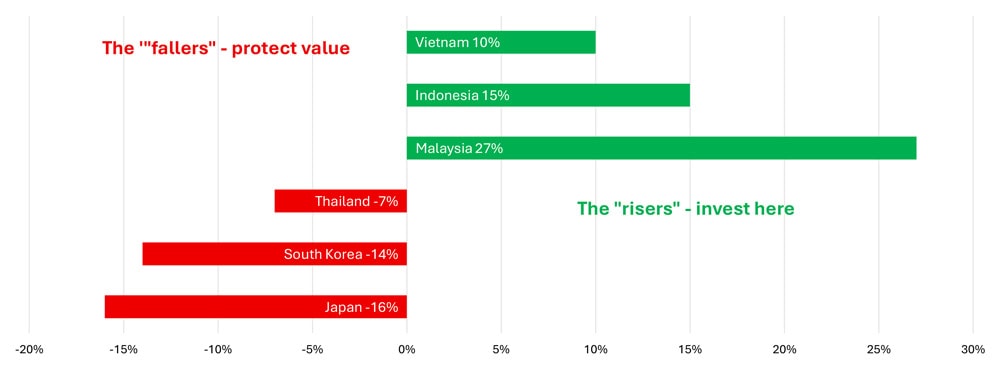
Gordon Butland, Director, G&S Agriconsultants warned that Asia’s poultry sector is entering a period of sharp divergence, with only modest overall growth masking very different country-level trajectories. Total regional chicken meat growth between 2025 and 2050 is expected to reach just 13%, meaning that success will depend less on “being in Asia” and more on precisely targeting the right markets and business models. The “fallers,” he noted, still matter strategically but require a focus on protecting value—through efficiency, product segmentation and disciplined capacity management—rather than chasing volume growth at any cost.
DATA-DRIVEN FORMULATION
Ian Mealey, Product Marketing Director for Formulation at Datacor, showcased a powerful new way to build diets—probability‑constrained optimisation. Instead of relying on gut feel or “safety margins,” this approach factors in real‑world ingredient, weighing, sampling and lab‑analysis variation to hit nutrient targets with a defined level of confidence. The result?
- Least‑cost recipes that still meet nutritional specs with a chosen probability for each nutrient
- Clear sensitivity and ingredient value insights for smarter buying and spec setting
- Far less guesswork in matrix changes and product decisions—using data you already collect
FARM DATA ACQUISITION & DATA MINING
According to Jon Ratcliff, Managing Director, Innotuc, almost all key data required to evaluate a trial or formulate for optimal bird performance—such as real time phased bodyweight, and real time FCR are missing.
For example, automating liveweight data using platform bird scales or vision-based cameras gives daily liveweight curve, weight distribution (not just average), growth rate (daily gain) and uniformity (CV%). Put simply, data mining turns raw farm data into actionable nutritional intelligence—helping optimize feed formulation, improve performance, and reduce waste in real time.