
Virtual fencing is redefining how producers manage livestock, offering a flexible, tech-driven way to guide herds, expand grazing access, and save time in the field. As adoption grows, the technology is helping operations of all sizes work more efficiently and use their land to its full potential.

US Managing Director
Nofence
Across the country, producers like Stephanie Mathis are finding that smarter grazing starts with flexible boundaries. On her goat and cattle ranch in Santa Barbara County, California, Stephanie found that virtual fencing technology “opens up new ways to protect the land while improving productivity.”
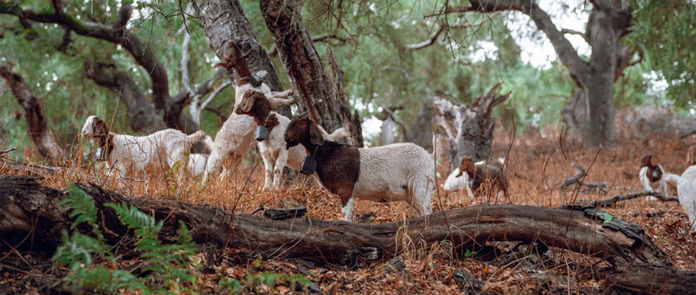
Using GPS-enabled collars, her goats clear invasive weeds and restore forage across her family’s 14,000-acre ranch, improving both productivity and ecological health. The flexibility of virtual fencing also allows Stephanie to target overgrown areas, remove dense underbrush, and reduce fuel buildup, all of which help her lower wildfire risk, protect feed value, and rehabilitate the land.
Her success reflects a growing shift in livestock management as producers adopt tools that increase farm efficiency and adaptability. Virtual fencing is one of the most transformative of these innovations, helping farms of all sizes save time, improve pastures, and turn underused acres into productive ground. The technology enables producers and ranchers to draw and adjust digital boundaries right from their phones, eliminating the need for physical fencing and maximizing the value of every acre.
Nofence, an innovator in virtual fencing technology, has helped make this approach accessible at scale for producers and ranchers—including Stephanie. Built by farmers for farmers, Nofence’s system is giving producers across 48 states more flexibility and control over how herds move and graze.
That flexibility isn’t just about convenience; it’s paying off in measurable ways.
SMARTER GRAZING, LOWER COSTS
What began as a new way to manage cattle, goat, and sheep herds has quickly become a proven strategy for utilizing resources more efficiently. For a typical 50-head cattle operation, Nofence users report annual savings of $4,000 to $6,500, including reduced hay and fuel use, lower labor needs, and fewer equipment hours.
In Idaho, rancher Tyson Coles notes that “Virtual fencing has completely changed how I manage my cattle. I can create smaller paddocks, rotate them efficiently, and extend my grazing season by up to two months. That’s $8,000 saved in hay costs this year alone.”
These savings add up quickly, especially as producers can extend grazing seasons and integrate managed grazing to optimize forage.
TECHNOLOGY BUILT FOR THE FIELD
The efficiencies gained through virtual fencing come from thoughtful engineering. Nofence’s virtual fencing systems use solar-powered collars that communicate through existing cellular networks, meaning no new base stations or towers are required. Each collar emits an audio cue as animals near a virtual boundary, followed by a mild pulse if needed. Within just five to seven days, livestock learn that the tone alone marks the limit, allowing producers to manage herds confidently and remotely.
Built for the realities of ranching, the solar-power collars’ nine-month battery life and five-year warranty make them durable across every U.S. ecosystem. The system is also easy to use through the Nofence mobile app, where ranchers can draw, move, or close off paddocks with just a few taps.
Beyond convenience, virtual fencing gives producers unprecedented visibility into herd movement and behavior. Real-time data from the collars provides early insight into animal health and behavior, enabling earlier detection of potential health or stress issues. With Nofence’s new HerdNet™ system, updates are now faster and more synchronized, ensuring smoother transitions and more precise control for rotational and adaptive grazing management. By minimizing handling and routine fence maintenance, virtual fencing helps reduce stress and promote natural herd movements, leading to improved herd performance.
GRAZING REVENUE AND PASTURE PERFORMANCE
Virtual fencing delivers more than cost savings and animal welfare benefits; it also opens the door to stronger returns from grazing. By giving producers the flexibility to access new or marginal land, it helps turn underused acres into productive ground, increasing grazing revenue and improving overall land performance. Coles highlighted that “With Nofence, I’ve avoided $35,000 in fencing costs and opened up 100 additional acres for grazing.”
Virtual fencing helps producers and ranchers get more value from every acre. For Stephanie, “the idea of managing both goats and cattle with virtual fencing is exciting.” The system is helping her and other producers to rotate herds efficiently, balance grazing pressure, and improve pasture condition. Well-managed grazing pays off by reducing reseeding, soil damage, and supplemental feed requirements.

EQIP COST-SHARE SUPPORT
For producers ready to explore the technology, cost-share assistance is available through the USDA’s Environmental Quality Incentives Program (EQIP). The program typically covers 50–75% of approved conservation practice costs, with historically underserved producers eligible for up to 90%.
Virtual fencing systems like Nofence are eligible under NRCS Conservation Practice Standards 382 (Fence) and 528 (Prescribed Grazing), which reward rotational and adaptive grazing approaches that protect soil and forage resources. More than ten states have already published standards or payment rates to provide cost-share for virtual fencing, and several additional states have shared that they expect to make virtual fencing eligible to producers for cost-share under EQIP starting in FY26.
As more producers take advantage of EQIP cost-share opportunities, virtual fencing is moving from innovation to everyday use. With more states recognizing its value, our team at Nofence is hopeful that flexible, tech-enabled grazing will soon become a standard tool for managing working lands nationwide.
MAKING EVERY ACRE COUNT
Across operations large and small, virtual fencing is helping producers transform challenges into opportunities. By helping producers restore pastures, protect resources, and operate more efficiently, Nofence is advancing a future where productivity and stewardship go hand in hand. And as stories like Stephanie’s show, this technology isn’t just a tool for modern livestock management, it’s a bridge between innovation and stewardship, giving producers the flexibility to get more value from every acre.
About Alex Bell
As the U.S. Managing Director at Nofence, Alex Bell is leading the company’s expansion and customer growth across the United States. With over 20 years of leadership in ag-tech and sustainable agriculture, he is working to bring Nofence’s virtual fencing technology to more operations, helping producers improve efficiency, flexibility, and sustainability in livestock management.