


Sponsored by Dairy Data Warehouse (DDW)
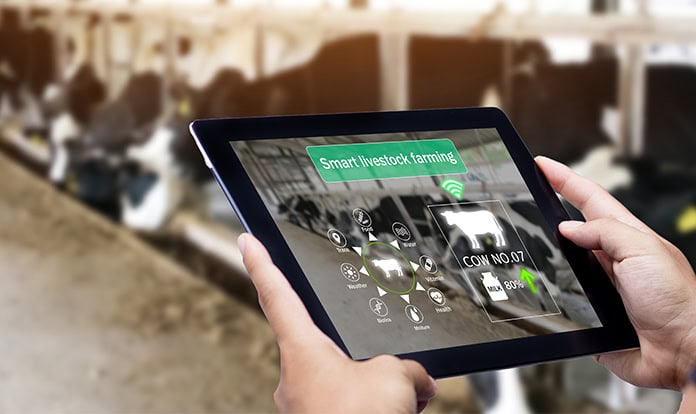
The transformation of animal nutrition from efficiency to sustainability is gaining momentum through systems powered by big data and artificial intelligence. In the face of raw material variability, climate-induced stress factors, animal health risks, and narrowing profit margins, feed formulations are no longer managed through static recipes; instead, they are driven by real-time data, predictive models, and integrated analytics. While big data infrastructures consolidate formulation, feed processing, animal performance, and environmental indicators, AI makes sense of these complex datasets, making correlations visible and enabling predictive insights for more accurate and timely decision-making.
By Derya Gulsoy Yildiz
The animal nutrition industry stands on the brink of a technology-driven revolution, moving beyond traditional methods. For many years, animal nutrition strategies based on static formulations, average nutritional values, and historical performance data are now giving way to data-driven, predictive, and dynamic decision systems. Uncertainties in the supply and pricing of basic feed ingredients, climate-related stress factors, increasing risks related to animal health, sustainability pressures, and ultimately shrinking profit margins are among the main drivers of demand for data and artificial intelligence-based solutions.
BIG DATA AND THE ANIMAL NUTRITION INDUSTRY
The concept of big data refers not only to high-volume data but also to the interpretation of data produced from different sources, at different speeds, and in different formats. In the animal nutrition industry, this translates to a complex data ecosystem extending from the field to the feed mill, and from the farm to the processing plant. Effective management of this ecosystem offers critical advantages for risk management and sustainable growth.
Luis Valenzuela, Precision Services Manager at dsm-firmenich Animal Nutrition and Health, explains the importance of big data and its role in the industry: “Over the past decade, animal nutrition has entered a new phase of transformation. What was once driven by static formulations, fixed nutrient matrices, and retrospective performance analysis is increasingly becoming a predictive and insight driven discipline. The rapid growth of data availability across the animal production system has made big data management essential for delivering value, managing risk, and supporting sustainable growth.”

Dairy Data Warehouse
“Big data in nutrition is now essential rather than a nice-to-have,” says Armin Pearn, Head of Insights at Dairy Data Warehouse (DDW), focusing on how big data shapes daily operations in the industry. Pearn shares the following: “Big data provides consultants with accurate, up-to-date herd insights, helping them make better, faster decisions that improve both efficiency and sustainability on farm. Here are some examples of how big data is shaping day to day in animal nutrition and feeding: We combine individual cow data with TMR information to support ration formulation tools. We can enable direct integration of herd inventory, group, and production data with mixer wagons to automatically adjust feed loads. We can deliver milk yield and feeding efficiency metrics per cow, helping nutritionists fine tune diets to optimise milk output and cost. We can provide fertility performance and health data per cow, for consultants to identify key improvement areas and support the farm with targeted feeding strategies. By connecting and standardizing these data streams, DDW turns information into measurable performance gains across feeding.”

Datacor
Ian Mealey, Product Marketing Director – Formulation at Datacor, touches upon the impact of big data on efficiency: “Quality data has always been fundamental to the success of the animal production industry. However, livestock production now operates within far tighter margins and far greater complexity than ever before. This impacts feed manufacturers who continue to balance volatile ingredient markets, evolving regulations, sustainability targets, animal health outcomes, and the growing demand for precision nutrition. To remain competitive and efficient, decisions can no longer be made in isolation or based on a narrow slice of information. “Big data” offers the opportunity to increase efficiency and productivity through improved data collection, verification and analysis.”
All these approaches position big data not merely as a pile of information, but as a strategic resource that adds value to the industry when managed correctly.
WHICH DATA, WHICH RESULTS?
Animal production systems involve numerous variables and data points. Collecting these data is no longer an option but a prerequisite for remaining competitive in today’s conditions. Formulation and raw material data, feed processing parameters, animal health and performance indicators, climate and environmental conditions, economic indicators, and sustainability metrics are all parts of this ecosystem.
Ian Mealey summarizes this multi-layered data structure and its interrelationships: “Across the value chain—from raw material sourcing and additive selection, to ration formulation, feed processing, and on-farm performance—each stage generates data that influences decisions and outcomes. Ingredient variability affects nutrient availability and ingredient value; processing conditions impact pellet quality and nutrient integrity; feeding strategies influence gut health, efficiency, and emissions. When these data streams remain disconnected, opportunities are missed and risks increase.”

dsm-firmenich
However, in an environment with such vast amounts of data, one of the most important issues is ensuring data integration between different processes and evaluating the existing data flow holistically. Luis Valenzuela explains: “Livestock production today operates under increasing complexity. Feed ingredient quality is more variable, disease pressure continues to evolve, climate related stressors such as heat stress are intensifying, and producers face constant pressure to improve feed efficiency while meeting stricter sustainability and regulatory expectations. Data collected at isolated points in the system provides limited value. The real opportunity lies in integrating data across processes.”
Why is it important to integrate data from different processes and interpret it as a whole? What are the gains? Mealey elaborates on these benefits: “By collecting and connecting data across these processes, the industry gains visibility into how formulation decisions translate into real-world performance. For example, understanding historical ingredient quality trends allows nutritionists to adjust formulations proactively rather than reactively. Linking formulation data with production and animal performance data enables more accurate assessments of feed efficiency, health outcomes, and cost control. Big data also supports consistency and trust. When data is centrally managed and validated, organizations reduce dependency on spreadsheets and informally held knowledge. This creates a shared foundation for collaboration between nutritionists, operations, procurement, and management. Ultimately, comprehensive data management and analysis based on proven principles enables the industry to move from static formulation toward adaptive, insight-driven nutrition strategies that improve profitability, animal welfare, and sustainability.”
Valenzuela also highlights the holistic perspective: “By connecting information from crop production, feed ingredient sourcing, formulation, feed processing, animal health, farm performance, and environmental metrics, nutritionists and producers gain a holistic view of the production system. This integrated perspective enables earlier risk detection, more targeted nutritional interventions, and better economic decisions. In this context, data becomes a strategic asset that supports faster, smarter, and more confident decision making.”
HOW SHOULD DATA BE EVALUATED AND INTERPRETED?
We know that collecting data alone is not enough; big data gains value through its capacity to bring fragmented data together to make it meaningful. But how can we collect accurate, consistent, up-to-date, and comparable data? And how do we ensure that big data creates decision support instead of decision confusion? In short, what solutions do we have to make sense of data, analyze it, and integrate it into decision processes?
This is where powerful tools that complement human expertise, such as Artificial Intelligence (AI) and Machine Learning (ML), come into play. At dsm-firmenich Animal Nutrition and Health, this integrated approach is made possible through the global Precision Services foundation. Luis Valenzuela describes their solutions: “Precision Services brings together digital solutions such as Verax™, Sustell™, Farmtell™, and additional analytics platforms to help producers transform complex datasets into practical and value creating decisions. Our global infrastructure aggregates data from multiple sources including feed mills, farms, laboratory analyses, production records, and external datasets. Advanced analytics, machine learning, and predictive modeling are applied to convert this information into AI driven decision support. Rather than focusing solely on historical performance, these tools help predict risk, quantify impact, and guide proactive actions. Verax™ for example, supports poultry production, combining health, nutrition, and performance data to identify emerging challenges and optimize interventions. Farmtell™ focuses on dairy and beef systems, helping ruminant producers improve efficiency, resilience, and productivity by integrating farm-level data. Sustell™ spans the entire value chain across species, from crops to processing plants, enabling robust life cycle assessment insights. In parallel, mycotoxin risk management analytics use predictive models to warn of contamination risks in crops and livestock feed, creating awareness and enabling timely mitigation. The common denominator across these solutions is not data volume, but the ability to turn data into decisions that deliver measurable business outcomes.”
Dairy Data Warehouse (DDW) is a Netherlands-based company with over 12 years of experience helping the global dairy industry unlock the full potential of farm data. Armin Pearn describes the solutions offered by DDW as follows: “We turn complex dairy data into actionable insights that drive more sustainable and profitable farming. We connect directly to herd management and on-farm systems, processing and standardising millions of data points daily into a consistent, high-quality dataset. This allows dairy professionals whether in nutrition, genetics, animal health, or cow monitoring to work with accurate, comparable information across all their herds. In practice, if a consultant supports 20+ herds using different software systems, DDW removes the complexity by collecting, cleaning, and harmonising all that data in the cloud. The result is a seamless data flow into the consultant’s own tools, enabling faster, smarter decision-making on farm.”
Ian Mealey shares Datacor’s data infrastructure and the process of transforming data into usable insights: “At Datacor, our data infrastructure is designed to turn complex, high-volume data into practical, usable insight. Our formulation platforms—Ara® Formulation, Brill® Formulation, and New Century—serve as the central intelligence layer for feed formulation operations. Ara is our flagship formulation platform built to manage formulation data at scale. It consolidates ingredient libraries, nutrient matrices, constraints, costs, regulatory rules, and historical formulations into a single, structured environment. This allows nutritionists to work from a trusted data source, that enables enterprise-wide visibility and control while reflecting local specifics. We apply advanced optimization methods to evaluate thousands of formulation possibilities simultaneously, identifying solutions that best balance cost, performance, and constraints. Powerful tools help nutritionists identify patterns and opportunities that would be difficult to detect otherwise. This enables better, more confident decision-making.”
PRECISION NUTRITION AND SUSTAINABILITY WITH BIG DATA AND AI
Precision nutrition and sustainability are among the most critical agenda items in the animal nutrition sector. Unlike traditional feeding approaches, precision nutrition aims to feed animals according to their individual needs—based on variables such as age, yield level, physiological state, health, and environmental conditions—rather than herd averages. At the core of this approach lies a decision-making process based on accurate, continuous, and meaningful data.
It is impossible to implement precision nutrition practices effectively without real-time data. When large datasets collected through sensors, automated monitoring systems, and digital records are processed with AI and advanced analytical tools, they enable the dynamic optimization of rations, increased nutrient utilization efficiency, and the prevention of performance losses.
Sustainability offers a broader framework that encompasses the precision nutrition approach. Through accurate feeding strategies, feed conversion rates increase while waste nutrients, emissions, and the environmental footprint are reduced. This contributes both to increasing production efficiency and limiting the environmental impact of livestock production. Big data and AI-supported precision nutrition practices are playing an increasingly decisive role in establishing the balance between performance enhancement and environmental sustainability.
“Big data and artificial intelligence are redefining precision nutrition,” says Luis Valenzuela from dsm-firmenich, explaining: “Instead of relying on average assumptions, nutrition strategies can increasingly be adapted to real production conditions, accounting for disease challenges such as coccidiosis, environmental stressors like heat stress, antimicrobial resistance pressure, and economic constraints related to feed cost volatility.This shift is also fundamental to sustainability. Sustainability starts at the farm. Highly efficient production systems, where animals convert feed effectively and reach their performance potential, inherently have a lower environmental footprint per unit of product. Once efficiency is optimized, environmental impacts can be significantly reduced.”
Valenzuela exemplifies this through Sustell™, dsm-firmenich’s life cycle assessment (LCA) platform: “Data plays a central role in achieving this. With solutions such as Sustell™, producers can assess their footprint across 19 standardized environmental impact categories, including but not limited to carbon emissions. By quantifying Scope 3 emissions and linking them to purchased animals, rations, farm operations, and resource use, producers gain transparency and independence. This enables credible sustainability reporting, supports compliance with frameworks such as CSRD, and creates opportunities for product differentiation and value creation.”
Armin Pearn focuses on the impact of big data and AI on efficiency and sustainability. Pearn says: “Farmers have been collecting farm data for decades enabling them to take strategic, data-driven decisions together with their consultants as well as to drive operational implementation via scheduled tasks and to do lists. Simple benchmarking against standard thresholds or data from a group of like minded farm colleagues allowed to identify key areas for improvement. Today, thanks to DDW and other companies specializing in farm data processing, a large amount of data is transferred and stored in the cloud allowing the creation of big data sets, which in turn can be used to train artificial intelligence models. Artificial intelligence, once trained on big data from thousands of dairy farms and hundreds of thousands of animals, has unmatched capabilities in detecting anomalies in individual farm and animal data sets. This allows us to predict with unprecedented accuracy future milk production, inventory evolution, conception probability, feed conversion rate, disease events or losses due to heat stress events. Knowing with a high degree of certainty what the future will bring if the farm continues the current path can drive changes in farm strategy in time to ensure future optimization of farm profit and environmental footprint. For example, predictions of future inventory in a dairy farm allow to determine the number of replacement animal conceptions that need to be produced in any given month while the remaining open animals can be inseminated with beef semen driving reduced heifer raising costs, increased sales from calf sales as well as significant reduction of the environmental footprint of the given farm operation.”
Emphasizing that big data and AI are fundamental to achieving meaningful progress in precision nutrition and sustainability, Ian Mealey shares: “Precision nutrition depends on understanding not just nutrient requirements, but how animals respond to feeds, environments, and management practices. Data affecting feed formulation, such as ingredient quality, markets, production data and past feeding outcomes, can now be collated and analyzed more efficiently than ever before. It is vital to ensure its quality and apply appropriate analysis. Then, in combination with application of the latest nutrition research and genetic advances, it offers the prospect of more precise, consistent outcomes. By aligning nutrient supply more closely with animal needs, such as optimizing to more precise amino acid requirements to reduce over-formulation, feed manufacturers can improve feed conversion while lowering costs. These gains also support sustainability goals through appropriate ingredient usage, reduction of nutrient excretion and overall environmental impact.”
Mealey points to the latest version of Datacor’s software, Ara Formulation: “Ara Formulation allows nutritionists to model these strategies confidently, balancing economic and environmental objectives while maintaining animal health and performance.”
A LOOK TO THE FUTURE: WHERE WILL BIG DATA AND AI TAKE LIVESTOCK?
Big data and AI have begun to radically transform decision-making processes in the livestock sector. In the future, it is assumed that nutrition, health management, and production planning will be based on real-time analysis and predictive models rather than historical performance data. AI-supported systems will enable the dynamic adjustment of rations by predicting nutrient needs at the individual animal level, while early detection of disease risks will prevent losses. At the same time, increasing feed conversion rates, optimizing resource use, and reducing the environmental footprint remain primary goals. There is a widespread view that this transformation will move livestock toward a more efficient, traceable, and sustainable production model.
Armin Pearn from DDW shares his future predictions based on practical field experience: “We work with 2 of the 5 major feed companies. Given the size of these companies and their complex business structure, it took them some time to drive digital transformation and change throughout their organizations. After a cautious start, we have seen a massive increase in the use of dairy data services from feeding companies over the last few years. And we expect these companies to use this momentum to leverage the power of AI on the data infrastructure and digital culture they have created going forward. As more farms use digitized feeding equipment, our AI models will be able to have an increasing amount of context not only of a given farm (i.e. dry matter content, feed consumed) or feeding group level but going forward also increasingly on animal level. This will drive feed conversion optimization and productivity on farm and in turn make dairy farms ever more sustainable.”
Ian Mealey from Datacor explains his expectations for the future: “The most successful feed businesses are those that place importance on forward planning and aligning ingredient purchasing policy to their feed production, so they can be more in control of their circumstances. Big data and artificial intelligence will enhance their ability to achieve this by encapsulating more data with a deeper understanding of the meaning of that data and the potential within it. For those who have been less able to take this approach, these new capabilities will offer the chance to fundamentally shift from a reactive discipline to a predictive and adaptive one.”
Touching on the balance between theoretical knowledge and real-world applications, Mealey continues: “It is possible that the formulation process will increasingly move toward continuous optimization informed by real-world performance data. However, this should be approached with caution. Appropriate analysis of data will advise the best course of action – there are many variables within the system, from ingredients through to efficiency of feed usage on farm. Utilizing new approaches to data analysis will help companies understand the complexity and variability in the real world and make the best decisions accordingly. It is important to balance the theoretical with the practicalities and implications of application in the real world. Artificial intelligence will help capture feedback and accelerate learning from the success or otherwise of previous decisions. Many in the industry attempt to do this now but, due to complexity and lack of data or time, these attempts can be based on subjective measures or gut-feeling. Big data and the application of artificial intelligence offers a step-change improvement in this process with the potential for better outcomes for those who can take advantage.”
“Looking ahead, big data and artificial intelligence will further transform animal nutrition from a formulation focused activity into a continuous optimization process,” says Luis Valenzuela from dsm-firmenich, sharing his predictions: “Closer integration between feed mills, farms, genetics, and processing will allow nutritional strategies to evolve dynamically as conditions change. Decision cycles will shorten, confidence in data supported recommendations will increase, and collaboration across the value chain will deepen. Nutritionists and producers will move from reacting to problems toward anticipating them, reducing risk while unlocking new efficiency gains.”
Finally, Valenzuela notes that AI is used to empower human expertise rather than replace it: “Ultimately, big data and artificial intelligence are not about replacing expertise. They are about amplifying it. By combining scientific knowledge, digital intelligence, and practical experience, the animal production sector can build systems that are more resilient, more efficient, and more sustainable, while delivering tangible value to producers and the broader food chain. We at Precision Services believe in making the invisible, visible and the visible valuable.”
Like Valenzuela, Mealey focuses on the empowering aspect of AI: “There is no doubting the imminent transformation. The transformation will not be about replacing human expertise, but amplifying it—giving nutrition professionals better tools, deeper insight, and greater confidence to make decisions that support efficiency, sustainability, and long-term resilience. It will give nutritionists time to spend on value-added activities such as ingredient evaluation, further improving efficiency and profitability for all involved.”
SUMMARY OF DIGITAL TRANSFORMATION IN ANIMAL NUTRITION
Big data and AI are moving animal feed formulations away from static recipes and into real-time, predictive, and adaptive systems. In the face of ingredient variability, increasing sustainability pressure, and narrowing profit margins, data-driven decision-making is no longer an option but a fundamental element of remaining competitive. Big data infrastructures and AI-supported analytics make it possible to optimize feed efficiency, animal health, and environmental performance together while increasing formulation accuracy. In the coming period, businesses that effectively adopt these digital approaches—which empower human expertise—are expected to lead in developing more resilient, transparent, and sustainable production models.