

EFSA’s latest annual report confirmed that the vast majority of food of animal origin in the EU complies with official limits for veterinary medicinal product residues. Overall, non-compliance levels in 2024 remained consistently low across all control programmes.
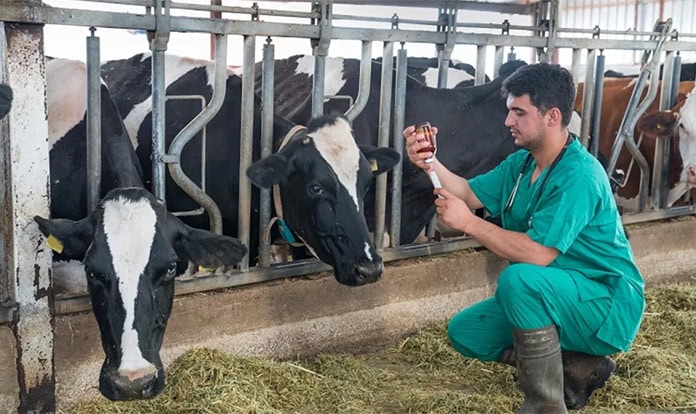
According to the European Food Safety Authority (EFSA), its yearly report on residues of veterinary medicinal products in live animals and animal products shows continued high compliance with official limits in 2024. The EFSA review looks at the presence of authorised and banned pharmacologically active substances and their residues in food derived from animals, including meat (farmed and game), dairy products, eggs, and honey. The types of substances covered are hormones (including steroids), beta-agonists (muscle-soothers), antibacterials, anti-parasitic drugs, and insect repellents, among others.
THE LATEST DATA FROM 2024
The data in this year’s report, covering 2024, came from the EU Member States[1], plus Iceland and Norway. Overall, the percentage of non-compliant samples was 0.13% (629 of 493,664 samples), which is comparable to the previous year, when non-compliance was 0.11%
The report features a division of the samples under three plans:
· National risk-based control plan for production in the Member States – 0.16% non-compliance
· National randomised surveillance plan – 0.22% non-compliance
· National risk-based control plan for third-country imports – 0.2% non-compliance.
THE EU’S APPROACH
According to the 2025 Eurobarometer on food safety, ‘antibiotic, steroid or hormone residues in meat’ is one of the top food safety concerns for over one-third (36%) of EU citizens, albeit 3 percentage points less than in the previous survey in 2022.
EFSA’s report supports risk managers in the European Commission and in Member States to evaluate the effectiveness of control plans in limiting the presence of these substances in the EU food chain. It also helps determine follow-up measures to further reduce non-compliance in subsequent years.
FIND OUT MORE
EFSA noted that the comprehensive dataset for the report will soon be made available through the EFSA Knowledge Junction. This open repository is designed to enhance transparency, reproducibility, and the usability of evidence in food and feed safety risk assessments.
[1] In accordance with the Agreement on the withdrawal of the United Kingdom of Great Britain and Northern Ireland from the European Union and the European Atomic Energy Community, and in particular Article 5(4) of the Windsor Framework (see Joint Declaration No 1/2023 of the Union and the United Kingdom in the Joint Committee established by the Agreement on the withdrawal of the United Kingdom of Great Britain and Northern Ireland from the European Union and the European Atomic Energy Community of 24 March 2023, OJ L 102, 17.4.2023, p.87) in conjunction with section 24 of Annex 2 to that Framework, for the purposes of this Regulation, references to Member States include the United Kingdom in respect of Northern Ireland.