


Today, the key requirements of feed formulation optimization are twofold: adequate nutritional content and minimum possible cost. Their importance will continue in the future, but a third dimension – environmental impact – is becoming increasingly important. By working on feed formulation, we can positively influence, up to 80% of the total environmental footprint…

Sales Manager – Performance
Ingredients & Solutions
BASF Animal Nutrition

Senior Manager – Global
Sustainability Metrics
BASF Animal Nutrition
The environmental impact of livestock farming is a global challenge that requires immediate and scientifically proven solutions. Public institutions at national and state level, supermarket chains and consumers are demanding a reduction in the environmental impact of livestock farming. The first step towards this change is not only to recognize the environmental impact, but also to quantify it accurately.
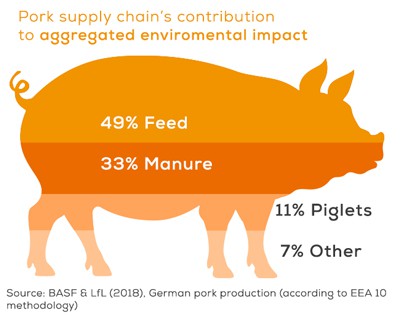
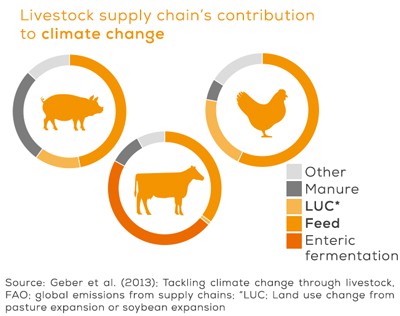
Today, we know that feed is the dominant factor in the total environmental impact of animal production. By working on feed formulation, we can positively influence, directly or indirectly, up to 80% of the total environmental footprint, since manure and nutrient excretion is closely related to diet.
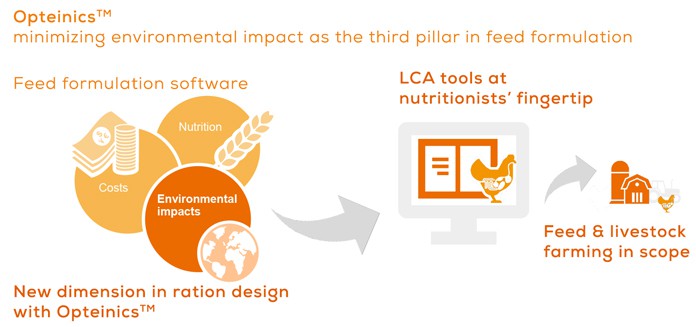
Today, the key requirements of feed formulation optimization are twofold: adequate nutritional content and minimum possible cost. Their importance will continue in the future, but a third dimension – environmental impact – is becoming increasingly important.
 This is the challenge that has motivated BASF Animal Nutrition to develop Opteinics™, an innovative new digital platform that enables feed producers and livestock producers to assess and improve their environmental impact, directly at the feed formulation stage. Making use of Life Cycle Analysis (LCA), a proven scientific method that assesses the environmental aspects and potential impacts associated with a product, Opteinics™ provides full transparency on the environmental impact of both the feed and its value chain. The key difference of Opteinics™ lies in its integration with feed formulation software: thanks to its direct link, time-consuming manual input of hundreds of data is avoided.
With a simple interface, any nutritionist can understand the environmental impact of the feeds they design and adapt their formulations to minimize impact, easily achieving double-digit percentage reductions in total environmental impact, in many cases without an increase in feed cost. In essence, Opteinics™ democratizes access to sustainability knowledge.
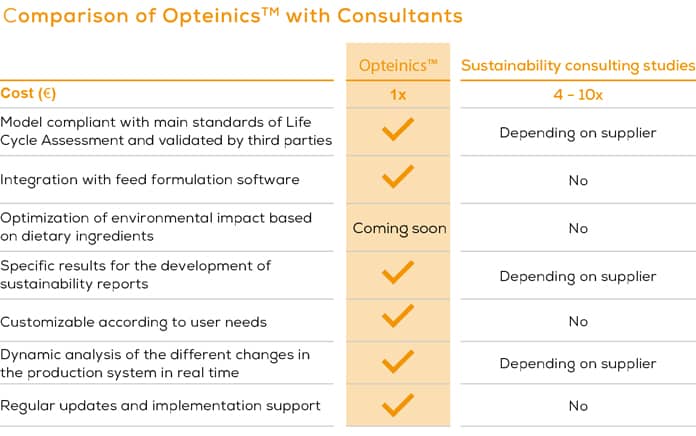
 Opteinics™ users benefit by simplifying data collection and calculation for environmental reporting, innovating their portfolio with sustainable solutions and boosting corporate image.
Many companies can thus avoid cost-intensive consulting studies or in-house sustainability experts.
With Opteinics™, the user can calculate the environmental impact in 10 different categories, such as climate change (carbon footprint), water use or eutrophication (nitrogen and phosphorus emissions into the environment), to name a few.
Opteinics™ takes all relevant factors into account. This includes all main variable-scope inputs for feed, farm and harvesting such as feed ingredients and origin, transport, utilities, manure management and on-farm animal performance parameters.
Opteinics™ can be connected to any formulation software via a standardized interface. At the end of 2020, BASF Animal Nutrition announced a first-to-market partnership with Adifo, which provides BESTMIX® feed formulation software and serves an important part of the market. This partnership enables the development of advanced functionalities and direct integration with BESTMIX® software. In addition, BASF is exploring the synergies of Opteinics™ with other solutions in the market and open to new collaboration opportunities.
 To ensure the quality and reliability of Opteinics™, BASF is conducting independent verification of the tool according to leading environmental impact calculation standards, including ISO standards and FAO’s Livestock Environmental Assessment and Performance Partnership (LEAP) guidelines. Opteinics™ also follows with European Product Environmental Footprint Category (PEFCR) standards and uses impartial databases such as the Global Feed LCA Institute (GFLI) and IPCC (International Panel on Climate Change) emission factors among other globally recognized sources. In this way, the user can be assured that there is no conflict of interest when using our tool, and that neutral data of the highest quality is provided.
Additionally, BASF continues to update and improve Opteinics™ every day to make it the reference tool for calculating and reducing the environmental impact in animal production. Among these developments, it is worth highlighting the planned 2022 Opteinics™ launch of optimization capabilities that will enable automated on-demand least-impact formulation design, with capabilities directly connected to the formulation software used. In practice, this means moving beyond least-cost formulation to least-cost formulation with the lowest environmental impact.
 Our vision for the future with Opteinics™, focuses on digital integration of the value chain for farm-to-table transparency, including:
• Sensor technology and digitization
• New business models, services and ecosystems
• Transparency and traceability
• Real-time environmental footprint
BASF Animal Nutrition, therefore, recently acquired Cloudfarms, a leading software company in livestock farm management, traceability and precision livestock farming with a focus on swine production. Cloudfarms enables producers around the world to continuously improve the efficiency and productivity of complex operations. Farmers can manage, track and analyze production data from daily operations in real time. BASF Animal Nutrition is also targeting to integrate the power of Opteinics™ within Cloudfarms. Gaining insights with digital solutions by connecting and analyzing data across the value chain helps increase efficiency, animal vitality and sustainability.
About Dr. Alvaro Gordillo
Alvaro Gordillo is Sales Manager for Performance Ingredients & Solutions at BASF Animal Nutrition, responsible for Spain and Portugal. There he is in close contact with customers, knows their needs and the market requirements. More sustainable processes in animal production are becoming increasingly important nowadays. Alvaro Gordillo holds a PhD in Chemistry from the University of Alcalá in Spain. He joined BASF in 2012 and has held several positions within R&D and Sales in Germany and Spain.
About Tom Battagliese
Tom Battagliese joined BASF in 2012 and is currently Senior Manager – Global Sustainability Metrics for BASF Animal Nutrition, collaborating with the business and stakeholders to measure and improve product and enterprise sustainability along the entire value chain he helps to create more sustainable feed and animal protein. Tom holds a Master’s Degree in Energy and Environmental Policy with a concentration in Sustainable Development from the University of Delaware and is currently the Chair of the Technical Management Committee & Board Member for the Global Feed LCA Institute (GFLI).