


Young animals have quite immature lipid digestion capabilities because their digestive organs may not be fully developed. To overcome this, nutritionists have started looking into the use of exogeneous emulsifiers to allow young animals to effectively digest and absorb lipids and converting that to energy for growth and production.

Technical Specialist
Manuka Biotech
Fats and lipids contribute a big part to the total energy provided to productive animals in their day-to-day energy expenditure. However, there are several factors that could limit lipid digestion and absorption, one of these is the age of the animal. Young animals (new-born piglets or broilers less than 14 days of age) have quite immature lipid digestion capabilities because their digestive organs may not be fully developed. To overcome this, nutritionists have started looking into the use of exogeneous emulsifiers to allow young animals to effectively digest and absorb lipids and converting that to energy for growth and production.
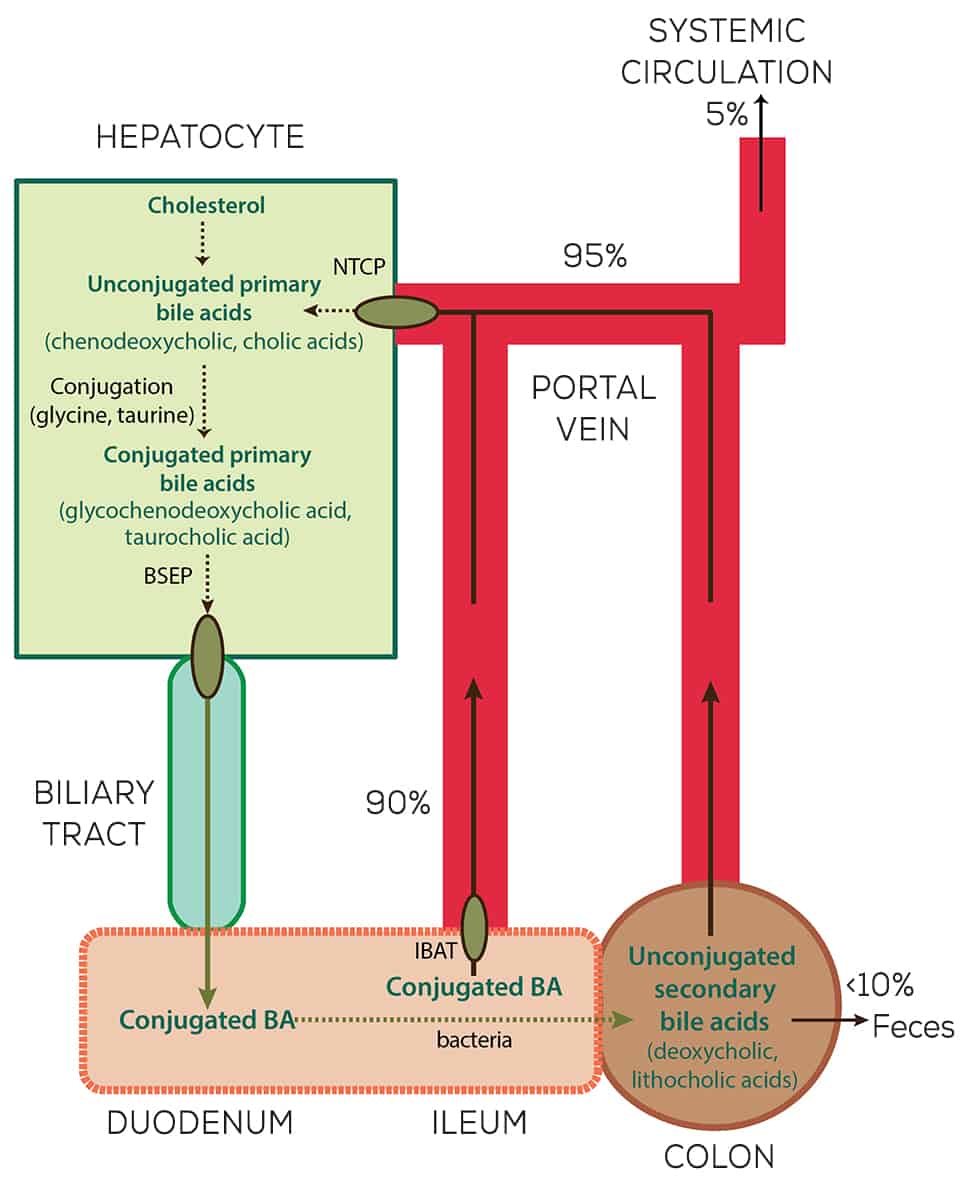
The body produces a natural emulsifier – bile acids. These are synthesized from cholesterol in the liver, and secreted into bile duct, and into the small intestines where they play a part in facilitating the absorption of dietary lipids and fat-soluble vitamins. Most bile acids are reabsorbed in the terminal ileum and returned to the liver via the portal vein. The bile acids are up taken by the hepatocytes and subsequently transported into bile which completes their enterohepatic circulation (Figure 1).
Exogeneous bile acid can be obtained as a by-product from animal production from avian, swine and bovine sources to be used as feed additives. Avian and swine bile acid mainly consists of cholic and chenodeoxycholic acid, whereas bovine bile acid mainly consists of cholic acid and deoxycholic acid (Sheriha et al., 1968). Although exogeneous bile acids from different sources could have a different amino acid conjugation, pathway of bile acid recycling including bacterial deconjugation in the ileum allows for unconjugated bile acids to return the liver and be re-conjugated in the hepatocyte.
Bile Acid Functions:
1. Facilitates fat and fat-soluble vitamin digestion and absorption
a. Bile acids promote fat digestion in 3 steps:
i. Emulsify fats. Bile acids are biosurfactants which allows fat to be emulsified into micro droplets. This greatly increases the total surface area of fat, increasing its availability for digestion by lipase.
ii. Activates lipase. Bile salt-dependent lipase cleaves triglycerides when combining into micelles to hydrolyse fat.
iii. Promote fat absorption. Only the formation of bile acids and fatty acids, could facilitate fatty acids to reach to surface of small intestinal villi and be absorbed into the lacteals.
iv. Emulsifiers only acts in the first step in fat digestion, which only emulsifies the fat into micro droplets. However, bile acids can further activate the lipase and promote the digestion of fat.
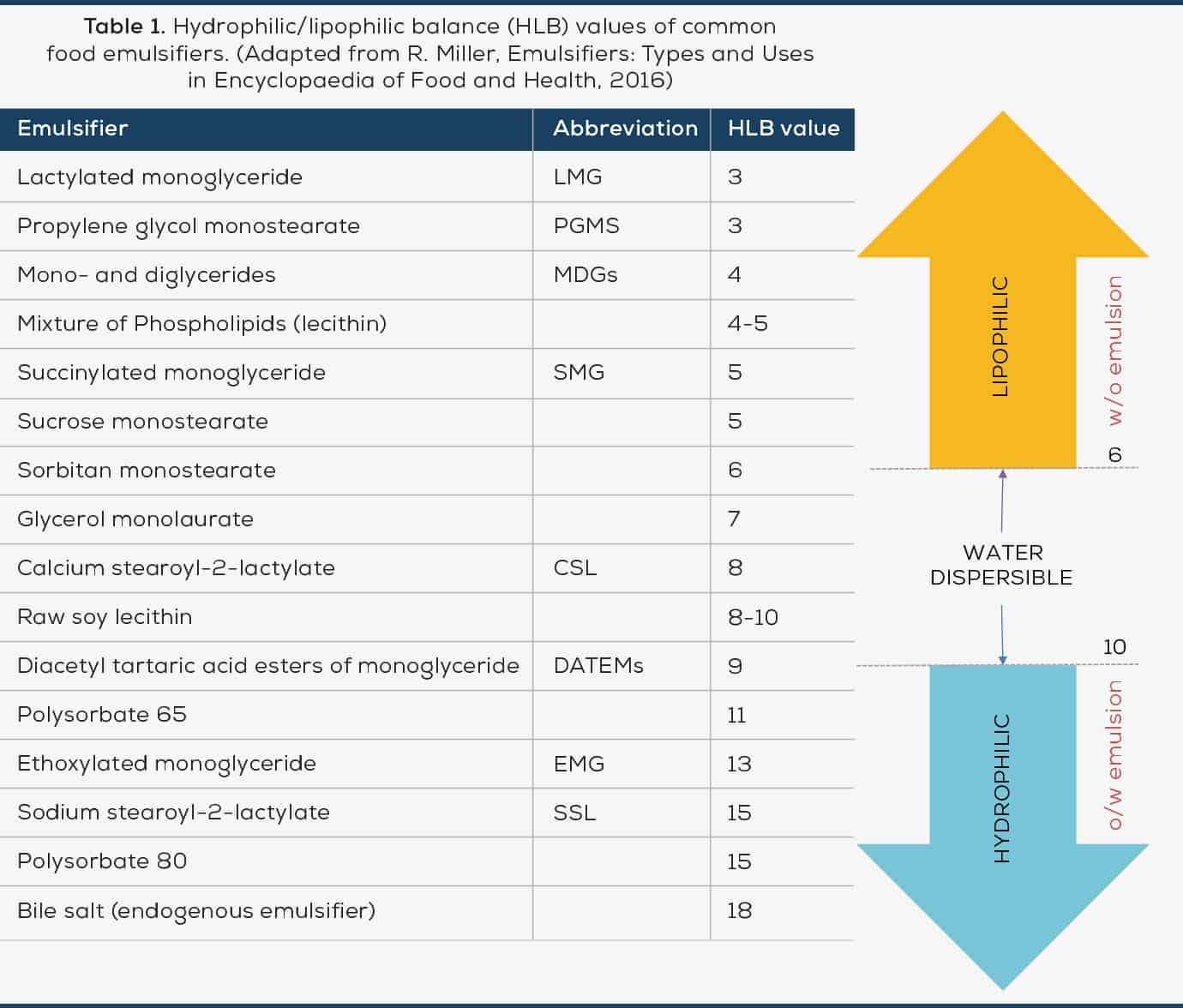
HLB of Bile Acid
Comparing the emulsification capabilities of bile acid and other emulsifiers using the HLB or Hydrophilic-Lipophilic Balance value developed by Griffin to formulate stable emulsions.
The HLB value of lipophilic emulsifier is lower than that of hydrophilic emulsifier. The intestinal track is an aqueous environment, where hydrophilic emulsifier would have a stronger emulsification effect and a higher HLB value represents better emulsification effects on oil. The HLB value of bile acids is about 18, which has excellent emulsification capabilities compared to other emulsifiers (Table 1).
2. Regulates bile acid homeostasis
a. Bile acid activates FXR (Farsenoid X Receptor) and TGR5 (G-protein coupled bile acid receptor) which leads to inhibition of bile acid synthesis through various pathways.
b. Conjugation of bile acids with taurine and glycine is mediated by the enzymes bile acid coenzyme A (CoA) synthetase and bile acid-CoA amino acid N-acetyltransferase which is controlled by FXR.
c. Bile acid can induce transcription of the bile salt export pump (BSEP) through FXR which facilitates bile flow and excretion of waste compounds from hepatocytes.
d. Bile acid regulates intestinal bile acid uptake by regulating the expression of sodium-dependent sodium taurocholate co-transporting peptide (NTCP) and apical sodium dependant bile salt transporter (ASBT) via FXR dependent mechanisms.
e. Protects Liver: Bile acids activate FXR, which induces suppression of de novo synthesis, enhances conjugation and detoxification, and increases efflux both across the canalicular as well as the basolateral membrane thereby preventing hepatic accumulation of bile acids and liver damage.
3. Modulates glucose homeostasis
a. Activation of FXR by bile acids reduces gluconeogenesis and increase glycogen synthesis in the liver therefore lowering blood glucose levels.
b. Activation of FXR by bile acids also regulates insulin sensitivity.
4. Improves energy utilisation via regulating lipid homeostasis *mainly through activation of FXR
a. Bile acids reduce triglyceride levels.
b. Promotes very low-density lipoprotein (VLDL) clearance.
c. Induce fatty acid oxidation.
d. Regulates cholesterol homeostasis.
5. Prevents fat deposition
a. Modulates energy metabolism via membrane-bound bile acid receptor TGR5.
b. Increases intracellular cyclic adenosine monophosphate (AMP) levels.
c. Prevents fat deposition and insulin resistance.
d. Lower incidence of fatty liver syndrome
All in all, exogeneous bile acid cannot be compared apple to apples with synthetic emulsifier because it is not just an emulsifier but plays multiple roles in terms of bioregulation within the body.
At Manuka Biotech, we carry high quality bile acid extracted from bovine sources from New Zealand – Lipotech BA and a combination of premium bile acid with EPA and DHA – Lipotech Omega 3 Plus. Within both products, bile acids are coated to ensure its potency, it is made entirely of emulsifiers therefore have secured potency since bile acid products made with carrier dilution can easily neutralised by alkaline substances in feed or destroyed by stomach acid.
About Kayla Wong
In 2019, Kayla completed her master’s in animal science at Massey University, New Zealand, researching in the area of meat science. Serves as the Technical Specialist in Manuka Biotech, a business unit of Singao based in Malaysia. Singao is the pioneer in the field of fatty acid nutricine, she hopes of bringing the best technology to improve animal well-being and productivity.
Before her role at Manuka Biotech, she was a dairy farm manager for a new farm of 500 cows. Working with a team of 25, they managed to improve milk yield, milk protein fat ratio, heat detection and reproductive performances of the cows. During her time at Massey University, she received a scholarship and successfully published and presented her research at the New Zealand Society of Animal Production (NZSAP) conference.