

Asia’s animal feed industry is undergoing rapid transformation. Companies we spoke to at Taiwan Smart Agriweek 2025 confirm a powerful wave of innovation, ranging from technology to microbial additives, digitalisation to sustainability. The region is setting the direction for the global market with both increasing feed demand and rising technology investments.

Derya Gülsoy Yıldız and Muhammed Akatay, Feed & Additive Magazine
Held in Taiwan in September, Taiwan Smart Agriweek 2025 was not only an event showcasing the region’s agricultural technologies; it was also a noteworthy gathering that highlighted Asia’s decisive role in the global animal feed market. Today, a large portion of global feed production and consumption occurs in Asia. Population growth, improving income levels, and rising demand for animal protein have positioned the region as both the largest producer and consumer of feed.
Representatives from five Taiwan and India-based companies we met during the event shared their observations on the trends shaping the industry. The emerging picture was quite clear: Asia’s animal nutrition sector is undergoing rapid transformation. This transformation is defined by three main pillars: Technology, efficiency, and health-focused feeding approaches.
EXPANDING LIVESTOCK INDUSTRY, INCREASING FEED DEMAND
The growth in feed demand in Asia is not only a result of population increase but also of production models becoming more professional and scaled. Industrial poultry farming, modern dairy production, and expanding pig operations are driving countries towards tech-intensive feed production. The aquaculture sector is also one of the region’s growing areas of interest.
Tommy Chou, Marketing Planner of AgriAsia DC, a Taiwan-based integrated feed processing solutions provider, summarises the region’s needs and demands: “There is a strong focus on storage, material handling and high-quality pellet production systems in Southeast Asia. Storage and material handling stem from the need for efficient bulk handling in humid climates and the reduction of post-harvest losses. Pelleting and extrusion systems are essential for livestock industries that require high-quality feed with durable physical stability. Demand for these technologies is fuelled by population growth, rising protein consumption and the transition towards more modern, large-scale feed mills.”
Similarly, for India-based animal nutrition solutions developer DSAND Animal Nutrition, the main factor driving demand is the necessity of economy of scale. The company’s Poultry Business Unit Head, Dr. Ashwani Jadaun, notes that poultry and dairy farming are widespread in India, while aquaculture and pig farming are still developing. Dr. Jadaun also draws attention to price volatility, explaining that feed costs put pressure on producers, particularly in large markets such as India: “In India’s poultry sector, production costs are the biggest challenge due to uncertainty in raw material prices and fluctuations in chicken/egg prices. Additionally, gut health is one of the biggest challenges due to disease outbreaks, mycotoxins, etc. The Indian dairy sector also faces similar challenges related to milk yield and reproductive performance. Therefore, solutions that focus on these challenges are attracting interest in the market.”
NEW GENERATION TECHNOLOGIES: PRECISION PROCESSING AND ENERGY EFFICIENCY
Growth in the region is also increasing interest in animal feeding technologies. Automation, process control and microbial additives are particularly prominent among the preferred options. Field observations indicate a significant leap in technology investments in the feed industry in Asia. The common view among companies is that ‘the transition to precision processing has begun.’
Tommy Chou from AgriAsia DC explains why advanced process equipment is crucial: “The industry is rapidly transitioning to precision feed technologies. For example, advanced expanders and conditioners precisely adjust processing parameters such as temperature, humidity, holding time, and mechanical energy input to enhance feed digestibility and nutritional value. These parameters are visualised on PC monitors, enabling operators to make real-time adjustments. Automation also plays a critical role in feed mills, enabling continuous monitoring of temperature, humidity and hygiene indicators. This improves compliance with feed safety standards while reducing operator exposure to hazardous environments, ultimately enhancing workplace safety and plant reliability. In addition, integrated safety detection systems mounted on equipment further strengthen process safety.”
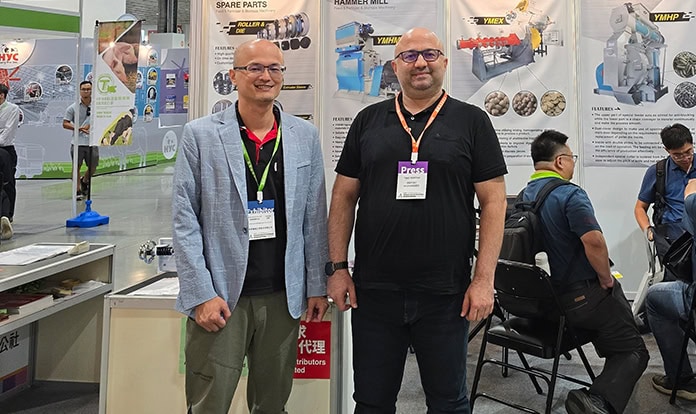
Taiwan-based feed processing machinery manufacturer Yeong Ming Machine Industrial is also observing similar trends. Company Manager Ryan Huang notes that demand for pellet machines is particularly high in South and Southeast Asia, but adds that the economic slowdown is putting pressure on some markets: “Due to the economic situation, the market is currently declining. Since the pandemic, our production has decreased, partly due to the economic climate and also competition from China.”

MICROBIAL ADDITIVES AND IMMUNITY-FOCUSED SOLUTIONS
Beyond technological equipment, biotechnological feed additives aimed at strengthening animal health and immunity are also rapidly rising in the Asian market. Chunghwa Protein, the first company in Taiwan to apply the theory of immunity stimulation, which “strengthens the innate immune system of animals and plants,” to animal and plant nutrition, is one of the region’s notable companies. The company utilises metabolites obtained from multi-layered fermentation and enzymatic hydrolysis processes in cattle, pig, poultry farming, and plant cultivation. Chairman of the Board Dr. I-Chang Yanga defines the basic function of their products as follows: “We reduce the chronic inflammation caused by excessive fat accumulation in organs and promote the conversion of fat into muscle. This improves both animal health and the flavour and aroma quality of the meat.”
According to Dr. Yanga, the following trends will become apparent in Southeast Asia over the next decade:
1. Development and use of local alternative protein sources,
2. Alternative proteins and sustainability pressures,
3. Animal health/increased use of micronutrients and additives,
4. Precision nutrition, digital technologies, and monitoring,
5. Antibiotic alternatives and health risk management in animal husbandry,
6. Aquaculture-specific nutritional needs,
7. Environmental and carbon footprint transparency, sustainability certification,
8. Rapid growth in the pet nutrition market,
9. Strengthening policies and regulations.
DSAND Animal Nutrition from India focuses on gut health, feed efficiency and performance parameters, developing enzyme, probiotic, protein hydrolysate and phytobiotic solutions in line with this. Dr. Jadaun describes their products as ‘solutions that bring scientific innovation together with real-world challenges’ and highlights the following regarding the market: “The animal nutrition sector is shifting towards science-backed biotechnological innovations. Gut health remains the biggest concern across the entire sector. Therefore, safe and innovative solutions that address these challenges could be one of the major focal points in the coming period. In addition to nutrition, developments in anti-viral solutions and vaccines could be the next big lookout for poultry and livestock producers.”
SMART FARMS ARE ON THE RISE IN ASIA
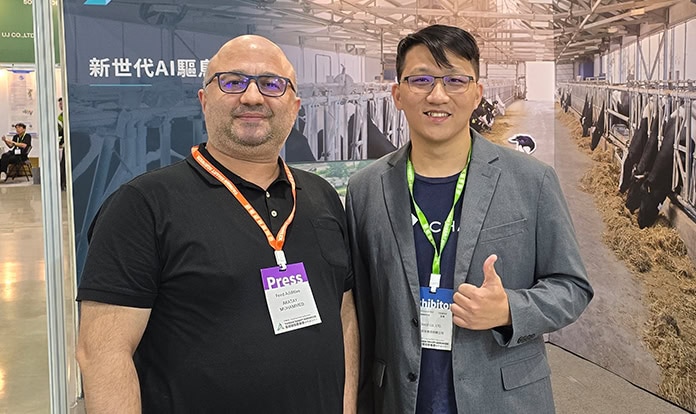
Digitalisation and the use of artificial intelligence in the sector are not limited to feed formulation or process control. Smart farming and automation solutions are rapidly gaining traction, particularly in markets such as Taiwan, which are experiencing labour shortages. Joe Huang, Vice President of Engineering at ICHASE, which utilises AI technology and offers biosecurity and productivity-focused solutions to help farmers increase their profits, summarises the future of technology in the region: “There is a significant labour shortage in Taiwan, and many young people do not want to become farmers. I believe that technology will be used in all areas of animal farming in the future.”
The company’s two products (an AI-powered live weight measurement system and an AI-powered device that recognises bird behaviour and repels them with a green laser) are rapidly gaining acceptance on modern farms. Exporting from Taiwan to Southeast Asia and 14 other countries, the company has come to the forefront at a time of increased biosecurity risks.
ASIA: GREAT OPPORTUNITIES, BUT ALSO UNCERTAINTIES
All companies agree that Asia is one of the world’s fastest-growing feed markets in the medium to long term. However, short-term economic uncertainties and competition from China are challenging some producers. Huang from Yeong Ming cautiously describes the region’s current situation: “Due to economic conditions, the market is currently declining. We do not expect this situation to improve in the short term.” In contrast, the sector’s innovation drive remains strong. According to Dr. Jadaun, biotechnology and antiviral solutions will be the two main areas of focus for producers. AgriAsia DC believes that the transformation in the market is shifting towards sustainability. Tommy Chou predicts that the Southeast Asian feed sector will continue to grow, driven by three main factors:
- Rising livestock production to meet growing food demand,
- Stricter food safety regulations, requiring higher feed quality and full traceability,
- Sustainability pressures, with greater emphasis on energy-efficient and environmentally friendly feed production.
CONCLUSION: ASIA IS SHAPING THE FUTURE OF FEED
When the interviews are combined, it is clear that a major transformation is taking place in the animal nutrition and feed technology sector in Asia. The key dynamics of this transformation can be summarised as such:
• The scaling up of the livestock industry is driving up feed demand,
• Precision control in process technologies is becoming the new standard for efficiency,
• Microbial additives, enzymes and immunity-focused solutions are rapidly becoming widespread,
• Digitalisation and automation are accelerating due to labour issues and biosecurity pressures,
• Sustainability is becoming central to nutrition strategies.
The region, stretching from Taiwan to India, Vietnam to Indonesia, is defining not only the volume of production but also the technological direction of the global feed industry. Asia is now not only the world’s largest feed producer but also one of the most innovative markets.