

Aquaculture waste as insect feed, mainly Black Soldier Fly feed, offers a promising path toward circular food systems by transforming fish industry residues into high-quality protein. Trials show technical feasibility, but regulatory barriers—especially in Europe—limit broader adoption. While countries like Thailand and Chile are advancing, safety concerns and legal restrictions still block progress. Can innovation and policy finally align to unlock this untapped resource?

Sales Director
FreezeM
Aquaculture is often held up as a solution to overfishing, yet the industry itself generates substantial volumes of biological waste, everything from blood, guts, and mortalities to nutrient-rich sludge and uneaten feed. Often seen as a growing sustainability issue, these materials may actually represent one of the greatest underused assets in circular food production.1
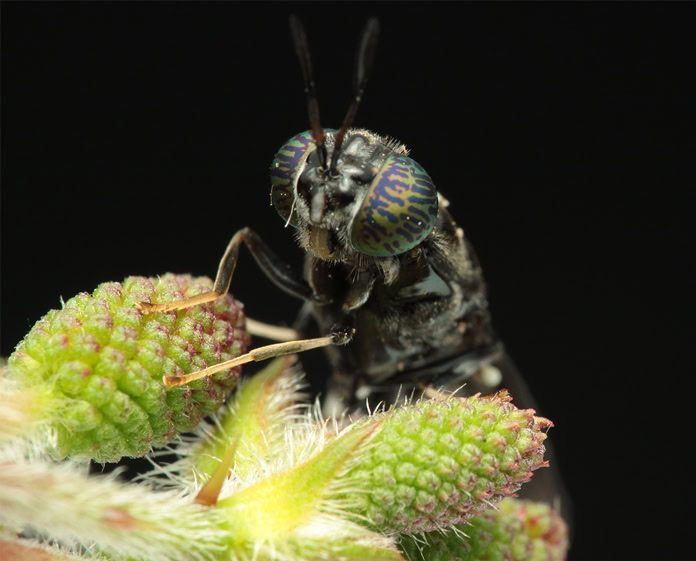
Black Soldier Fly (BSF) larvae are uniquely equipped to transform these low-value residues into high-quality protein and fat, creating a closed-loop potential: Fish waste feeds the larvae, larvae feed the fish.
At FreezeM, we are working with farmers across the globe to test these ideas in practice. Some customers are experimenting with alternative substrates and are even eyeing the future potential of incorporating fish blood into BSF diets. These are small steps, but they’re precisely the kind of curiosity that drives innovation.
BSF: FROM DECOMPOSER TO FEED INGREDIENT
BSF larvae are more than waste processors; they’re miniature biorefineries. Several studies have shown that larvae fed aquaculture sludge and fish offal can reach commercial weight and deliver high protein content with favorable fatty acid profiles.2
Notably, larvae raised on marine residues, such as fish viscera, have shown increased omega-3 content10, making them particularly attractive for aquafeed formulations, though above a certain threshold, heavy metals and ash content began to accumulate in larval tissue3, underlining the importance of balanced feed composition and risk monitoring.
Nevertheless, these results demonstrate a compelling technical case for using aquaculture side streams in insect production.
THE CIRCULARITY PARADOX IN EUROPE
Despite the scientific progress and growing interest in circular food systems, Europe’s regulatory landscape remains a major roadblock. Under current EU legislation (Regulation EC 1069/2009 and 142/2011), insect larvae destined for animal feed must be raised on “feed-grade” substrates. This excludes most aquaculture by-products, especially anything classified as an Animal By-Product (ABP) of Category 2 or 3.
In practice, this means that nutrient-rich fish viscera, blood, and sludge are not allowed as BSF feed, even when pre-processed to eliminate pathogens. These materials are considered “too risky” due to the potential for contamination from viruses, bacteria, heavy metals, or veterinary residues. Ironically, many of these side streams are already used for other purposes, such as ensiling or energy generation, without similar levels of scrutiny.
The paradox is that Europe continues to promote circularity and waste valorization as sustainability goals while keeping some of the most promising feedstocks for BSF locked behind regulatory barriers. The result is a frustrating bottleneck: The biological solution exists, but the political and legal framework has not caught up.
WHAT THE REST OF THE WORLD IS DOING DIFFERENTLY
Outside the EU, other countries are moving faster. In Thailand and Vietnam, BSF larvae are routinely reared on a mixed organic waste that includes catering scraps and fish byproducts.4 In Chile and Ecuador, countries with large aquaculture industries, BSF systems have been piloted using fish offal and processing waste with strong results. The USA, while still cautious, allows more flexibility for R&D projects and regional approvals, enabling innovative trials on aquaculture sludge and other feedstocks.5
The environmental and economic impacts are significant. Insects fed on aquaculture waste can reduce the organic volume by a considerable percentage, thereby cutting methane emissions and landfill use. Feed costs for aquaculture producers can drop substantially, especially when larvae are raised locally using existing waste streams. In regions where fishmeal costs are volatile or imports are expensive, this model offers supply chain resilience.
CONTAMINANTS, PATHOGENS, AND REAL RISKS
The key hesitation from regulators, and rightly so, revolves around food safety. Aquaculture residues can carry pathogens like salmon viruses or contain contaminants such as cadmium, arsenic, and antibiotics.6 But these risks can be addressed. Thermal preprocessing, blending of substrates, and real-time monitoring technologies are now advanced enough to keep these contaminants within legal thresholds.7
This isn’t just a theory. One of our existing partners who has tested BSF larvae growth on aquaculture sludge found that larvae performed well up to a specific percentage of sludge inclusion. Beyond that, performance declined due to elevated ash and metal accumulation, underscoring the need for careful formulation. However, within limits, it worked well, suggesting the need for consistent quality control rather than a blanket prohibition.
CLOSED LOOPS AND OPEN OPPORTUNITIES
The potential for integrated circular systems is enormous. Imagine a recirculating aquaculture system (RAS) where sludge is directed to an on-site insect bioconversion unit. There, larvae, such as those provided through FreezeM’s live-suspension solution, are activated and introduced into controlled rearing systems. The resulting larvae are processed into high-protein meal and reintroduced into the fish feed. The leftover frass is used to fertilize fields or aquaponic crops, closing the nutrient loop entirely.
Pilot projects, such as ClimAqua and Safe Insects, are already exploring these models by combining BSF farming with aquaculture and agriculture. What’s missing is scale, and that can only be achieved with regulatory reform.
ECONOMICS: WASTE AS AN ASSET, NOT A COST
Incorporating aquaculture waste into BSF systems not only improves sustainability but also changes the economics. Feed is the most significant operating cost in both aquaculture and insect farming.8 By transforming waste into a zero-cost input, companies can save on raw materials, reduce landfill and waste-treatment fees, and generate secondary value through the sale of frass or carbon credits.
In Chile, some of the companies we’ve spoken with see the use of local fish waste not only as a sustainability play but as a buffer against the rising prices of imported feed ingredients.
Moreover, the externalities, such as reduced GHG emissions, avoided waste disposal fees, and improved soil health from frass, are rarely captured in cost-benefit analyses but are critical to long-term sustainability. With proper investment, BSF systems could not only lower production costs but also enhance the environmental credentials of farmed fish.
WHAT NEEDS TO CHANGE
To unlock this potential, Europe needs to shift from a prescriptive to a risk-based regulatory model.9 Rather than banning entire waste categories, the system should allow for conditional approvals based on validated safety protocols. Standardized testing, certification schemes, and third-party audits can ensure safety while enabling innovation.
At the same time, the industry must collaborate across sectors, bringing together fish farmers, insect producers, researchers, and policymakers to co-design systems that are technically, economically, and legally effective. Organizations like IPIFF (International Platform of Insects for Food and Feed) and their members can play a leading role in this process, offering not just breeding expertise but the technical infrastructure needed to scale.
CONCLUSION: TIME TO REDESIGN WASTE
Aquaculture side streams are not a problem; they are a design flaw in how we define and manage waste. Black Soldier Fly farming offers a biologically elegant, economically sound, and ecologically urgent solution. But for it to work, we need to align science with policy and innovation with regulation.
As the global food system races to meet growing demand while reducing environmental impact, BSF farming, at the intersection of aquaculture and circularity, could be the breakthrough we’ve been waiting for.
References
1Aquaculture waste types and production potential: https://www.sciencedirect.com/, PMC9857928
2Bioconversion of aquaculture waste blended with vegetable by-products using Hermetia illucens larvae: Sciencedirect
3Aquaculture sludge as feed for black soldier fly: ScienceDirect
4Research on BSF use in Asia, USA, LATAM: PMCID: PMC5664030
5University of Arkansas. National Institute of Food and Agriculture
6Accumulation of contaminants in larvae: https://www.MDPI.com/, PMC9184698
7Safe Insects 2.0 reports and HACCP protocols
8Frontier Economics report: Delivering Insect Feed at Scale, 2023
9EFSA working group concept paper 2024, IPIFF advocacy briefs
10Front. Anim. Sci., 30 May 2023. Volume 4 – 2023 | https://doi.org/10.3389/fanim.2023.1204767
About Ron Shavit
An experienced aquaculture innovator, Ron Shavit has led sustainable offshore and precision fish farming initiatives, championing circular solutions in the seafood industry. With a deep focus on resource optimization, he explores how fish waste can be used as feed for black soldier fly larvae, closing the loop in aquaculture systems.